A month before the Bharatiya Janata Party walked out of the Jammu and Kashmir government headed by Mehbooba Mufti, a report by the state’s CID chief on patterns of radicalisation and militancy in South Kashmir reached national security planners in Delhi. The study suggested that there was no radicalisation in South Kashmir with young people neither attracted to puritan Wahabism nor the ideology of the Alhe Hadis (the so-called Islamic State). Footfalls in Ahle Hadis mosques in the Valley hadn’t gone up and militancy, according to the study, was confined to less than 50 villages in the region.
These villages, the report added, saw periodic cycles of violence. Even as the report was being studied, it was clear that large-scale recruitment by local militant groups was on from villages other than those listed by the state CID. Interestingly, the CID chief’s report spoke of the strength of the Jamait-e-Islami in South Kashmir.
Clearly, a religious-political grouping was responsible for unrest in districts which had sent legislators from the PDP to the state assembly.
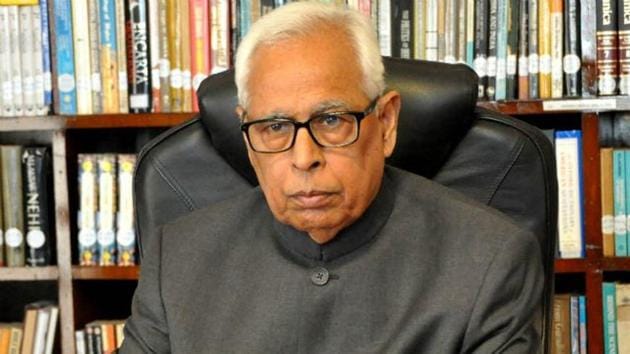
It is evident from the study that the state government has failed to reach out to the people through its own legislators. After the BJP pulled out of the coalition, some of its leaders talked about a muscular policy against terrorists and an all-out counter-terrorism operation by the security forces. While muscle-flexing may find resonance with the BJP’s supporters south of the Pir Panjal, the need of the hour is to normalise the situation, not aggravate it. Thousands have already lost their lives in the battle against militancy since 1990. The neutralisation of more terrorists will be nothing more than another statistic. Perhaps, the state governor N N Vohra, with nearly 50 years of experience in administration, could use President’s Rule to enforce good governance and focus on infrastructure development in the state. Reaching out to the masses and good governance are the only two options available to normalise the situation, since Pakistan won’t stop sending militants across the Line of Control (LoC) and its proxies in the Hurriyat will not stop instigating the people against the state and central governments.
With no sign of the next Jammu and Kashmir state Assembly elections, New Delhi , through the governor, should show tangible results on the ground to convince people of its bonafide intentions. There will be strong attempts from across the border to raise the level of violence in the state and discredit or embarrass the Modi government. The army should be allowed to operate without hindrance on the LoC to prevent infiltration as well as dominate the rural hinterland. It should be allowed to indulge in Sadhbhavna (a goodwill campaign it launched in 2016 to build bridges with the man on the street).
{{/usCountry}}With no sign of the next Jammu and Kashmir state Assembly elections, New Delhi , through the governor, should show tangible results on the ground to convince people of its bonafide intentions. There will be strong attempts from across the border to raise the level of violence in the state and discredit or embarrass the Modi government. The army should be allowed to operate without hindrance on the LoC to prevent infiltration as well as dominate the rural hinterland. It should be allowed to indulge in Sadhbhavna (a goodwill campaign it launched in 2016 to build bridges with the man on the street).
{{/usCountry}}The state police must quickly find the killers of journalist Shujaat Bukhari. The security forces need a serious technology upgrade and surveillance equipment to deal with stone pelting mobs and orchestrated funeral processions of militants. A former home secretary, governor Vohra, along with chief secretary B V R Subramanium, who has handled Naxals in his Chhattisgarh stint, and security advisor Vijay Kumar, should ensure that the security forces have state-of-the-art equipment for house interventions, rather than use excessive force. Dineshwar Sharma, the Centre’s interlocutor, is an astute officer who doesn’t believe in the iron-fist policy but wants to reach out and listen to people with genuine grievances. The governor would do well to use him. He should also appoint all-India services police officers at the district level and replace state police officers, who are more than happy to accommodate their political bosses.
Although Pakistan will continue to keep the Valley on the boil, the average Kashmiri appears to be confused with the various forms of sub-nationalisms on offer—from independence, to self-rule, to genuine autonomy —from various political parties. To make matters worse, Kashmir’s insecurities are being played up by those who’ve raised the bogey of the rise of the BJP and so-called Hindutva forces in the Valley. It would be perhaps better if the Valley were to come to terms with the fact that Kashmir is an integral part of India, where multi-party democracy and Sufism flourish alongside each other.
shishir.gupta@hindustantimes.com