Pakistan high commissioner Abdul Basit’s assertion that bilateral talks with India are “suspended” may have made for screaming headlines and TV anchors, but reality could well be only bark and no byte.
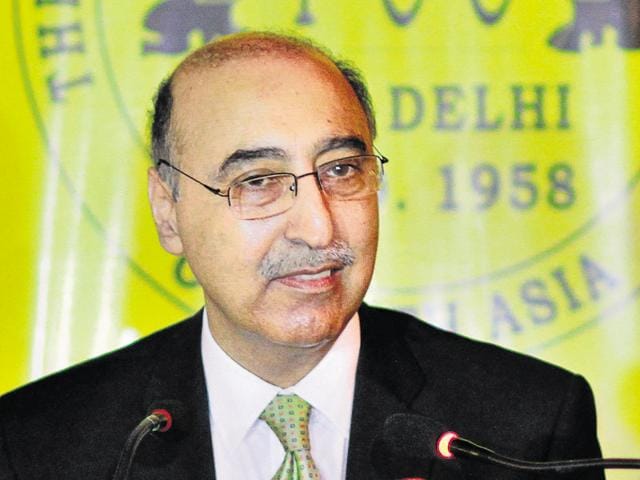
The carefully-choreographed statements made by the foreign office spokespersons of both countries in the past week yield another interpretation: New Delhi and Islamabad are in touch with each other.
New Delhi is, however, waiting for Islamabad to indicate why Basit used the Indian media to hang a question mark over the future of foreign secretary-level talks and the possibility of the National Investigation Agency (NIA) visiting Pakistan in connection with the January 2 terror attack on Pathankot airbase. India says the attack was the handiwork of the proscribed Jaish-e-Mohammed (JeM) outfit.
Top government sources do not rule out the possibility of the two national security advisers (NSAs) being in touch, and perhaps even meeting soon along with their foreign secretaries as happened in Bangkok last November. This could result in the NIA being allowed to visit Pakistan as New Delhi was satisfied with the professional attitude of the Joint Investigating Team (JIT) sent by Islamabad to collect clues at Pathankot. Indian NSA Ajit Doval and Pakistan NSA Naseer Janjua have kept their lines of communication open since the Bangkok meet.
Read | Ceasefire violation along LoC, heavy firing after Pak suspends talks
{{/usCountry}}Read | Ceasefire violation along LoC, heavy firing after Pak suspends talks
{{/usCountry}}“One has to look at Pakistan’s foreign spokesperson’s statement, a day before on the JIT (April 6) as well on the day (April 7) Basit spoke, to understand the mind of Islamabad. India has shown its bona fides by allowing the JIT access to all the NIA had as far as the Pathankot probe was concerned. And contrary to public perception, India has got support from Islamabad in nailing the actual perpetrators. It is now for Islamabad to get back to us,” a senior official told Hindustan Times.
The South Block perspective on Basit’s public outburst is that it was possibly aimed at his own foreign ministry. That he was kept out of the NSA dialogue in Bangkok and then over-ruled by his own superiors during the ‘Heart of Asia’ conference in Islamabad last December would explain that. Seen as a supporter of a Hurriyat role in India-Pakistan relations, Basit was pipped to the foreign secretary’s post by Aizaz Choudhary.
Basit may thus have acted at the behest of a section of Pakistan’s foreign establishment which feels that Islamabad has been forced into a Pathankot corner because there’s only terror on the menu, and other outstanding issues stay on the back-burner. This section, South Block says, is unhappy at New Delhi trying to block the sale of F-16 fighters to Pakistan, supplying Mi-26 attack helicopters to Afghanistan and establishing close contacts with the ruling dispensation in United Arab Emirates and Saudi Arabia.
Shishir Gupta is Executive Editor, Hindustan Times.
Read | The time has come for India to be firm with Pakistan