Following in the footsteps of Odisha, the government of Tamil Nadu in January drafted a housing policy that emphasises leveraging technology for conducting accurate spatial surveys of slums. The Odisha government’s policy has been lauded for providing a clear roadmap towards granting land titles to slum dwellers. However, it does not take into account the different tenural types in slums and risks excluding some of the most vulnerable groups — tenant slum households. For Tamil Nadu, and other states formulating housing policies, it is critical to recognise the importance of rental arrangements.
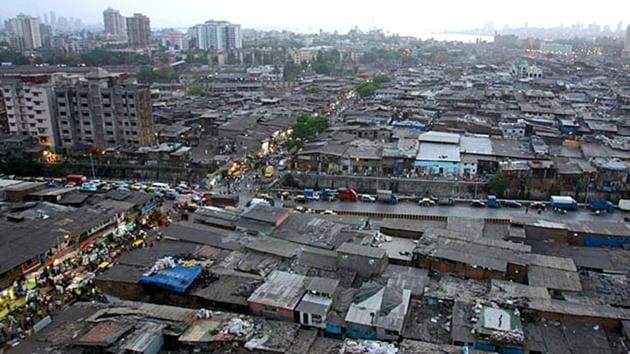
New migrants in a city prefer to rent. When migrants belong to low-income groups, they usually find a shelter in the city’s slums thanks to kinship and other social networks. Renting is also a preferred choice for those who cannot afford the time and money spent on long commutes to the place of work. Therefore, an informal system of thriving rental markets has emerged in India’s slums. According to the 2011 Census of India, 26% of slum households lived in rented accommodation. In the city of Mumbai, 24% of slum households are tenants. In Bangalore and Chennai, rental households constitute 46% and 45% of slum households respectively.
Rental agreements between tenants and landlords are either oral or written on paper having no legal validity. Rental payments are often made in cash and tenants are not provided proofs of payment. With no system of law and framework for dispute resolution to undergird rental agreements, both tenants and landlords face a very high degree of risk and uncertainty. To an extent, private ordering of different types has emerged to mitigate risks. Tenants are afforded some protection against unfair evictions and landlords can expect some guarantee of regular payments due to informal modes of contract enforcement. Often, tenants and landlords belong to the same community or might be related, which creates a degree of trust as well as a need to maintain a good reputation in the community. In some cases, slumlords or local leaders act as enforcers in case of disputes or reneging of contracts.
This existing system is inadequate and far from efficient. There is anecdotal evidence showing that tenants may be asked to vacate their homes at short notice and that their homes are not properly maintained by landlords. Once the duration of negotiated rent ends, increases in rents are often very high. This is partly to dissuade tenants from staying for too long and claiming some sort of de facto ownership. A potential cause for this is the high degree of insecurity landlords face in renting out their premises due to the general nature of informal ownership tenure. A 2001 paper by Sunil Kumar of London School of Economics and Political Science finds that in Surat, when tax officials visited, landlords would remove partitions in the house separating themselves and the tenants and report that the tenants were relatives living with them temporarily. In Dharavi, during a slum census being conducted by Mashal, a Pune-based NGO, surveyors reported that landlords did not allow them to speak with tenants — who often resided in lofts above their homes — due to fear among landlords that tenants may become eligible for benefits or even ownership rights.
{{/usCountry}}This existing system is inadequate and far from efficient. There is anecdotal evidence showing that tenants may be asked to vacate their homes at short notice and that their homes are not properly maintained by landlords. Once the duration of negotiated rent ends, increases in rents are often very high. This is partly to dissuade tenants from staying for too long and claiming some sort of de facto ownership. A potential cause for this is the high degree of insecurity landlords face in renting out their premises due to the general nature of informal ownership tenure. A 2001 paper by Sunil Kumar of London School of Economics and Political Science finds that in Surat, when tax officials visited, landlords would remove partitions in the house separating themselves and the tenants and report that the tenants were relatives living with them temporarily. In Dharavi, during a slum census being conducted by Mashal, a Pune-based NGO, surveyors reported that landlords did not allow them to speak with tenants — who often resided in lofts above their homes — due to fear among landlords that tenants may become eligible for benefits or even ownership rights.
{{/usCountry}}Reforms for improving the situation have to be designed carefully so that the incentives they create do not lead to a complete breakdown of private ordering or drive rental markets further underground. Rent control-like regulations will be too onerous and will quickly and effectively thwart supply. The ideal reform is providing a foundation of clear property rights in the form of tenure security upon which the transactions and contracts can be built. Tenure security can be of different types, ranging from full property rights to the dwelling — and, therefore, freedom to develop, rent or sell — to partial rights that guarantee protection of slum dwellers against eviction for occupying public or private land and provide eligibility for basic amenities and services.
The benefits to landlords from tenure security that recognises their right to rent are obvious. The risks they face from illegally renting out will dissipate. Since landlords often themselves live in slums and have low incomes, earnings from rent are an important revenue source and help smoothen consumption. But this policy is equally beneficial for tenants, who can expect better condition of dwellings and getting access to basic amenities. A 2017 study of slums in Pune by Shohei Nakamura of the World Bank provides empirical evidence to show that tenants are willing to pay a premium for living in slums that have been granted tenure security in order to get the aforementioned benefits. Therefore, for slum housing policies to be truly inclusive, they must recognise diverse tenurial arrangements instead of assuming a single type, that is, ownership, and legitimise informal rental arrangements. State governments that wish to create housing solutions for the poor cannot afford to overlook and undermine the solutions the poor have found for themselves.
Vaidehi Tandel is Junior Fellow at IDFC Institute, Mumbai
The views expressed are personal