“The function of freedom is to free someone else”, author Toni Morrison said in a speech at Barnard College in 1979.
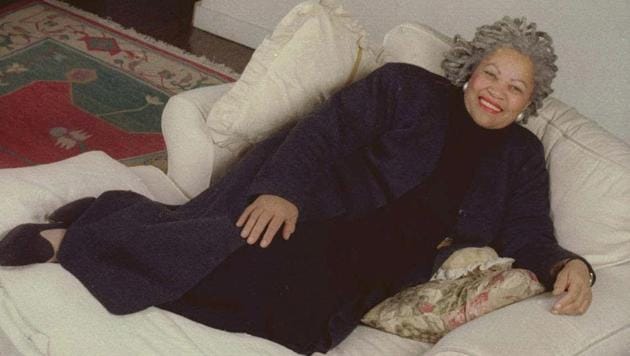
A Nobel Laureate in Literature who wrote her books on borrowed time between her job and single-motherhood, she premised her works of fiction on a world familiar to her, but still invisible in mainstream literature at the time — the African-American experience. Unapologetically flawed and palpably pained by their experiences, the characters she wrote into existence – black and mostly female – remained true to her cause. Their lives were intimately woven together by love, pain, trials and triumph. From the unending trauma of Sethe as a runaway slave in Beloved to Pecola Breedlove’s inability to love herself because of her desperate longing for blue eyes (a socially-accepted notion of beauty) in The Bluest Eye (among many others), Morrison’s storytelling had the ability, and the intention, to tear you apart, and bit by bit, chapter by chapter, piece you together. With every character who inevitably grew on you, whose oppression you may or may not be familiar with, you found yourself growing, too.
In a 2014 interview with NEA Arts Magazine, Morrison talked about writing what she wanted to read. She began writing her first book — The Bluest Eye — in 1970 when she did not find any serious literature revolving around ‘the black woman’. But to call Toni Morrison just a writer is an injustice. Morrison marked the beginning of a movement in literature. Unabashedly woman, uncompromisingly black, painfully honest, and starkly political, her work represented everything she stood for — perseverance, determination, resilience, and most importantly, freedom. She threw herself into her work, not to lead or follow, but to guide. It was all in an effort to make America challenge its own society; to reflect on the bloody history that haunts the country even today (she said, “the past is always present”), and to strive for a better, more inclusive America. Her work, in literature and activism, exposed the country’s inherent, often overlooked, forms of racism.
Across oceans, I read her as a teenager, growing up in my own country mired in oppression that was unique to it. But the thing about oppression is that, irrespective of location, it is centred on difference and propagated through similar means: brutality, injustice, suffering and persecution. And so, I understood the struggle her characters experienced; it manifested in my own society, in the way we treat one another, in our notions of beauty, and in our interactions with our own — some less than our own, some more. Our worlds collided.
{{/usCountry}}Across oceans, I read her as a teenager, growing up in my own country mired in oppression that was unique to it. But the thing about oppression is that, irrespective of location, it is centred on difference and propagated through similar means: brutality, injustice, suffering and persecution. And so, I understood the struggle her characters experienced; it manifested in my own society, in the way we treat one another, in our notions of beauty, and in our interactions with our own — some less than our own, some more. Our worlds collided.
{{/usCountry}}To question one’s privilege, to closely analyse one’s place in the world and to feel (as many did for the first time after reading her books) a sense of responsibility to your people was a natural reaction to her books. She wanted the reader to understand, to reflect. One book at a time, Morrison changed the way we see, think, and feel about injustice and discrimination.
Toni Morrison died on August 5, aged 88. She is gone, but the world is a better place because she lived. Through her work, both fiction and non-fiction, Morrison will transcend the test of time. She will live on through Sethe, Pecola, Nel, and all the characters she created in her pursuit of a better tomorrow. Even beyond that, she will live on as Toni Morrison — a legacy like no other.
She believed that there is no greater gift than passing on to others what she created. In her Nobel Prize acceptance speech in 1993, as the first African-American woman to receive the award, she noted the true power of language to effect change, as she did so spectacularly with Black literature. Her words encapsulated her journey when she said, “We die. That may be the meaning of life. But we do language. That may be the measure of our lives.... Be it grand or slender, burrowing, blasting, or refusing to sanctify; whether it laughs out loud or is a cry without an alphabet, the choice word, the chosen silence, unmolested language surges toward knowledge, not its destruction.”
Today, I struggle to find the words to write for and about Morrison. But because of her, tomorrow, I will try and write again.
marika.gabriel@htdigital.in