Print Intro: A collapse of the so-called Caliphate will trigger an exodus of trained mercenaries towards the lands they came from. Are we prepared to handle them?
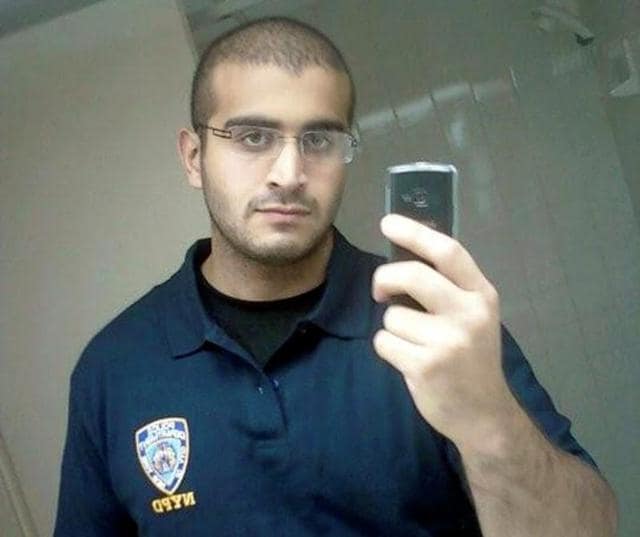
At the annual director generals of police (DGPs) conference in the Rann of Kutch last December, Telengana police chief Anurag Sharma made a presentation before Prime Minister Narendra Modi on ‘Lone Wolf attacks’ and the need to counter religious radicalisation on the Internet. While Modi tasked his counter-terrorism envoy Asif Ibrahim to sensitise the state police on religious radicalisation and its consequences, mowing down innocents by a self-radicalised jihadist like Orlando’s Omar Mateen has been an old nightmare of all countries, including India, as anyone can turn into a walking time-bomb or a trigger-happy mass murderer at any given moment. It is evident that Mateen’s sense of victimhood drove him to identify the enemy, in this case the LGBT community, and then butcher them with a Ramzan call for violence against infidels by Islamic State (IS), giving legitimacy to his bloody purpose. It now comes to light that despite the US FBI interviewing the killer twice in the past, there were no red flags or alarms when Mateen crossed the threshold, notwithstanding America’s proven capabilities of monitoring the social media, Internet and technology to interdict or pre-empt any attack. Mateen succeeded because lone wolves do not communicate and, as a result, all the intrusive technology in the world is rendered ineffective. This is different from the Paris attacks in November 2015 and Brussels terror strikes in March, where there was structured target planning and the Islamic attackers were trained in Syria and Iraq.
With the so-called Caliphate of Abu Bakr al-Baghdadi shrinking by the day due to coalition military efforts, it is not difficult to presume that lone-wolf attacks will increase in the near future. While Mateen’s macabre success was partly due to easy availability of semi-automatic weapons over the counter, the fact is that there is no dearth of assault rifles in India either, from Kashmir to Kerala. So what should India do to pre-empt lone-wolf strikes? The answer lies both within the internal security establishment and society at large. In India, intelligence collection is also part of the charter of the local police station, which is short-staffed and over-stretched in enforcing law and order and providing security to courts and VVIPs. The result is that 6,000-odd police officers and men of the anti-terror squad (ATS) in each state are tasked to monitor and pre-empt any strike in a country with population of 1.25 billion. Given that India technological capabilities are less than one-tenth of the US and British counter-terror apparatus, there is an urgent need to have more feet on the ground for collecting human intelligence. The fact is that with the US virtually controlling all the Internet servers, Indian counter-terror operatives sought American help to crack the IP address of a self-radicalised IS module planning to target the Ardh Kumbh festival in Haridwar in January this year. Without even the capability to intercept voice-over-internet-protocol calls, the Indian security establishment relies on 10-15 persons of the Special Operations Group (SOG) in each Intelligence Bureau unit in all the states to prevent any terror carnage.
Read: Youths missing in Iraq: Kin threaten to protest against Modi during Yoga Day event
{{/usCountry}}Read: Youths missing in Iraq: Kin threaten to protest against Modi during Yoga Day event
{{/usCountry}}The problem gets multiplied as there is hardly any functioning counter-radicalisation programme with central and state jails turning into hot-beds of religious fundamentalism. Arthur Road, Kot Bhalwal, Sabarmati, Yerwada, Lucknow, Jaipur, Tihar and Bhopal jails are full of radicals belonging to Pakistani terrorist groups, Indian Mujahideen (IM) and banned hardliners of Students Islamic Movement of India (SIMI). If the IM’s explosive courier Babu Bhai is spreading jihad in Lucknow, SIMI’s Safdar Nagori is spreading radical Islam in Sabarmati jail with impunity without any jail programme to counter this. As a section of the IM, particularly those belonging to Azamgarh and Bhatkal, pledged allegiance to IS, there are legitimate fears that religious radicalisation is going at a much faster pace than expected without Indian society unable to provide a counter-narrative. With IS fast spreading its tentacles in neighbouring Bangladesh, the Maldives and the Af-Pak region, India needs to be pro-active not only in the neighborhood but also in West Asia, the origin of the threat. As it is, no fewer than 35 persons of Indian origin are fighting on the side of IS in Syria and Iraq and the number of those radicalised over the Net is growing by the day and now in hundreds. The onus of taking on the IS ideology does not lie only on the Indian police or intelligence agencies but also on the clerics, community and, most importantly, the family.
Read: After breakthrough in Fallujah, Iraqi forces begin push towards Mosul
While the State needs to ensure that the majority in a minority community are not insecure, the clerics and community need to provide viable alternatives to this death cult by engaging the youth. The civilisational strength of Indian Islam and its rich heritage need to be propagated with the all-inclusive Sufi strain to counter the ‘us versus them’ theory of IS. Both the community and the State need to cut the roots of so-called victimhood by ensuring through scientific investigations, not media trials, that innocents are not punished and the culprits do not go scot-free. In this context, it is incumbent on both to not let go of the half-baked religious debates on social media and other platforms unchallenged as this uninformed and motivated discourse is the crux of radicalisation.
Read: Stop preaching or you’ll be hacked to death: Dhaka priest gets death threat
It’s time Muslim clerics in India engaged the youth to give them valid answers on why the IS ideology is not true Islam and why Indian Islam of mutual accommodation or the so-called grey zone is the only way out in democratic societies. In 2014, no fewer than 30,000 Muslims were attracted from some 100 countries to the so-called IS Caliphate as Hijrat with the lure of Dar-ul-Islam and civic order based on the Holy Book. Today, the IS empire is crumbling rapidly with coalition forces knocking on the doors of Raqqa, Mosul and Fallujah. A collapse of the so-called Caliphate will trigger an exodus of trained mercenaries towards the lands they came from. Are we prepared to handle these future time-bombs and lone wolves?