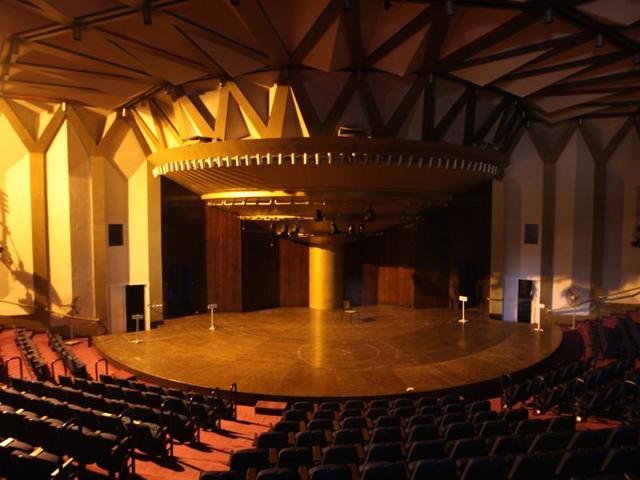
Whether it is dance, music, theatre or photography, the National Centre for the Performing Arts (NCPA) is a landmark in the business district of Nariman Point. It was the brainchild of entrepreneur JRD Tata and scientist Dr Jamshed Bhabha, and opened its doors to the public in 1969. Boasting of five theatres and spread across 32,000 sqm (eight acres), it has been a platform for showcasing diverse performing arts.
We spoke to Deepa Gahlot, head of programming (theatre & film), NCPA and Nayan P Kale (general manager — technical) for some interesting facts about the NCPA.
* The seating at all the five theatres was arranged keeping in mind the acoustics and purpose of each auditorium (music, dance, plays, etc).
* The NCPA was built on land reclaimed from the sea.
* The Jamshed Bhabha Theatre boasts of a 100-year-old staircase in the foyer. Made of high-quality Carrara marble, it was shipped from Italy and originally belonged to the
* Petit Hall in Malabar Hill. When the hall was demolished 50 years ago, it was donated by the Petit family to the NCPA. It remained in NCPA’s warehouse for 40 years, after which it was re-assembled and added to the foyer.
* The NCPA has an extensive library of music and books. The Stuart-Liff library has 11,000 LPs and 6,000 books on opera and concerts. The NCPA library has an archival section that features 5,000 hours of audio recordings and 1,000 video tapes and studio recordings.
{{/usCountry}}* The NCPA has an extensive library of music and books. The Stuart-Liff library has 11,000 LPs and 6,000 books on opera and concerts. The NCPA library has an archival section that features 5,000 hours of audio recordings and 1,000 video tapes and studio recordings.
{{/usCountry}}* The Jamshed Bhabha Theatre has a ‘music shell’ for concerts which includes walls, a roof and sidewalls with wood/metal acoustic panels to ensure that the sound is clear and doesn’t divert.
* The Tata Theatre boasts of a movable pipe organ (the only one in the city), which was fully restored in 2013 at a cost of Rs 22 lakh. It is mounted on a platform and stored backstage with proper climate controlled system.
* The Tata Theatre has an AC plant located in the basement (approximately 30-feet below sea level) to prevent the noisy machinery from interfering with acoustics.
* The Tata Theatre also has pyramid pop-up structures on the ceiling, which ensure that sound is evenly distributed and prevents hotspots (extreme high or low sound level) in the auditorium.
* The Little Theatre is attached to an audio studio where archiving of studio recordings were done.
* The musical auditoriums are designed in such a way that they require no additional amplification. Till the ‘90s, use of microphones was not allowed here.
* The auditorium doors are thick and filled with sand to prevent airborne noise from entering the hall.
* The Tata Theatre was designed by American architect Philip Johnson, renowned for his postmodern structures; and acoustician Cyril Harris, who has worked on prominent concert halls and auditoriums such as the Metropolitan Opera, USA.
* At the Jamshed Bhabha Theatre, every seat is optimal to view the performance. At the Experimental Theatre, opt for the centre seats. At Tata Theatre, you can see clearly even from the last row.