
 E-Paper



Book Box: A South African Odyssey: Rage, Rugby, Lions & a Signature Campaign
Read these five fabulous books from South Africa. And meet motorbike-riding South African animal rights advocate, Irma Wouters, who tells us about her wildlife reads.

 Prefer HTon Google


Dear Reader,
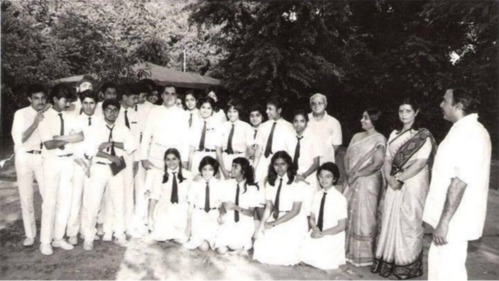
A thrilling event took place in the summer of my sixteenth year. It involved Nelson Mandela, whose birthday was celebrated earlier this week.
On an early morning in 1986, a group of us got into our Delhi Public School R K Puram school bus, and drove to the residence of Prime Minister Rajiv Gandhi at 7, Race Course Road. We carried with us sheaves of paper — a signature campaign we had run, for the release of Nelson Mandela. Standing there, on the beautifully manicured lawns, in my school girl uniform, talking to one world leader, for the release of another, I felt, for the first time in my life, a part of history.
Nelson Mandela has captured the imagination of the whole world. On his birthday week, we look at five books from his home country, from spectacular literature spawned by stunning landscapes, tribal traditions and a turbulent history.
Book 1 of 5: Political History

As bureau chief of the London Independent in South Africa, John Carlin has tracked the tumultuous anti-apartheid years at close quarters. In Playing the Enemy Carlin tells the South Africa story framed around the drama of a rugby match. The book is packed with fascinating vignettes of black and white antagonists, and vivid details of their encounters. I particularly enjoyed the audio version, where the storytelling comes alive in the accents of the political players. The perfect companion book to this, is Nelson Mandela’s autobiography Long Walk to Freedom.
Book 2 of 5: Wildlife Memoir
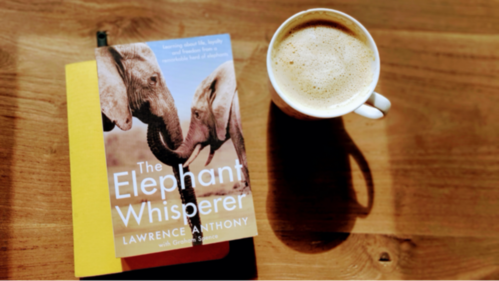
The Elephant Whisperer begins with a desperate phone call. A herd of elephants has gone rogue and they will be killed unless author and conservationist, Lawrence Anthony, agrees to take them in. He does, and thus begins a moving story about people and animals, set on a game reserve in South Africa. The Elephant Whisperer is action-packed, with dangerous poachers and the rogue elephants themselves. It’s also touching and profound. “Perhaps the most important lesson I learned is that there are no walls between humans and the elephants except those we put up ourselves, and that until we allow not only elephants, but all living creatures their place in the sun, we can never be whole ourselves,” says Lawrence, who died in 2012. But his story goes on. Read An Elephant in My Kitchen by his wife Françoise Malby-Anthony, who carries on his conservation work.
Book 3 of 5: Award-Winning Fiction
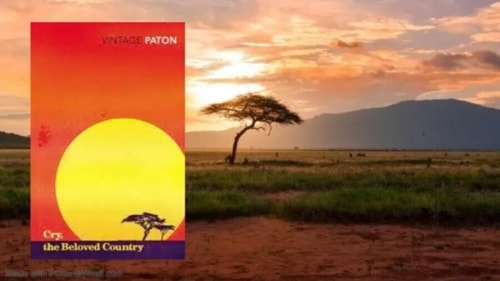
Cry, the Beloved Country is a story of two families — one black and one white, in apartheid South Africa. A 1948 classic, this book is still relevant, in the way it tackles the theme of division and conflict. “It suited the white man to break the tribe, he continued gravely. But it has not suited him to build something in the place of what is broken,” says Zulu pastor Stephen Kumalo, who journeys to Johannesburg, encountering protest, prison and hope and forgiveness in this unforgettable tale.
Book 4 of 5: Memoir
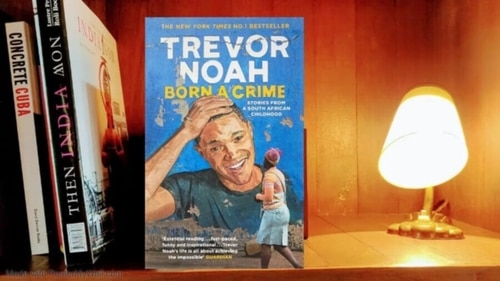
Trevor Noah's very existence broke an apartheid law. He was a child of a white Swiss father and a black Xhosa mother at a time when such a union was punishable by five years in prison. As a mixed-race child, Noah spent his life being an outsider, in every world — black, white and coloured. He writes of this through simple incidents like losing a new bicycle, being stood up by a girlfriend, starting a rock band, selling pirated CDs, and using humour as a buffer against the world. This almost flippant narrative style and his rags to riches story are what make Born a Crime a remarkable read. The audiobook version of this story, voiced by Trevor Noah, is also a great option.
Book 5 of 5: A Nobel Prize Winner’s Short Story
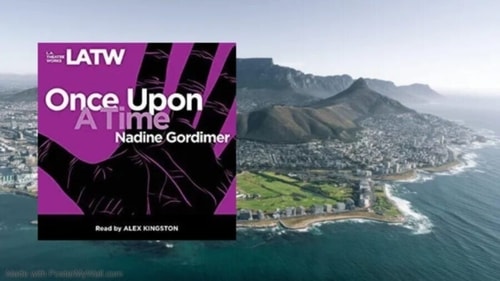
Read the Novel laureates in literature from South Africa — Doris Lessing, J M Coetzee and Nadine Gordimer. All three have fabulous novels as well, including the much-discussed Disgrace by JM Coetzee. If you want to start small, begin with this audio version of a short story — Once Upon a Time by Nadine Gordimer.
This list of 5 leaves out many amazing books — like The Book of Joy where Bishop Tutu and the Dalai Lama share their life learnings, historical fiction by Wilbur Smith and thrillers by Deon Meyer. But we have some more fabulous book recommendations, coming up from an unusual source.
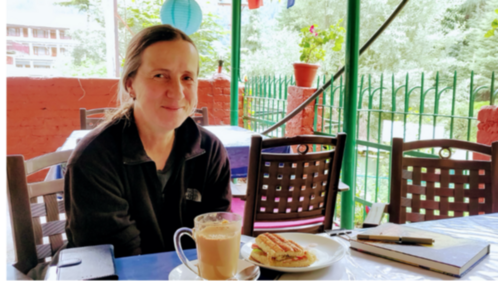
On a rainy day in Manali, I meet South African animal rights advocate Irma Wouters. She’s been visiting India for years now and currently works with the animal rescue charity Manali Strays. Over steaming cups of masala chai, she talks about reading in three different languages, Dutch, Afrikaans and English, and why reading quantum physics was important to her work.
Edited excerpts of our conversation:
Tell us about your early reading?
The first books I read were in Dutch. We had moved to South Africa when I was three and the only books at home were in Dutch. First, it was picture books and after that, I’d read whatever was available. Gypsy romances were very popular in those days, it was the thing then, to fall in love with a gypsy and be free to roam, so we had all these gypsy romances in Dutch, many translated from German and I read all the ones at home.
As a teenager growing up in Pretoria, what were the books that influenced you?
I still remember Kringe in ’n bos a novel by Dalene Matthee about the extermination of the elephants and the exploitation of the woodcutters of the Knysna forest. It was school reading and I loved it even though most of the students didn’t read it because it was in Afrikaans. But since I had gone to an Afrikaans primary school and then an English senior school, I find it easy to read in both Afrikaans and English. There is an English translation of the book called Circles in a Forest also, though I am not sure what it reads like.
Another book was A Dry White Season, again a book I read in Afrikaans. It was banned shortly after print, because it was way too leftist for the political climate at the time. Andre Brink writes from a man's "honest" perspective, so it can come across as harsh, sexist, misogynist, or crass in places, but the story was good. Alas, in his later books, they edited his words to a smooth, soft polish and his later writing lost a lot of passion due to the editing.
What are some of the other wildlife books you would recommend?
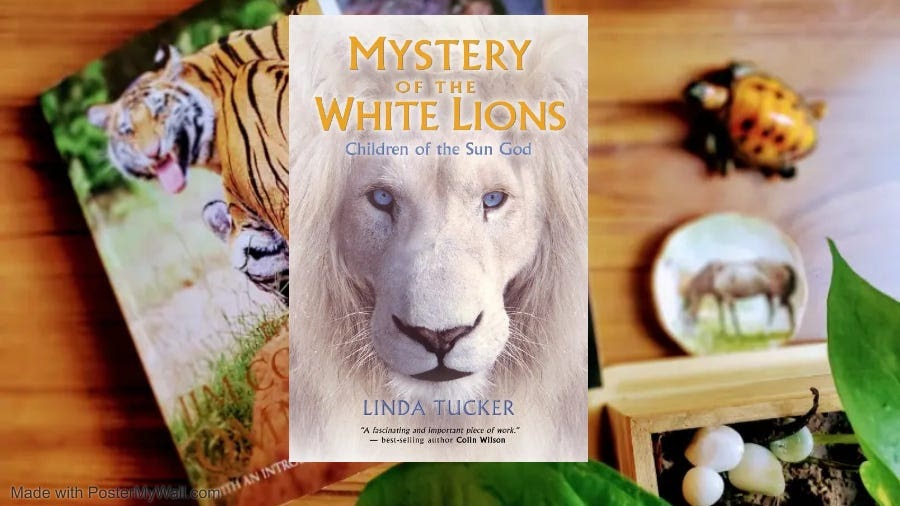
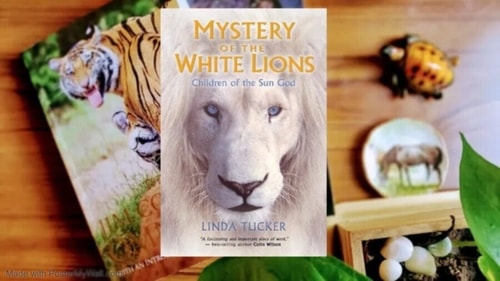
If you like animals, mystery and symbolism with a dash of culture thrown in Mystery of the White Lions by Linda Tucker blew me away. I met Linda on an animal communication course when she just published this book. Brave woman. My sister and I went to one of her talks about rescuing the lions, when a bunch of hulky hunters and canned lion farmers walked in with big guns to intimidate her... and us. The book is also contentious because of her teacher, Credo Mutwa, he is revered by many as a great seer, but he is also a little bit controversial.
Tell us about your reading phases?
For many years, I didn’t read. We lived in a suburb and I didn’t have access to books. But then one day when I was in Class 9, a teacher handed me a book. We had exams in those days, one in the morning, one in the afternoon, and we had to sit and wait in between exams. “Why don’t you try this. I think you will like it “ she said. The book was the first in the Belgariad series by David Heddings. I was hooked straight away. She was right. I just had to find the right book.
Later, I had a friend who would borrow lots of books on witches and on feminism from her college library. I would sit at her place and read them all.
Those were the apartheid days and with all the sanctions, we were locked away from the world. You didn’t get many books, you just read whatever you got.
I always wanted to become a vet, but then I started working in IT instead. We used to have what we called these ‘hurry up and wait nights’, we would run the code and have to stay awake, in case there was an error. We would spend those nights reading whatever we could get, often sci-fi.
Did you visit bookstores?
When I was 16, I got my first motorbike. That changed my life. I had a weekend job in a mall and there were bookstores there. And once apartheid lifted, more books began coming in. Then I moved to Ireland for work and started to buy and read books there.
Besides sci-fi, what are your other areas of interest?
While working in IT, I began studying the T-Touch method of healing animals, by working with the nervous system. People think T-Touch is hocus pocus and flaky, but quantum physics can explain these concepts of energy healing. One of the books I remember from those times is The Dancing Wu Li Masters.
My sister gave me The Agony and the Ecstacy and I loved it. The Harry Potter books, I loved them too, staying home from work to read them
What’s next on your reading shelf?
The Heart of Redness by Zakes Mda. I am excited about reading this author. Not only is he regarded by Chimamanda Adichie, he is also recommended by avid reader friends in South Africa.
Finally, what are 3 South Africa books you recommend?
Long Walk to Freedom by Nelson Mandela — When people hear you are a white South African, they automatically assume you are racist. But then when they hear you love Mandela, they are ok. I am happy that I genuinely and truthfully admire Mandela and would recommend his book.
Born a Crime by Trevor Noah
Circles in a Forest by Dalene Matthee
****
Have you visited South Africa?
And do you have any books you enjoyed — do write in with recommendations.
Next week, as we gear up for the July 31 deadline for filing our income tax returns, we bring you books on personal finance that will change your life.
Until then, Happy Reading!
Sonya Dutta Choudhury is a Mumbai-based journalist and the founder of Sonya’s Book Box, a bespoke book service. Each week, she brings you specially curated books to give you an immersive understanding of people and places. If you have any reading recommendations or suggestions, write to her at sonyasbookbox@gmail.com
The views expressed are personal


