
 E-Paper



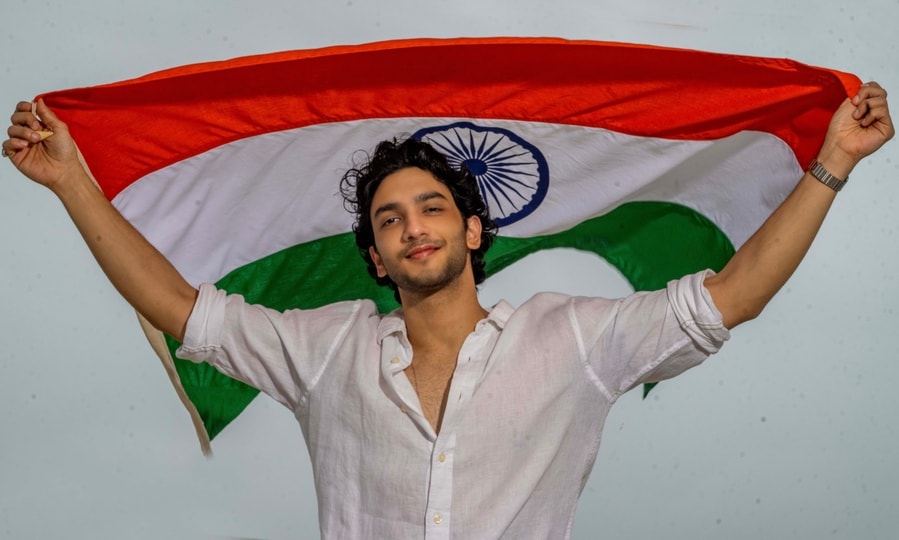
Independence Day 2026: Vedang Raina Feels Gen Z Has A Strong Voice Which Cannot Be Ignored| Exclusive
Vedang Raina exclusively talks to HT City about what this Independence Day means to him after learning a lot from Main Vaapas Aaunga

 Prefer HTon Google


Vedang Raina has been riding high after the success of Imtiaz Ali’s Main Vaapas Aaunga. The 26-year-old actor has been praised for his strong performance in the romantic drama that revolves around the partition period in 1947. It wasn’t just a film for Raina, but a redemption after Jigra (2024), and an eye-opener in a lot of ways, as he holds the film responsible for changing his perspective on the significance of Independence Day and what it meant for the country back then.
Excerpt:
What a year you have had with Main Vaapas Aaunga. Did you always anticipate it becoming the biggest movie of the year?
No, I still don’t think it’s the biggest movie of the year. But it’s done its bit and found its audience. I’m very grateful for that. While shooting the only thing I understood at that time was that it’s an honour to be part of a film in which Imtiaz Ali is directing, and to be playing the younger version of Naseeruddin Shah. I think those two things were like the highlight of my journey in this industry.
What was Imtiaz Ali’s process like?
It wasn’t really like a narration, not in the typical sense. With him, it was like he had certain ideas in his head. It lasted maybe two minutes, and he spoke about the concept of the film. And this is the character I want you to play. And for me, it was the fact that Imtiaz sir was making it. I said, okay, fine. Like, I’m on it. Let me know when we start.
What does Independence Day mean to you after Main Vaapas Aaunga?
I feel this immense sense of belonging to the country and an immense sense of pride. After Main Vaapas Aaunga, I’ve had a different outlook on what that day meant, how much it means to the people and how important it was in the history of our country. As a kid, I did not get into it that much. But now, I really got in-depth into what that day was like for so many people. And what it stands for now.
You also went to the partition museum. Did that open up a different world to you of what actually happened decades ago?
Yes, 100%. That was probably the most important thing that I did in pre-production. Sharvari and I went to the partition museum in Amritsar. We spent four hours there. The museum was amazing, but it was those anecdotes from the people. There were 15-20 minute videos of actual people who went through that partition journey. And what that migration was like for them. That experience was really important.
What were the things that you found that we don’t talk about when we talk about Independence Day and partition?
The Radcliffe Line [drawn by Sir Cyril Radcliffe] that we know of: I didn’t know that Sir Radcliffe hadn’t ever been in India before. He came here for a few weeks, and he was in his hotel room. And he had so much pressure from the higher-ups to make the line between India and Pakistan that he didn’t really get to go talk to the people, understand what it means, what those areas mean, what those people are like in those places. And for them, it was kind of just like a line that they drew. Which sounds so terrible. Lahore was such a big part of Indian culture. It was the heart of India. What we call Madhya Pradesh right now was Lahore because that was kind of central India. It was not the capital, but it was the hub of culture, art, music and movies. What Mumbai is now, the stars of that time used to stay in Lahore and everything used to come from there... And I’m thinking just that line could have changed the lives of maybe 1000s of people.
Have you heard anything about partition or the freedom struggle from your grandparents or parents?
I must have heard stories about the partition, but also we are from Kashmir. My grandparents were in Kashmir at that time. So, it was different for them. They didn’t experience any migration at that time. Later they did, of course. My nana used to talk about how things were, what Mahatma Gandhi was doing, what Pandit Jawahar Lal Nehruji was doing, and what the political climate was. He is very politically aware. He’s always had very strong opinions on politics.
Do you have strong political views as well?
Yeah, I’d say not as extreme as him. I do have political opinions, and I do have strong opinions.
Diljit, in Main Vaapas Aaunga, says the major problem in partition was that there was no social media. If we had to go through something similar now, how do you think the Gen Z would react? Will they ‘clock it’?
(Laughs) 100 per cent they will. We’ve seen a little whiff of what social media and something that is an important subject to our country means in recent times, right? And just imagine something like the partition [happening]. Well, there would be one side where Gen Z would be making those reels, but also we are such a strong collective voice now. And not just Gen Z, but all generations. Because of social media, we have a strong, collective voice that cannot be ignored. That is something that we’ve proven.


