The world comes calling
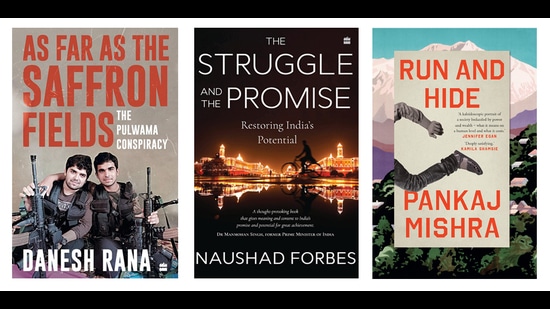
Aseem, Virendra and Arun meet each other in IIT – a place regarded as the gateway to success, wealth and fame by all who enter it. All except Arun. After university, he becomes a translator of Hindi novels and watches Virendra become a hedge fund mogul in America and Aseem, a swashbuckling media darling in Delhi.
“The world is what it is, and those who are nothing have no place in it” – Aseem likes to quote Naipaul. Virendra lives by this mantra too. Ensconced in a small hill station with his aged mother, Arun embraces its opposite. To him, a life of quiet routine, spent with books and nature, a life without love, distinction and money is preferable to stepping into the restless waters of the world.
Yet the world comes calling. It has, after all, never gone away. Arun is drawn into a love affair with a beautiful, wounded young woman even as Virendra and Aseem’s lives fall spectacularly apart. And in this love affair and its violent denouement, Arun realizes he is as implicated in the world he has disowned as his friends were. That he too, like them, is as sullied, as compromised.
Run and Hide is the story of an India that has transformed itself in the last 20 years, both materially and morally, and it tells more deeply and truly how those two things are wholly entwined than any novel in recent years. Profound, deeply human, perfectly realized, this is a magisterial work.*
{{/usCountry}}Run and Hide is the story of an India that has transformed itself in the last 20 years, both materially and morally, and it tells more deeply and truly how those two things are wholly entwined than any novel in recent years. Profound, deeply human, perfectly realized, this is a magisterial work.*
{{/usCountry}}The Pulwama Conspiracy
In March 2019, two militants were killed during a siege at a house in Nowgam, on the outskirts of Srinagar. One of them was known simply as “Idrees Bhai”. The encounter was forgotten for the most part, until investigators came upon a smartphone that had been destroyed by Idrees Bhai. When it began to reveal its secrets, investigators realized they had hit upon the mother lode. For Idrees Bhai was none other than Umar Farooq Alvi, mastermind of the Pulwama suicide attack of February 2019, which had killed 40 CRPF personnel. It was the deadliest terror attack on Indian security forces since 1989.
Now, for the first time, IPS offcer Danesh Rana meticulously pieces together the conspiracy behind the attack. Based upon personal interviews with the protagonists, police charge sheets and other evidence, Rana reveals the modern face of militancy in Kashmir.
Through this single terror attack, As Far as the Saffron Fields tells the story of a state in conflict. Piecing together the stories of the conspirators – from Umar, the dreaded terrorist, to Insha, the love of his life; from Adil Dar, the man who rammed a van full of explosives into the CRPF bus, to Head Constable Jaimal Singh, the driver of that ill-fated bus, it goes where no book on the Kashmir conflict has gone before. This is war at its worst, tearing apart families and dreams, leaving only bodies and phones behind.*
Restoring India’s Potential
Our diverse culture has something for everyone. Our young population is thirsty for education and achievement. And a strong private sector is our engine of growth. We can lead the world in the future.
But we struggle to create a business-friendly environment. We lag in innovation. Education, public health and quality of jobs demand attention. Our governments control some things too much and neglect others.
How can the government, citizens and firms turn our struggle into promise and enable India to lead? How can we fix things by learning from best practices elsewhere? How can we ensure openness, inclusivity and innovation? How can independent institutions make up for low state capacity? How can our culture deliver leadership?
In The Struggle and the Promise, Naushad Forbes answers these and other critical questions concerning India’s progress. He provides a logical, actionable blueprint for getting the balance right between industry, institution and policy. Backed by rigorous research and copious data, here’s a book that shows how to fulfil India’s potential.*
*All copy from book flap.