The Suppression of the Santal Rebellion in Bengal, 1855
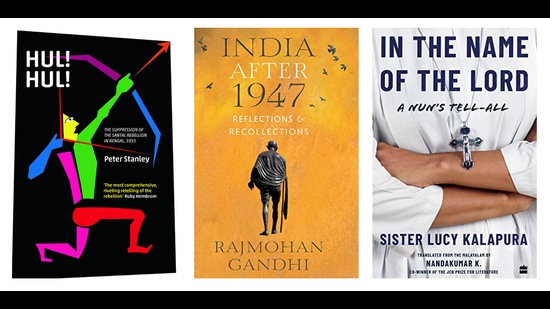
If not for the famous Indian mutiny-rebellion of 1857, the Santal “Hul” (rebellion) of 1855 would today be remembered as the most serious uprising that the East India Company ever faced. Instead, this rebellion — to which 10 per cent of the Bengal Army’s infantry was committed and in which at least 10,000 Santals died — has been forgotten. While its memory lived among Santals, British officers published little about it, and most of the sepoys involved died in 1857. In the words of one British officer, the Hul was “not war ... but execution”, and perhaps thus was dismissed as unworthy of attention by military historians.
Drawing for the first time on the Bengal officers’ voluminous reports on its suppression, Peter Stanley has produced the first comprehensive interpretation of the Hul, investigating why it occurred, how it was fought and why it ended as it did. Despite the Bengal Army virtually inventing counter insurgency operations in the field (and the Santals improvising their first war), the Hul came to an end amid starvation and disease. But between its bloody outbreak, its protracted suppression and its far-reaching effects, Stanley demonstrates that the Hul was more than just “execution” — it was indeed a war.*
Reflections and recollections
75 years after Independence, India faces stark questions. Some of the most pressing ones relate to jobs and the cost of living. But questions about the state of our democracy are equally critical, if not more so. When India won independence and prepared to become the world’s largest democracy, the people, through their leaders and elected representatives, looked to create a nation built on the ideals of equality, liberty, and fraternity. That this seemed a successful exercise — in a densely populated country with high levels of illiteracy and poverty, a bewildering variety of religions, castes, and languages, and a history of internal conflict — surprised many and gave hope to many more. However, over the years, these ideals have repeatedly come under attack.
In the book, the author reflects on key issues that India will need to deal with. He asks if India’s future will be dictated by the resentful victimhood that seems to grip the champions of Hindu nationalism in a country where Hindus dominate the economy, the polity, the media, the culture, and everything else. Or will calm, thoughtful, self-critical yet confident young Indians — Hindu, Muslim, Christian, Sikh, Buddhist, Jain, Parsi, and others — prevail and continue to build a country that treats everyone as equal? He addresses debates about the idea, image, and personality of Ram throughout India’s life and history; analyses the fallout of Partition and the concept of Akhand Bharat; and delves into what Mahatma Gandhi stood for and against — all of them issues that are contested in today’s India. In addition to these reflections, the author looks back at the history of the nation from 1947 onwards and examines what we, the people of India, should do to remain a viable and vibrant democracy that ensures that none of its citizens are left behind or feel oppressed, unwelcome, or unsafe. A timely study of the state of the nation from one of our foremost thinkers, India After 1947 is an essential read that reminds us of who we are as a nation and what we should aim to be.*
{{/usCountry}}In the book, the author reflects on key issues that India will need to deal with. He asks if India’s future will be dictated by the resentful victimhood that seems to grip the champions of Hindu nationalism in a country where Hindus dominate the economy, the polity, the media, the culture, and everything else. Or will calm, thoughtful, self-critical yet confident young Indians — Hindu, Muslim, Christian, Sikh, Buddhist, Jain, Parsi, and others — prevail and continue to build a country that treats everyone as equal? He addresses debates about the idea, image, and personality of Ram throughout India’s life and history; analyses the fallout of Partition and the concept of Akhand Bharat; and delves into what Mahatma Gandhi stood for and against — all of them issues that are contested in today’s India. In addition to these reflections, the author looks back at the history of the nation from 1947 onwards and examines what we, the people of India, should do to remain a viable and vibrant democracy that ensures that none of its citizens are left behind or feel oppressed, unwelcome, or unsafe. A timely study of the state of the nation from one of our foremost thinkers, India After 1947 is an essential read that reminds us of who we are as a nation and what we should aim to be.*
{{/usCountry}}A Nun’s Tell-All
A best seller in Malayalam when it was first published in 2019 as Karthavinte Namathil, In the Name of the Lord is a harrowing account of Sister Lucy Kalapura’s life as a nun and her spirited fight for justice.
Cast out for writing a poem, for owning a car, for talking about the sexual harassment that nuns face in the Church, Sr Lucy reveals what it was like for her to join a nunnery hoping to lead a life of faith and service but to instead be confronted with unexpected and bone-chilling realities. She presents an unsettling narrative about nuns who have no choice but to surrender to the lechery of their male counterparts, as well as about issues such as corruption within the Church, the distorted faces of authority, the partisanship of the state, and the much-talked-about recent sexual assault case involving the Bishop of Jalandhar.
At a time when women continue to hesitate to report the sexual misconduct they face at home, at their workplaces and in society, this no-holds-barred memoir of a nun who has taken on the all-powerful Catholic Church by herself will inspire many to speak up for themselves as well as to think about how India treats its women.*
*All copy from book flap.