Saleem Kidwai died earlier this year. Apart from being a translator par excellence he was a medieval historian, and queer rights activist, best known for co-authoring Same-Sex Love in India: Readings from Literature and History.
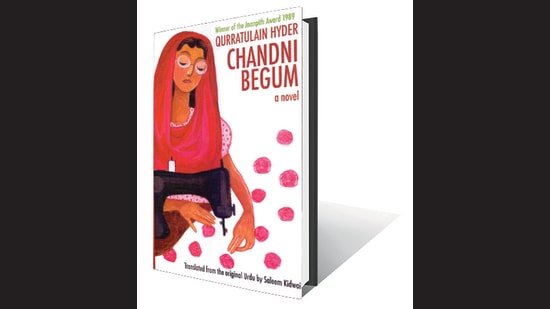
My interaction with him began over his translation of an Urdu phrase in Chandni Begum - Allah maaf kare as “Allah, forgive my sins”. I thought the phrase had lost its zing and frankly told him that the dramatic, half-mocking Allah maaf kare should have been retained like Aye bahu, a lament that is difficult to express in English.
We discussed the possible alternatives, Kidwai graciously half-defending the phrase, and then he revealed that he was translating Hyder’s Safina e Gham e Dil (Ship of Sorrows). Both books are my absolute favourites, and I re-read them after his untimely demise.
Chandni Begum, 1989
The novel centres around the lives of two aristocratic families living on a controversial estate with a mosque and a temple in its compound. The story moves at a fierce pace, shuffling between the past and the present, from the Partition of India to the Mandir-Masjid dispute in Ayodhya, amplifying the complexities of life, trying to find coherence in the class-caste chaos.
{{/usCountry}}The novel centres around the lives of two aristocratic families living on a controversial estate with a mosque and a temple in its compound. The story moves at a fierce pace, shuffling between the past and the present, from the Partition of India to the Mandir-Masjid dispute in Ayodhya, amplifying the complexities of life, trying to find coherence in the class-caste chaos.
{{/usCountry}}She wrote this tale of love and loss a few years before Babri Masjid was razed to the ground, almost predicting the future course of events, of an India that would become increasingly intolerant. This was Hyder’s last novel.
Ship of Sorrows, 1952
Only when I was holding “Ship of Sorrows”, Hyder’s part memoir, part fictional work in hand, did I learn that Kidwai had decided to abandon the project midway.
Unlike other Partition stories written from the perspective of average men and women who witnessed its horrors, this novel is a coming-of-age story, without a conventional storyline, of a privileged set of six friends from Awadh. The author herself debuts as Anne Hyder and fictionalises her experience during the communal riots in Dehradun.
Kidwai praises Hyder’s command over the Urdu idiom, with its Persian and Arabic inflections, and her equal ease with English and western idioms. Her fiction is not easy to read and she was impatient with critics who tried to evaluate the impact of modernism and of particularly Virginia Woolf, on her work. Kidwai was indeed overwhelmed by her genius, but after two years of hard work he successfully anchored his ship.
In Kidwai’s memory next up on my reading list is his biography of the legendary singer Malika Pukhraj. Song Sung True (Kali for Women, 2005) was first published in translation in India. The original Bezubaani Zubaan Na Ho Jaey was recently published in Pakistan.
Lamat R Hasan is an independent journalist. She lives in New Delhi.