One… two… three… In August last year, boxing endured and barely survived a standing eight count, after Floyd Mayweather Jr and Conor McGregor made an appearance in the ring in Las Vegas for 10 rounds of blasphemy, and walked away with millions. Professional boxing is now struggling to recover from that low blow.
The truth is boxing is going through an existential crisis much bigger than the strife it has overcome in the past. The sport has a tumultuous history, and has, over the years, been battered black and blue just like the fighters in the ring. But the mob-controlled tyranny of the mid-20th century, or the racism of the early 1900s pale in comparison to what the sport now faces -- its ugly alter ego, underwritten as fine print in contracts, glazed over with showbiz antics. It is the pugilistic sport’s most hollow and dangerous opponent yet.
Then again, we still have the Manny Pacquiaos and the Gennady Golovkins, and, recently, the refreshing entry of Anthony Joshua, the current IBF, WBA and IBO heavyweight champion. Joshua! But, even as the enthusiast enjoys Joshua’s physical symmetry and boxing sense, he is yanked away to a far-off dimension by a predisposed condition from which every boxing fan suffers. Really, I am just one among the millions who try to find traces of the great Muhammad Ali in Joshua whenever he gets into the ring.
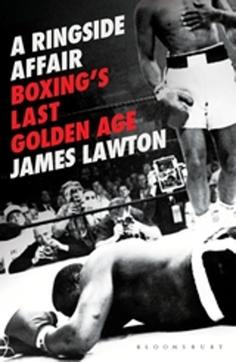
Many heavyweights after Ali have faced such futile scrutiny. In doing this, I, like everyone else, seek reassurance that the sport will bounce back. But James Lawton, a fight fan who lived through the glory days as a boxing writer doesn’t seem to be looking for those signs in his book titled ‘A Ringside Affair -- Boxing’s Last Golden Age’. Has he given up on the sport? Like others who read the book, I may shed a tear for Ali, for Roberto Duran, Sugar Ray Leonard, Thomas Hearns, Marvin Hagler, and last, but not the least, Mike Tyson.
{{/usCountry}}Many heavyweights after Ali have faced such futile scrutiny. In doing this, I, like everyone else, seek reassurance that the sport will bounce back. But James Lawton, a fight fan who lived through the glory days as a boxing writer doesn’t seem to be looking for those signs in his book titled ‘A Ringside Affair -- Boxing’s Last Golden Age’. Has he given up on the sport? Like others who read the book, I may shed a tear for Ali, for Roberto Duran, Sugar Ray Leonard, Thomas Hearns, Marvin Hagler, and last, but not the least, Mike Tyson.
{{/usCountry}}At the same time, I wonder if the sport deserves any tears -- a boxing irony! Lawton does fret for the fate of boxing every now and then. But his narrative mainly involves time-travelling to the fights he covered for newspapers in the US and the UK.
On a few occasions, it also looks at the struggles of the fighters, who were victims of their quest for glory in the golden era, and are sorry slaves of a mad rush for money now. The reader gets immersed in the highlights of professional boxing from the 1970s to the late 2000s -- Lawton was there. Lucky him, but the writer, like the great boxers -- including Ali, who suffered physically, and perhaps mentally, from overstaying in the ring -- has also suffered from the long journey.
The pain was subdued in his euphoric days as a cub reporter. He narrates how he had the privilege to listen to Ali, who later asked him to read out the notes to ensure the philosophical intonations had been captured. This was when Ali was in the twilight of his career. The reader can only feel sorry for the great champion. Lawton did not, at the time.
However, with the passing years, and the passing of the careers of some of the greatest boxers, Lawton starts tasting the bile. The book dwells on the yearly decline of boxing even as the writer covers bouts in Las Vegas, New York, London, Tokyo, and Copenhagen. He doesn’t eulogise boxing, nor does he try to find reasons for the decline. His lines, however, sometimes reveal a flickering hope that the sport will get back on track, that it will get its priorities right. Boxing could once make its athletes immortal. Lately, though, fights lack gravitas – most boxers today shy away from taking on fellow boxers, who could potentially beat or even kill them in the ring.
Lawton doesn’t introspect on the psyche of the golden warriors, or that of the fighters who heralded the decline. But particularly relevant is his chat with Joe Calzaghe, a two-division world champion from Wales, who waited out before giving fights to Bernard Hopkins and Roy Jones Junior way past their prime -- boxers who could have potentially beaten him, but also handed him immortality. When the writer asked the boxer why he had delayed, Calzaghe exclaimed: “Don’t you understand that boxing is a business”? That line sums up all that’s been going wrong in the ring.
Read more: Seven books on Muhammad Ali
The book begins with Ali and the start of Lawton’s career in the 1970s. It ends with the writer standing on the stairs of Sugar Ray Robinson’s house, talking about regrets -- perhaps ruminating over the bitter aftertaste of his four-decade long affair with the blood sport. Still, that’s a small price to pay for the carnal ecstasy of being in touching distance of greatness.
Though it mostly remains in Lawton’s memoryscape, hardly venturing into the philosophical realms of boxing’s “last golden age”, A Ringside Affair tells a rich tale. I enjoyed it best with the book in hand, a window open on youtube for the bouts I had missed, and another window open to the recesses of my mind where the clashes I have enjoyed are archived in black and white.