If asked to name Urdu fiction writers, most English readers would list historical icons such as Manto and Chughtai — contemporary writers in the language do not have that kind of widespread recognition. Those familiar with Urdu literature would associate it with contemporary authors belonging to or adjacent to major Urdu literary centres, such as Lucknow, Lahore, or Delhi.
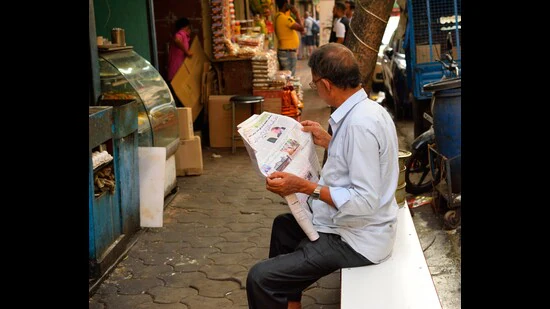
Most would be surprised to learn that Urdu literature also flourishes in a city more famous for Bengali literature and culture: Kolkata. The language has been entwined with the city’s cultural fabric for centuries, partly due to various colonial policies. However, it has not received even a sliver of the attention that Bengali writing does in literary circles.
That’s why the new anthology, Contemporary Urdu Short Stories from Kolkata, edited by Shams Afif Siddiqi and Fuzail Asar Siddiqi and translated by the former, is a pioneering work. It compiles 19 short stories by eight authors from the city, giving English readers a hitherto unavailable glimpse into its Urdu literature. While some of these authors’ works have been translated into other languages, most haven’t, nor have they featured as prominently in collections of contemporary Urdu writing.
The tales have eclectic themes and narrative styles, though common among them is a preoccupation with the abstract. One of the reasons for this is that some stories are fleshed around ideas rather than characters or plots. Besides, a sense of strangeness and mystery pervades most of them, even in the occasional instances where they are built on the scaffolding of everyday lives and experiences.
{{/usCountry}}The tales have eclectic themes and narrative styles, though common among them is a preoccupation with the abstract. One of the reasons for this is that some stories are fleshed around ideas rather than characters or plots. Besides, a sense of strangeness and mystery pervades most of them, even in the occasional instances where they are built on the scaffolding of everyday lives and experiences.
{{/usCountry}}Many dwell on existential unease and alienation. Still, they read more like an intellectual examination of these rather than indulgences in mere despair. Siddique Alam’s The Stopped Clock features a man desperate to leave the city of his birth, but a non-functional clock at the railway station leaves him seemingly stranded. Agony’s protagonist receives a letter predicting his death, which puts his life in disarray.
In Mahmoud Yasein’s Epic of the New Colony, a family faces attacks from hooligans. They eventually lay siege to their home and cut off electricity, water, and supplies, pushing them to the brink of starvation amid unceasing violence. The family has no contact with the world outside. With others of their community facing similar dispossession, at what scale could horrors be unfolding?
In The Shop of Words, a father purchases a bunch of “old words” from a vendor, but his wife, distraught at their potential to unsettle the status quo, stows them away. With violence increasingly impinging upon their lives, what words will prevail?
Anxieties about sectarian violence, ghettoization, and the curtailing of civil liberties are at the forefront of the latter two narratives. But only a couple of stories are grounded in such communitarian experiences. Most explore individual eccentricities and social dynamics, with some digging deep into psychological recesses. Bollywood-esque twists also make an appearance, such as in Anis Rafi’s A Story Heard Before. This story too has an element of eeriness, which makes its plot curveball more palatable.
Among the quirkiest pieces is The Wedding Register, featuring the narrator’s quest to learn more about Pinki Salman, a Chinese convert to Islam in Kolkata. The former stumbles upon the latter’s wedding register, which mentions that he has officiated over 1,353 weddings. The narrator scurries down several blind alleys even as his obsession with the register threatens to engulf his life. Unexpected descriptions like, “A friend of mine who was of Fidel Castro’s age” further add to the narrative’s peculiarity.
Siddiqi’s adept translation makes these stories a pleasure to read. The voices of the different authors shine through rather than the translator’s. In a few instances, though the translations are exceedingly faithful to the Urdu original’s sentence construction and style, they are rendered so well in English that they do not seem stilted, even if they are odd.
While there are diverse opinions on what constitutes a good translation, Siddiqi’s mostly veers towards American translator Norman Shapiro’s ideal: “I see translation as the attempt to produce a text so transparent that it does not seem to be translated.” At times, I forgot that I was reading works originally written in Urdu.
The anthology’s introduction, however, falls short. It delves into the origin and evolution of short stories across the world, right from the second millennium BC to the 20th century. But when it comes to Urdu literature in Bengal, all Siddiqi offers is, “The history of Urdu in Bengal is interesting” and “The progress of Urdu prose [in Bengal]... is replete with achievements that require serious studies.”
Regarding the authors featured in the collection, he writes, “Shahira Masroor is the only woman writer, and I wish I had accommodated more.” But he does not explain why he included just one despite wishing otherwise if there is “no dearth of women writers in the city”. We also do not know why he included certain celebrated authors, but left out others, such as Khurshid Akram and Ishrat Betab.
Rather than dwelling on the history of the short story globally and Urdu short stories in the Indian subcontinent, which are fairly easy to find, I wish Siddiqi had provided an overview of Urdu literature in Bengal, why he selected the authors he did, and more information on the common threads in their work and preoccupations. I am not sure whether the stylistic and thematic similarities among the stories constitute a literary movement of sorts, bear the imprint of a Zeitgeist, or are a result of editorial discretion.
There is scholarship on Urdu literature from Kolkata, including on Shodhganga, a digital repository of PhD theses from Indian universities. Sadly, it is predominantly in Urdu with barely any analysis in English.
With this anthology, Siddiqi has done a stellar job of taking the oeuvre of Kolkata Urdu writers to a wider audience. I hope he publishes more such works and builds upon his experience as a literary scholar to shed critical insights on a much-overlooked category of Urdu literature.
Syed Saad Ahmed is a writer and communications professional.