The fifteenth edition of India’s National Security is a testament not only to the endurance of its editor, Satish Kumar, but the rapidity with which the world’s security environment has changed.
The latest volume covers the years 2015-16. Inevitably, much of the material in the essays actually takes place in 2014 and publication has taken place three years hence. In the meantime, the world has become a very different place.
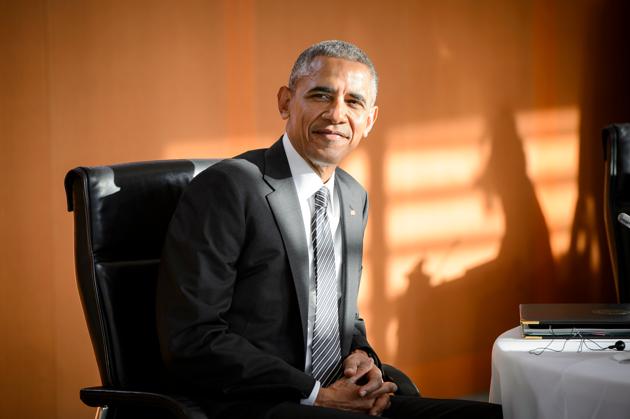
With a sense of handling a time machine of ink and paper, the US is still ruled by President Barack Obama, the Islamic State is hale and hearty, Russia is being rhetorically beaten about over its Ukraine shenanigans and the world is bravely still negotiating the Paris agreement on climate change. New Delhi is still fretting about the Trans-Pacific Partnership and how it might leave India high and dry. The phrase Belt-Road Initiative has yet to be coined and there are odd references to Silk Routes and corridors. And, of course, there’s nary a mention of Donald Trump.
The assessments of India fare better. In the pages, India and Bangladesh are still struggling with the land border agreements. The Naga peace talks are going nowhere but nor is the insurgency. The anti-Indian regime of Mahinda Rajapaksa has just fallen but its sister franchise in Nepal is still in business. Narendra Modi has just begun his global touring so there is little sense in the book of how radically the Indian leader has since tied his foreign policy to his domestic reforms – the closest thing to a Modi doctrine with this regime.
{{/usCountry}}The assessments of India fare better. In the pages, India and Bangladesh are still struggling with the land border agreements. The Naga peace talks are going nowhere but nor is the insurgency. The anti-Indian regime of Mahinda Rajapaksa has just fallen but its sister franchise in Nepal is still in business. Narendra Modi has just begun his global touring so there is little sense in the book of how radically the Indian leader has since tied his foreign policy to his domestic reforms – the closest thing to a Modi doctrine with this regime.
{{/usCountry}}Much of the review is a tightly-written compendium of speeches, events and personalities who played a major role in world politics at the time of writing.
A few of the contributions stand out. G Balachandran’s piece on the then nascent China-Pakistan Economic Corridor is a sensible early look at the project that tries to dissect the financial side of the corridor. His conclusion: “India need have no fear about the economic resurgence of Pakistan in the short term.” Sujeet Samaddar’s writing on the role of the private sector in India’s aerospace and defence sector makes a case for saying that more is going on than meets the eye. Unfortunately, the three-year gap also exposes the weaknesses of many of the other essays. Thus the West Asian chapter does not even speculate at the tectonic shift in India-United Arab Emirati relations that came about.
Read more: China remains India’s primary security challenge: UK report
While there is a fair amount of information packed in the volume, its primary weakness is that many of the chapters have no overall strategic connect-the-dots thinking involved. The economic sections are also overly focussed on trade and investment when the more exciting activity was in global monetary policy and energy supplies. The few stray mentions of cybersecurity are also unworthy.