...
...
Next Story

Review: The Male Gaze Redefined by Shoma A Chatterji

The film scholar explores how the objectification of women in cinema is the result of social structures

Updated on: Nov 13, 2026, 16:47:06 IST
Advertisement

Film theorist and analyst Laura Mulvey coined the term ‘male gaze’ to describe mainstream male filmmakers’ objectification of women. The term turns the focus on how the female body becomes a source of visual pleasure for men. The act of gazing creates a subjective power difference with the person being gazed at getting objectified ie being perceived more as an object and less as a human being with her own desires and agency. This is particularly apparent in the cinema
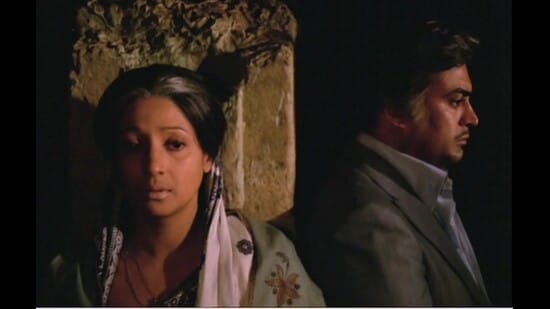
PREMIUMA scene from Aandhi (1975). The film by Gulzar had the character played by Suchitra Sen turning her back on family responsibilities for her political aspirations. (Film still)
A scene from Aandhi (1975). The film by Gulzar had the character played by Suchitra Sen turning her back on family responsibilities for her political aspirations. (Film still)
200pp, ₹499; Hachette

Here, the camera operated by a male director and an almost entirely male crew acts in clear accordance with the instincts of the straight male viewer.

In The Male Gaze Redefined, film scholar Shoma A Chatterji refuses to treat the idea of the male gaze as a fixed one and believes its nature is predominantly shaped by social structures. In her long innings as a critic, she has observed that women in Indian films are either wronged, humiliated, oppressed and tortured or presented as paragons of strength, courage, dignity and respect. In either case, under the male gaze she is shrunk to a stereotype. The script is so designed that she doesn’t freely express her real feelings.

Of course, this is not always the case. Some directors have given their woman characters space, weight, and a layered inner life. Gulzar’s Aandhi (1975), which ran into trouble with the censors during the Emergency for the female protagonist’s similarity to Prime Minister Indira Gandhi, had the character played by Suchitra Sen chucking her family responsibilities for her political aspirations. Others have also shown female characters who are true to life. Among these are Hrishikesh Mukherjee’s Guddi (1971), Bimal Roy’s Sujata (1959) and Basu Chatterjee’s Rajnigandha (1974). Unsurprisingly, in each, the script was in favour of female choice.

But by and large, women in Indian cinema have rarely been fully realized characters. The Male Gaze Redefined, which asks if our films can steer clear of the nation’s deep-rooted patriarchy and if women can avoid being seen as mere pretty playthings with no depth, is an important contribution to the conversation on how women should be represented and indeed how stories should be told.

Towards, this end, Chatterji has explored and analysed the work of nine atypical male directors. These include Mehboob Khan’s Mother India (1957), Ritwik Ghatak’s Meghe Dhaka Tara (1960), Satyajit Ray’s Mahanagar (1963), Vijay Anand’s Guide (1965), Gulzar’s Aandhi (1975), Shyam Benegal’s Zubeidaa (2001), Buddhadev Dasgupta’s Andhi Gali (1984), Mrinal Sen’s Ek Din Pratidin (1979), and Nabyendu Chatterjee’s Parasuramer Kuthar (1989).

Each of these scripts reflects how the filmmaker has subverted the physical and audio-visual aspects of the male gaze, stripped women of patriarchal conditioning, and allowed them to execute their choices. This book’s lively insights will compel the reader to revisit these works and watch them afresh.

Author Shoma A Chatterji (Courtesy Hachette)

With five decades of reviewing experience, Chatterji’s critique is expectedly thoughtful and shows that though cinema has historically viewed women as objects of visual pleasure, the reality is closer to what’s presented in Andhi Gali (1984) where the woman exercises her right to her own body when she uses suicide as a protest.

Chatterji asks compelling questions: Can the double standards normalised by patriarchy remain unchallenged? Can male film makers avoid titillation and sensationalism when it comes to female characterization?

In the expanding digital landscape, obvious voyeurism now invites condemnation from a growing cohort of vocal women who openly express their outrage, and the male gaze in all its obvious salaciousness appears to be on its way out. However, it is clear that the dark web still sees the female body as bait. In such a new reality, discussions on the subject have a fresh urgency.

Sudhirendar Sharma is a writer, researcher and academic.

Film theorist and analyst Laura Mulvey coined the term ‘male gaze’ to describe mainstream male filmmakers’ objectification of women. The term turns the focus on how the female body becomes a source of visual pleasure for men. The act of gazing creates a subjective power difference with the person being gazed at getting objectified ie being perceived more as an object and less as a human being with her own desires and agency. This is particularly apparent in the cinema of filmmakers of an earlier era like Raj Kapoor whose Satyam Shivam Sundaram (1978) and Ram Teri Ganga Maili (1985) were particularly voyeuristic in their presentation of the female body.

PREMIUMA scene from Aandhi (1975). The film by Gulzar had the character played by Suchitra Sen turning her back on family responsibilities for her political aspirations. (Film still)
A scene from Aandhi (1975). The film by Gulzar had the character played by Suchitra Sen turning her back on family responsibilities for her political aspirations. (Film still)
200pp, ₹499; Hachette

Here, the camera operated by a male director and an almost entirely male crew acts in clear accordance with the instincts of the straight male viewer.

In The Male Gaze Redefined, film scholar Shoma A Chatterji refuses to treat the idea of the male gaze as a fixed one and believes its nature is predominantly shaped by social structures. In her long innings as a critic, she has observed that women in Indian films are either wronged, humiliated, oppressed and tortured or presented as paragons of strength, courage, dignity and respect. In either case, under the male gaze she is shrunk to a stereotype. The script is so designed that she doesn’t freely express her real feelings.

Of course, this is not always the case. Some directors have given their woman characters space, weight, and a layered inner life. Gulzar’s Aandhi (1975), which ran into trouble with the censors during the Emergency for the female protagonist’s similarity to Prime Minister Indira Gandhi, had the character played by Suchitra Sen chucking her family responsibilities for her political aspirations. Others have also shown female characters who are true to life. Among these are Hrishikesh Mukherjee’s Guddi (1971), Bimal Roy’s Sujata (1959) and Basu Chatterjee’s Rajnigandha (1974). Unsurprisingly, in each, the script was in favour of female choice.

But by and large, women in Indian cinema have rarely been fully realized characters. The Male Gaze Redefined, which asks if our films can steer clear of the nation’s deep-rooted patriarchy and if women can avoid being seen as mere pretty playthings with no depth, is an important contribution to the conversation on how women should be represented and indeed how stories should be told.

Towards, this end, Chatterji has explored and analysed the work of nine atypical male directors. These include Mehboob Khan’s Mother India (1957), Ritwik Ghatak’s Meghe Dhaka Tara (1960), Satyajit Ray’s Mahanagar (1963), Vijay Anand’s Guide (1965), Gulzar’s Aandhi (1975), Shyam Benegal’s Zubeidaa (2001), Buddhadev Dasgupta’s Andhi Gali (1984), Mrinal Sen’s Ek Din Pratidin (1979), and Nabyendu Chatterjee’s Parasuramer Kuthar (1989).

Each of these scripts reflects how the filmmaker has subverted the physical and audio-visual aspects of the male gaze, stripped women of patriarchal conditioning, and allowed them to execute their choices. This book’s lively insights will compel the reader to revisit these works and watch them afresh.

Author Shoma A Chatterji (Courtesy Hachette)

With five decades of reviewing experience, Chatterji’s critique is expectedly thoughtful and shows that though cinema has historically viewed women as objects of visual pleasure, the reality is closer to what’s presented in Andhi Gali (1984) where the woman exercises her right to her own body when she uses suicide as a protest.

Chatterji asks compelling questions: Can the double standards normalised by patriarchy remain unchallenged? Can male film makers avoid titillation and sensationalism when it comes to female characterization?

In the expanding digital landscape, obvious voyeurism now invites condemnation from a growing cohort of vocal women who openly express their outrage, and the male gaze in all its obvious salaciousness appears to be on its way out. However, it is clear that the dark web still sees the female body as bait. In such a new reality, discussions on the subject have a fresh urgency.

Sudhirendar Sharma is a writer, researcher and academic.

All Access.
One Subscription.

Get 360° coverage—from daily headlines
to 100 year archives.

E-Paper
Full
Archives
Full Access to
HT App & Website
Games
 
Explore the latest Books News, author interviews, book reviews, literary events and new releases. Discover recommendations, reading lists and updates from the world of literature on Hindustan Times.
SHARE THIS ARTICLE ON
Notifications

Get breaking alerts directly from the newsroom

Notifications are on!You'll be notified when news breaks