
Volkswagen is considering making its first American pickup in 40 years. Nissan is promising more rugged SUVs. And Detroit is racing to maintain its high margins in the heartland.
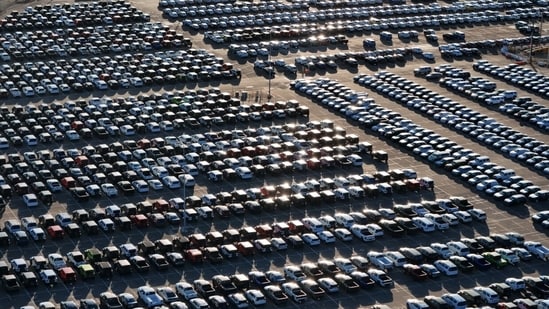
The U.S. is emerging as the last true profit engine for the world’s carmakers—and the auto industry is scrambling to compete.
“My top three priorities are: U.S.A.,” Hyundai CEO José Muñoz said at a recent event, explaining why so many of the South Korean automaker’s new models are tailored for American
Volkswagen is considering making its first American pickup in 40 years. Nissan is promising more rugged SUVs. And Detroit is racing to maintain its high margins in the heartland.
The U.S. is emerging as the last true profit engine for the world’s carmakers—and the auto industry is scrambling to compete.
“My top three priorities are: U.S.A.,” Hyundai CEO José Muñoz said at a recent event, explaining why so many of the South Korean automaker’s new models are tailored for American drivers.
U.S., European and Asian automakers are all focused on making and selling cars in the U.S. because of Americans’ proclivity for large pickups and SUVs—vehicles with high profit margins—and their willingness to swallow record-high sticker prices. New car prices are hovering around $50,000, while roughly one-fifth of new-vehicle buyers have monthly car payments that top $1,000.
Another reason is that the market in China, for decades the path to automotive dominance, has hit a wall. Sales are down more than 20% through September, creating a massive overcapacity crisis. Other big markets, including Europe, Japan and the Middle East, are also sputtering.
Additionally, the Trump administration eliminated strict emissions and fuel-economy rules that pushed carmakers to make electric vehicles, often at a loss. And the U.S. is insulated—by high tariffs and technology bans—from low-price, high-tech cars being made in China.


Over the last decade, Chinese central and local governments have poured billions into developing the country’s homegrown electric-vehicle industry, building with a fraction of Western labor costs.
The low-cost vehicles have conquered overseas markets and battered European automakers on their home turf.
Detroit automakers like General Motors are on the defensive and looking for new revenue streams as overseas rivals target the most profitable and fastest-growing types of vehicles in the U.S.: pickup trucks, SUVs and gas-electric hybrids.
“The United States is the most lucrative auto market in the world,” GM finance chief Paul Jacobson said recently. “We’ve got to be competitive.”
Toyota, which has pledged up to $10 billion in U.S. investments, is spending $3.6 billion on a new factory to bring production of its midsize Tacoma pickup back to the U.S. This past week, the company named a new North American chief and said it’s weighing whether to add more vehicles at its growing Texas truck factory to help beef up offerings in the region.
Honda is growing its manufacturing presence in Ohio. Hyundai said it aims to launch dozens of new or made-over models in North America by the end of the decade, including off roaders, its first-ever midsize pickup and high-end models from its Genesis brand.
And Nissan is bringing back its beefy Xterra SUV while racing out hybrid versions of its top sellers, including the Rouge SUV, which it launched nearly a year ahead of schedule. CEO Ivan Espinosa said he aims to grow Nissan’s U.S. market share to about 7%, up from below 6% today. That would mean more than 160,000 in additional vehicle sales.
European automakers are also rolling out hulking new high-end SUVs for the U.S. market.
Last month, Volkswagen-owned Audi announced a new $4 billion factory in rural Georgia, where it will build big, premium SUVs for American drivers—joining other European companies, including Mercedes and Volvo—that are growing their manufacturing operations and product lines in the U.S.
“The United States is the second-largest premium market in the world, and today we are not fully exploiting this potential,” Audi Chief Executive Gernot Döllner said in announcing the move. (Even as sales slump, China is still the world’s biggest market for premium vehicles.) “We are changing that,” Döllner said.
Though the German automaker is slashing jobs and closing factories elsewhere around the world, Volkswagen executives also said last month the company will look at building and selling trucks in the U.S., even if the Trump administration doesn’t pass trade deals with Canada and Mexico to make it more affordable.
It is considering building the trucks in collaboration with another automaker and is in talks with Ford over a potential joint venture, the company said.
That may be easier said than done. A Volkswagen truck would be a direct run at a segment that Detroit has dominated for more than half a century—one that almost no foreign competitors have been able to crack. Only Toyota’s Tacoma manages meaningful sales volumes against Ford, GM and Ram trucks.
“It’s a market that looks really good from an outsider’s perspective,” said Sam Fiorani, vice president of global vehicle forecasting at research firm AutoForecast Solutions. “But it’s really hard to tap in to.” Fiorani estimates new factories planned by automakers will add enough capacity to build more than one million additional vehicles a year in the U.S. by 2030.


The foreign automaker surge promises new choices for American customers and a wave of manufacturing jobs. It also threatens to crowd an already stagnant U.S. auto market—leaving automakers vulnerable to expensive, half-empty factories if demand softens further. Americans are holding on to their cars for longer these days: The average car on U.S. roads is about 13 years old, a historic high.
Jacobson, the GM CFO, said he worries the U.S. market could run into problems with underused factories given how many automakers are adding manufacturing space and capacity. He said GM must keep costs down and resist the urge to grow capacity itself.
As Toyota is closing in on GM’s spot as America’s top-selling automaker—a title it’s held for 100 years—the American manufacturer is racing to build profitable side bets in software subscriptions, battery energy storage and defense contracting.
It’s also planning a raft of new products. After long dismissing hybrid technology as an unnecessary detour on the path to EVs, the automaker has made a dramatic about-face as Toyota, Honda and Hyundai see their hybrids drive big sales gains this year.
GM now plans to roll out hybrid versions of many of its most popular vehicles, including a trio of three-row SUVs and the Chevrolet Equinox SUV, its top-selling model behind the Silverado and Sierra pickups, according to people familiar with the matter.
Ford is battling slowing sales with plans for a raft of more affordable models and its much-hyped Fathom electric pickup truck, designed to rival the low-cost and high-tech sheen of Chinese EVs. But while GM has said it won’t give priority to growing market share, Ford CEO Jim Farley recently told employees he expects the company to grow global sales by 20% by early next decade.
The company is also looking to Washington, arguing that tariff relief extended by the Trump administration to South Korea and Japan has placed the automaker at a competitive disadvantage to its Asian rivals. Hyundai is creeping up on Ford as No. 3 in the ranking of America’s top-selling automakers.
Executives at foreign automakers say they harbor no illusions about the difficulty of growing sales into the U.S.
“It’s going to be a challenge as we go forward, but I think we know what the consumer is looking for,” said Lance Woelfer, Honda’s U.S. sales chief.
Ponz Pandikuthira, Nissan’s North American product chief, said: “There’s a sense of urgency. U.S. success and profitability is critical.” It has been apparent even in his interactions with the Japanese automaker’s headquarters.
Now, when he has a question for the boss, he never has to wait for a reply.
“I don’t need to wait for a formal meeting to address an issue with the CEO,” Pandikuthira said. “I literally send them a WhatsApp message and say, ‘I need a quick decision on this, please help.’”
Write to Sharon Terlep at sharon.terlep@wsj.com
One Subscription.
Get 360° coverage—from daily headlines
to 100 year archives.
Archives
HT App & Website