The history of the PC chip can be told in simple stages. The 1990s were about clock speed. The 2000s focused on shrinking transistors. For most of the 2010s and 2020s, the goal was performance per watt. Gokul V. Subramaniam, Intel India president and vice president of Intel’s Client Computing Group, said that while the definition is rapidly changing, those measures still matter, even if they are no longer enough.
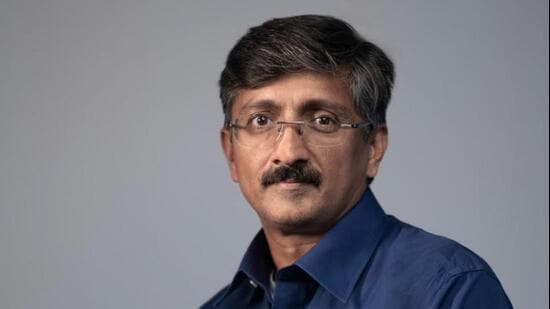
“Raw speeds without the right kind of performance per watt are not good,” he said, explaining there are priorities that define the next phase of Intel’s silicon roadmap.
First, heterogeneous compute is a key foundation. “You want the right horse for the course,” he explains. That means a CPU or central processing unit, GPU or graphics processing unit, the neural processing unit or NPU and other specialised engines in one product, each matched to a workload, instead of “a one-size-fits-all processor architecture.”
Secondly, advanced packaging becomes important with a higher cost for shrinking transistors. Chips are increasingly built from chiplets, or tiles, each made on whichever process node suits it. They are then joined using 2.5D and 3D packaging. The engineering challenge is connecting those tiles without losing performance, power efficiency, area, cost or yield. Subramaniam argues that Intel leads here, and its foundry pitch depends on that being true.
In the cloud, the data centre and neoclouds, there is the perspective of the system as a unit of compute, with the question no longer being just how fast one chip is. It is seen as a collective where a rack scales up, and how processors talk to each other within a rack and across racks, over copper or, increasingly, through silicon photonics.
{{/usCountry}}In the cloud, the data centre and neoclouds, there is the perspective of the system as a unit of compute, with the question no longer being just how fast one chip is. It is seen as a collective where a rack scales up, and how processors talk to each other within a rack and across racks, over copper or, increasingly, through silicon photonics.
{{/usCountry}}Last but not least is chip-level security for agentic AI, with processor architectures requiring upgrades as AI agents start acting on a user’s behalf.
A lot depends on the 18A, a process node on which Intel has staked its comeback. Subramaniam called it “a very, very critical process node,” pointing to its two headline technologies—the RibbonFET gate-all-around transistors and PowerVia backside power delivery, two innovations Intel delivered with this generation. He said manufacturing maturity is improving “significantly.”
The numbers support that. Intel’s Q2 2026 revenue rose 25% year on year to $16.1 billion, with Data Center and AI witnessing an upward trajectory to the tune of 59%. Panther Lake is in high-volume manufacturing, Xeon 6+ launched as the first server chip on 18A, and 18A-P is believed to be on schedule.
These innovations will be “taken forward from a laptop and AI PC perspective, as well as mini PCs, agent boxes, AI boxes, and for edge inferencing,” he said. Subramaniam adds that even in the context of physical AI and robotics, the 18A is critical.
Intel has delivered the Core Ultra Series 3 and Core Series 3 chips for edge AI and robotics use-cases to certain organisations globally. Within each category are scenarios that are diverse. Edge AI, for instance, includes industrial uses, smart cities, education, health and life sciences, to name a few. Physical AI includes everything from fixed robots to an autonomous mobile robot, quadrupeds and even industrial robots that may just be a robotic arm.
“There are a variety of compute needs for these verticals, both for the control function, and for the brain. They have very interesting requirements for latency and performance. We are finding the Core Ultra Series 3 playing really well into these. There are places where we’ve been able to reduce the number of compute (units) that a customer needed by just giving them one Core Ultra Series 3 and thereby reducing their costs,” Subramaniam said.
With significant conversation around AI PCs, Subramaniam believes that the definition of the PC as we know it, may well be changing.
“The whole industry is going through that transition. We don’t have a solution yet, but everybody recognises the way compute is offered to the user—not just a processor, not just the form factor, but also what kind of operating system and what kind of software capabilities,” he said. “There are going to be a plethora of compute form factors with different software capabilities eventually because not every one of them will need a keyboard and a display and a camera and a mic.”
AI PCs, which have gained traction in the Windows PC ecosystem in recent years, still pose a challenge for Intel. “The application is now becoming the critical aspect that brings out the value of an AI PC,” he says.
Subramaniam underlined how easy it has become to code, run an agent on a computing device, or run AI models locally. “Those are becoming interesting use cases for AI PCs. We optimise and bring the best performance and performance-per-watt, and more importantly, the tokenomics,” he says.
Tokenomics defines what kind of model can run locally on a computing device and how effectively it can be used locally or partly with cloud-based compute.
Intel has delivered the Core Ultra Series 3 and Core Series 3 chips for edge AI and robotics use cases to certain organisations globally.