Opening thoughts. The more things change, the more they seem to remain the same. Mozilla Foundation has followed up on its report from earlier in the summer, which noted Microsoft’s deceptive tactics to drive users toward the Edge browser on Windows PC. Now, ‘100 days later’, the researchers say things really haven’t changed for Windows users globally, except in the EU where strict laws have forced Microsoft to make a “better version of Windows”.
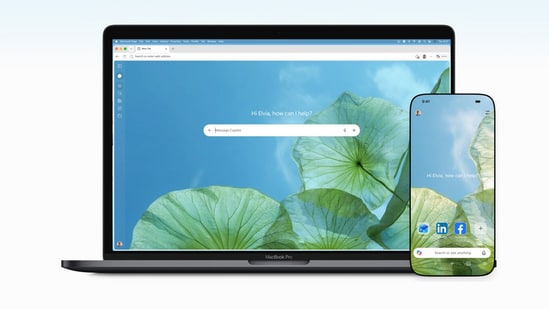
Key concerns continue to be how Windows Search and Widgets open links in Edge instead of another browser that has been set as default, Windows keeps Edge as the default for common browser file types like PDFs and SVG images despite another default browser and Edge remains pre-pinned to the taskbar giving it a prominence that other browsers don’t get on millions of Windows PCs. The Copilot artificial intelligence (AI) assistant also continues to open web links in its own side panel rather than the browser users have chosen.
“Mozilla’s research demonstrated that harmful patterns in the Microsoft ecosystem are designed to steer users toward Edge, yet Microsoft has refused to commit to respecting users’ browser choice. Today, we join Mozilla’s call for Microsoft to end its campaign to undermine fair competition and restrict web freedom for users across the globe,” notes the Browser Choice Alliance, in a statement shared with HT.
Following Mozilla’s previous report, the Browser Choice Alliance wrote an open letter to Microsoft CEO Satya Nadella, indicating that browsing apps should be allowed the same preinstallation privilege as Edge, ending dark patterns including at system level to get users to switch to the Edge browser, and opening all web links in the default browser selected by the user.
{{/usCountry}}Following Mozilla’s previous report, the Browser Choice Alliance wrote an open letter to Microsoft CEO Satya Nadella, indicating that browsing apps should be allowed the same preinstallation privilege as Edge, ending dark patterns including at system level to get users to switch to the Edge browser, and opening all web links in the default browser selected by the user.
{{/usCountry}}They say Microsoft has still not responded to that letter. Mozilla is not a BCA member—Vivaldi, Opera, Wavebox, Browserworks, Midori and Google’s Chrome are members.
Previously, on Wired Wisdom: Broadband landscape, analysing Optimist X1, and DailyObjects Stack
EDITOR’S MARGIN: Samsung Galaxy S26 FE
There is something to be said about Samsung persisting with the ‘fan edition’ phone in this supply chain economy. Two things actually. First, the wherewithal to add the Galaxy S26 FE to its premium phone lineup this year. And secondly, they’ve smartly navigated the aforementioned supply chain inflation by keeping upgrades absolutely minimal, and therefore the price tag of ₹79,999 in this supply chain economy. If you have last year’s Galaxy S25 FE, then things may feel a tad familiar. Yet, it was important to find this base for the Galaxy S26 series, considering the entry-spec Galaxy S26 now has prices starting at ₹1,22,999 after a series of corrections due to external pressures.
The leading generational upgrades are the new Exynos chip, and the updated One UI 9 based on Android 17. A crucial thing to note about the latter specifically, the Galaxy S26 FE is running the August security patch, which means updates are timely and on point. As is the availability of the Galaxy AI suite. And Samsung is promising 7 major Android upgrades for this phone, bringing it at par with the flagships, though it’s a separate matter if you’d really hold on to any phone that long in this time.
Samsung’s in-house Exynos 2500 chip takes over from the Exynos 2400, and architecturally, this is a more efficient 3nm (or nanometer) node compared with the earlier 4nm. There are 10 cores, and as is always the case, they are bunched into different frequencies for allocating tasks based on required resources. There is only one variant on sale, which is 8GB memory and 256GB storage. I would recommend configuring 8GB of additional virtual memory (this is found in the Settings app; Samsung enabled RAM Plus by default), to help things on those occasions when multitasking load can be felt.
While the Exynos 2500 isn’t exactly a flagship chip, there are certain performance as well as battery life improvements over the Exynos 2400. This is in the same ballpark as the MediaTek Dimensity 9500s chip, and not far behind the Qualcomm Snapdragon 8 Elite. That means, no shortage of raw performance.
There are specific reasons I’d recommend a Galaxy S26 FE for. First, this feels compact for a 6.7-inch screen phone, which in this era, is something many are looking for. Secondly, the 50-megapixel main camera (alongside a 12-megapixel ultra wide and an 8-megapixel telephoto) typically delivers Samsung flagship-like photos with a nice dynamic range and great colours.
But most of all, for the Galaxy AI feature set is extensive, on-device and doesn’t require a Google AI Pro subscription for most things to work, unlike Google’s Pixel phones now do. During the time of ownership, that will continually deliver good value.
The latest, on Neural Dispatch: Google’s space odyssey, assumed AI approach, and Microsoft redoes Copilot again
TECH SPOTLIGHT: XECH AIR PURIFIER
₹2,999. The price tag caught my attention, and that is exactly why an extensive analysis followed. Luckily for the sake of objectivity, this period interspersed with a pollution spike, particularly in the morning hours in recent days in the NCR, as temperatures have begun to dip. Indian tech company XECH has made what they simply call an Air Purifier, very compact in size, and deploys a high-quality H13 HEPA filter. This will to an extent compete with Xiaomi’s Mijia Smart Air Purifier 4 Compact (that’s priced around ₹6,999) and the Philips Airpurifier AC0920 which costs around ₹8,999. The coverage area is for compact indoor spaces, such as a study room or a smaller bedroom at home.
For starters, the filter that the polluted indoor air will run through is thick, and that’s a good start in terms of filtration efficiency (thinner filters tend to let particles pass through if there’s enough suction force). Three step filtration process, starting with a pre-filter for larger particulate and dust, a H13 HEPA (or high-efficiency particulate arrestance) filter for finer particles as small as 0.1 micron (that is an advantage, most filters top out at 0.3 micron) and an activated carbon filter layer that will eliminate odour and gases. Mind you, the typical indoor air pollution sketch doesn’t have the sort of smoke you see outside, but a cocktail of things including cooking residue and aerosols alongside fine dust.
The XECH Air Purifier uses a brushless DC motor which remains quite silent at the first two fan speeds, though as expected, you can notice some noise at its highest speed setting. Overall efficiency at fan speeds one and two is also worth noting. With the room’s AQI measuring around 230 microgram per cubic meter (𝜇g/m), the XECH Air Purifier stabilises this around 50 in about 15 minutes. The fact that it is able to maintain that despite some movement in the room, does testify to the fact that this is a powerful purifier in a compact package. XECH has kept it simple, and by not dabbling with smart app connectivity, has managed to keep prices low. Not the first brand that’ll come to mind, but as an effective compact air purifier, this is worth absolutely considering.
Pollution season: some points to keep in mind
- Air purifiers work in the room they are kept. If you keep one in the living room and expect clean air in the bedroom, that will not happen. Buy one for each room — think of this as an expenditure to buy clean air. Placement is important. You should leave space on all sides of the purifier for clear intake and not keep furniture too close to it. Some purifiers have intake vents at the back too, and shouldn’t be placed against a wall.
- Air purifiers have HEPA (high-efficiency particulate arrestance) filters. This thick filter captures airborne particles. You must buy one with multiple filter layers — the must haves are a pre-filter to capture larger dust particles, and activated carbon filters to capture allergens that may get through the HEPA filter. These days, multi-layered but single filter constructions are common.
- The quality of filters defines performance. While it’s impossible to judge how efficient one is till you use it, you could try holding up the filters to understand their thickness and the materials used. If it feels flimsy, it is probably best to avoid it.
SECOND THOUGHTS: APPLE’S SIRI AI COMES HOME
This was always a frontier, once the re-architectured Apple Intelligence suite was ready. With two on-device models and three server-side models working as the basis for all things AI across Apple’s devices and apps, Home finally has that critical ‘smart’ element which Amazon and Google to an extent had claimed with their smart speakers and smart displays over the years (mind you, Alexa wasn’t exactly smart, and I haven’t experienced the new Alexa+). Therefore, a new chapter for a new product category is being written, with the Apple HomeView as the flagship product, and serious upgrades to the Apple TV 4K (4th generation) and the HomePod mini 2.
Also Read | Apple Home push starts with HomeView, new HomePod mini and a powerful Apple TV 4K
“The strategic shift is from competing on individual devices to extending its AI ecosystem across the home, potentially strengthening Apple’s position in the consumer AI market and giving it an advantage over voice-first rivals. By connecting AI, entertainment, communications and home management through a more contextual, voice-led experience, Apple can deepen ecosystem engagement and create incremental services opportunities, including through iCloud+,” Prabhu Ram, Vice President - Industry Research Group, CyberMedia Research (CMR), tells HT.
I see three key things happening.
- At a time when Android phones are increasingly baking in AI capabilities, be it Google Gemini or additionally their own such as Samsung’s Galaxy AI, Apple has given the iPhones specifically parity in terms of what consumers expect from AI. Be it a chatbot to answer queries, context from what’s on the screen, transcriptions, image editing and so on. A lot of those capabilities are now being extended to the HomeView and new Apple TV 4K.
- Music and videos, FaceTime calls, Photos, smart home hub, handoff activity from an iPhone to this as you change location within the home, and of course, a full-fledged Siri AI assistant at a call away, the HomeView in particular has a broad context. A lot will depend on how Apple opens this up for more apps.
“Extending baseline Siri AI capabilities to users without a compatible iPhone or iPad also broadens its potential reach, even as richer personalisation remains tied to Apple’s ecosystem. However, integration alone will not guarantee adoption. Apple must demonstrate that context-aware AI makes the connected home meaningfully more useful, while addressing interoperability and adoption barriers,” Ram adds.
- While many will point out to the ₹39,900 price tag and say this is expensive (I will not disagree), the context is Amazon’s 2026 Amazon Echo Show 8 that holds a sticker price in India of around ₹24,999. In my book, it is debatable if Alexa or anything Amazon can match the HomeView in terms of depth and finesse of the experience, particularly music playback, the spoken word replication (be it an AI conversion or a podcast), or even app integration. A smart display is a long-term purchase, think about that.