
 E-Paper



Covid-19 makes yoga popular in Chandigarh, but hits instructors, institutes badly
Followers of this ancient practice have increased manyfold in the last two to three months, but in spite of that, the pandemic has hit professional yoga instructors and training institutes badly.

 Prefer HTon Google


The coronavirus pandemic has motivated residents to adopt a healthy lifestyle and boost their immune systems, and yoga is turning out to be one of the favourite fitness routines.
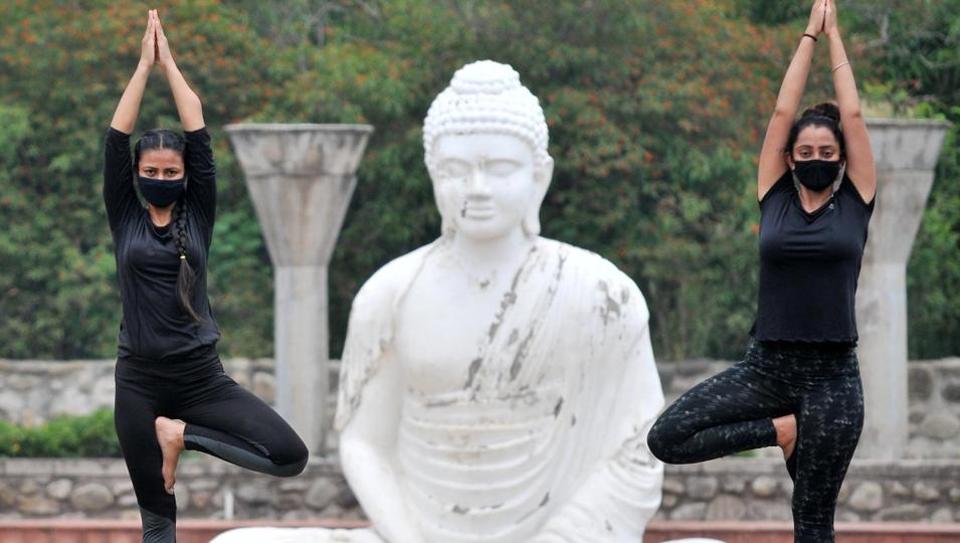
Followers of this ancient practice have increased manyfold in the last two to three months, but in spite of that, the pandemic has hit professional yoga instructors and training institutes badly.
Due to fears of spread, residents are avoiding engaging instructors, thus costing them their monthly incomes. Training institutes across the region are the worst hit. With no footfall and heavy rentals to pay, many of the centres have closed down or are at the verge of doing so.
“Yoga industry is one of the worst hit sectors,” says yoga expert Harimindra Singh, 30, who is the co-founder of Rishikesh Yoga Association, a training institute located in the Yoga Capital of the World, Rishikesh, in Uttarakhand.
“There are over 100 institutes here, catering annually to over 20,000-25,000 enthusiasts, 80% of them foreigners. But for the last three months, there hasn’t been a single admission, and with monthly rentals to pay, institutes are finding it hard to survive,” adds Harimindra.
The yoga industry of Rishikesh provides lucrative job opportunities to many yoga instructors from Chandigarh.
INCOMES HALVED WITH ONLINE CLASSES
At a time when physical classes have become obsolete, many instructors are turning to the alternative of offering classes online. But that is not nearly enough as regards the number of clients they used to have before the lockdown.
“During the lockdown our first motive was to engage our old clients, so we started online classes. But we are charging only half the usual amount,” says yoga instructor Mandeep Lal, who works in Chandigarh. “Earlier, on an average, a yoga instructor would earn somewhere between ₹30,000 to ₹40,000 monthly. This has been reduced to half or less,” he adds.
Many instructors from India got the opportunity to work overseas, and had been earning decent money. “In Vietnam, people have started visiting the centres, but right now I am earning one-fourth what I used to earn before Covid,” says Chandigarh-based yoga expert Munish Kumar, who runs four centres under the name of Shine Yoga School in Vietnam. “Before lockdown, I had 11 students training to become teachers. Now, only five of them want to continue saying they can’t afford the course anymore,” he adds. The course fee is $1,500 (₹1.14 lakh).
With a hike in the number of people practising yoga daily, the demand for yoga accessories has also gone up. To keep yoga institutes afloat, some equipment companies are extending them financial help. “My friend, who is a distributor of famous yoga equipment company Manduka in Singapore and Vietnam, tells me that there has been a decent increase in the sale of yoga accessories now. The top yoga equipment companies have also come up with schemes to extend some financial help to the institutes,” says Munish.


