By Diwali in November, Ayodhya’s Ram ki Paidi, as the Saryu riverbank in the temple town is known, would be bigger, and better as the work on its extension is in its final stages and expected to be complete by this month or early October, officials aware of the matter said. The Uttar Pradesh tourism department is likely to market it as a major attraction to draw tourist to the town.
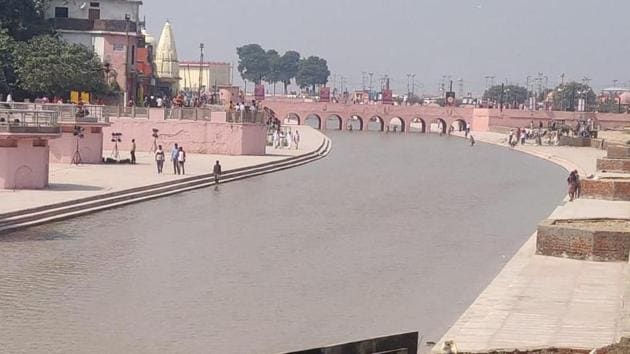
The project is a part of the town’s makeover as the state government seeks to make its a major religious tourism hub over the next decade with the launch the Ram Temple construction in Ayodhya last month. The Supreme Court paved the way for the construction at the site of demolished Babri Masjid after years of litigation and bad blood.
Officials said Ram ki Paidi is being extended at the cost of ₹56 crore. “Post-revamp, Ram ki Paidi would have more ghats [from five to nine] and more space [as the length of the remodelled bank is being extended from 500 metres to a kilometre], to accommodate devotees who want to take a holy dip in the Saryu river during major festivals and fairs,” said irrigation department’s engineer-in-chief, VK Niranjan, who is associated with the remodelling project.
The first phase of the makeover was completed in October barely eight months after it began.
{{/usCountry}}The first phase of the makeover was completed in October barely eight months after it began.
{{/usCountry}}Officials said it impressed chief minister Yogi Adityanath, who visited the place twice and performed rituals and ordered that the Ram ki Paidi be further extended.
The river discharge flow around Ram ki Paidi, where the water was mostly stagnated, was increased from 40 cusecs since 1988 to 240 cusecs to ensure a continuous, steady flow of water with the help of a pump house. “To ensure steady flow, we approached the Irrigation Research Institute at Roorkee for suggestions. On the basis of those, the department started the challenging task of ensuring smooth water flow,” said Niranjan.
He added in 1988, the water from the Saryu would be pumped into the Ram ki Paidi from one side and pumped out from the other. “This two-stage pumping meant that there was no flow as it was designed more like a water tank and slowly it became full of silt and dirt. The irrigation department would carry out cleanliness drive but every 15 days, things would be back to square one.”