
 E-Paper



Canadian House passes motion on ‘foreign interference in internal affairs’
The motion’s text stated it wanted the House to recognise that “recent events, including the credible allegations of a link between agents of the Government of India and the killing of a Canadian citizen, Hardeep Singh Nijjar, at a place of worship on Canadian soil, are examples of rising forms of intimidation, threats and interference from countries such as India, China, Russia, Iran and others”.

 Prefer HTon Google


A private member’s motion, which includes allusion to an Indian link to the killing of pro-Khalistan figure Hardeep Singh Nijjar on June 18 last year, has been passed by Canada’s House of Commons.
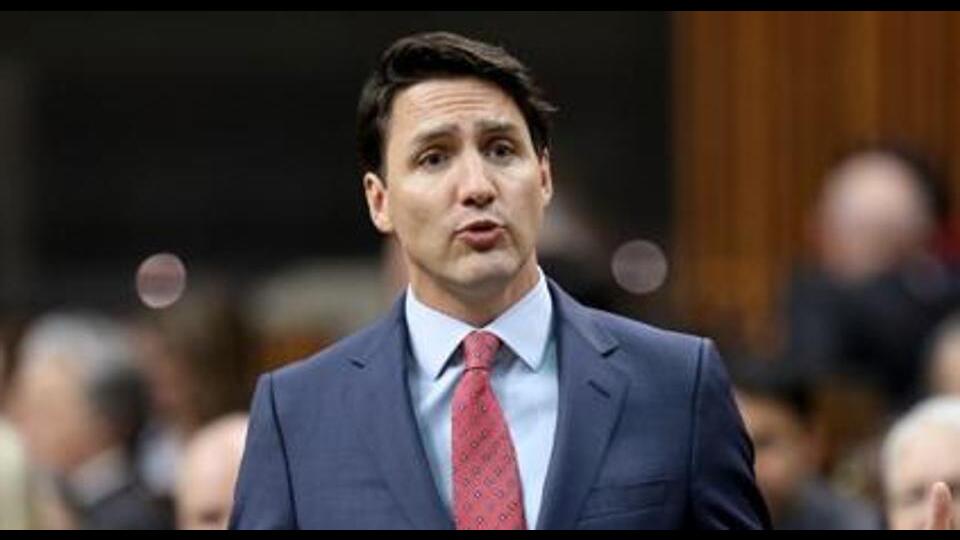
Titled “Political Interference, Violence or Intimidation on Canadian Soil”, the motion was moved by Indo-Canadian MP Sukh Dhaliwal on February 12. It was seconded by several MPs, including eight Indo-Canadians.
It was passed on Wednesday with 326 votes for and none against. Those who voted for it included Canadian Prime Minister Justin Trudeau, several cabinet ministers and Pierre Poilievre, leader of the opposition Conservative Party.
The motion’s text stated it wanted the House to recognise that “recent events, including the credible allegations of a link between agents of the Government of India and the killing of a Canadian citizen, Hardeep Singh Nijjar, at a place of worship on Canadian soil, are examples of rising forms of intimidation, threats and interference from countries such as India, China, Russia, Iran and others”.
Nijjar was killed on June 18 last year in Surrey, British Columbia. The principal organiser in the province for the secessionist group Sikhs for Justice (SFJ), Nijjar was considered a terrorist in India though those allegations were not tested in a Canadian court. His killing impacted bilateral ties after Trudeau stated in the House on September 18 that there were “credible allegations” of a potential link between Indian agents and the murder.
In a post on X on Monday, Dhaliwal said his motion “would hold to account any person or agents of a foreign state undermining our democratic institutions, engaging in acts of violence or intimidating diaspora communities in Canada”.
The motion had been opposed by the Canada India Foundation (CIF). In a letter to Dhaliwal last month, its board of directors stated, “If passed, this motion will be one more initiative in a lengthy list of provocations that will damage the Canada-India relationship.”
At the same time, Canada’s spy agency has accused India of engaging in “hostile foreign interference and espionage activities” in the country.
In its Public Report 2023 issued this week, the Canadian Security Intelligence Service (CSIS) stated, “Major perpetrators of foreign interference and espionage in both Canada and the West include China, Russia, Iran and India. In 2023, these states and their intelligence services continued to engage in a variety of hostile foreign interference and espionage activities to advance their objectives and interests.”
The introduction from CSIS’ Director David Vigneault delved into the killing of Hardeep Singh Nijjar in Surrey on June 18 last year. He referred to the statement by Canadian Prime Minister (PM) Justin Trudeau in the House of Commons on September 18 that there were “credible allegations” of a potential link between Indian agents and the murder.
The report stated that prior to Trudeau’s statement, Vigneault and then National Security Intelligence Adviser Jody Thomas travelled to India to discuss the matter with their counterparts.
“In response to the serious allegations, Director Vigneault stated that Canada and its allies require accountability from the Government of India concerning its potential involvement in the murder of a Canadian citizen on Canadian soil,” the report stated.
It also said that after deterioration in the bilateral relations between Canada and India, “low-sophistication cyber activities against Canada by India-aligned non-state cyber actors were observed” but there was “no indication that the Government of India was responsible for these cyber incidents”.
Interestingly, in its 2018 public report, released in June 2019, it had warned that there “has been an increase in observed threat activity” in the country related to support for Khalistan including “attacks targeting India”.
The agency found that within Canada “threat-related activities primarily targeting India and committed by a small number of Canada-based extremists who support violent means to establish an independent state within India have continued.” This, it stated, had been “mostly at a low level” after its peak in the mid-1980s. However, it noted that recently “there has been an increase in observed threat activity, wherein Canada is being used as a base to support this view as well as attacks targeting India.”
“We have an obligation to fully investigate threat activities in Canada directed outside our borders,” the report affirmed, adding that Canada must contribute to the international community’s efforts to prevent violent attacks from happening in any country.
However, those warnings were absent from later reports and the matter is not addressed in the latest version.


