


 Live Score
 Cricket Teams
 Cricket Players
‘You can’t do that': David Warner calls out Steve Smith after bizarre review comes before umpire's final decision
David Warner questioned Steve Smith's bizarre DRS call after the batter signalled for a review before the umpire had completed his out decision in Darwin.

 Prefer HTon Google


David Warner was left unimpressed by Steve Smith’s extraordinary use of the Decision Review System during the first Test against Bangladesh in Darwin on Saturday, questioning his former Australia teammate for signalling for a review even before umpire Kumar Dharmasena had completed his decision.
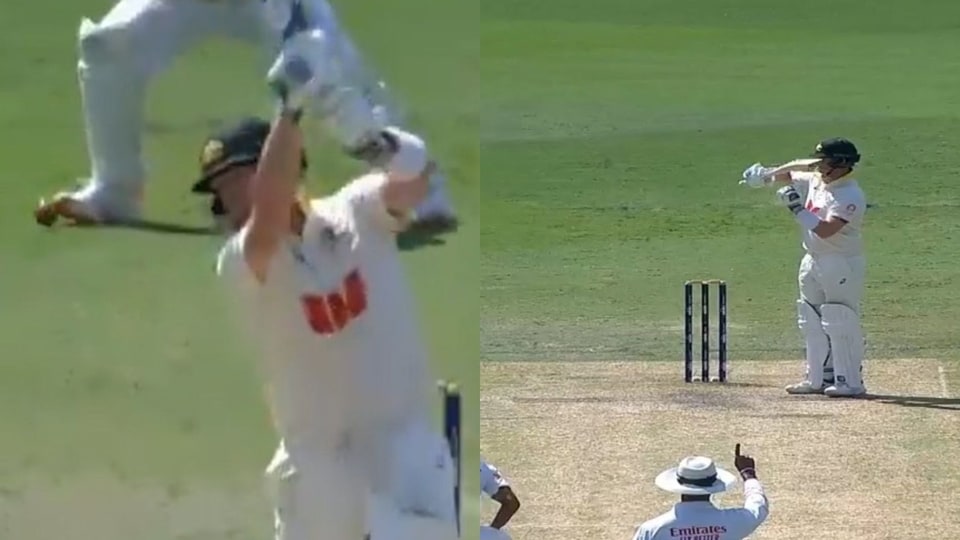
The unusual episode unfolded on the first delivery of the 14th over of Australia’s second innings. With the hosts struggling at 40/2, Ebadot Hossain sent down a full delivery outside off stump, and Smith attempted a powerful drive. A clear sound was heard as the ball passed the bat, prompting wicketkeeper Litton Das and Ebadot to immediately celebrate. Dharmasena responded to the appeal and had only begun raising his finger when Smith made the ‘T’ signal to request a review.
Warner, watching the incident from the commentary box, was not impressed by Smith effectively challenging a decision before it had even been fully delivered. “I just don’t like the way that Steve’s reacted there,” Warner said on the broadcast. “You can’t do that.”
Warner doubles down over Smith's lightning-fast review
Fellow commentator Brendon Julian pointed out that Smith clearly knew he had not edged the delivery and described it as one of the quickest reviews he had witnessed. Warner, however, remained unhappy with the manner in which Smith had reacted. “I just don’t think you can do that!” the former Australia opener reiterated.
Kerry O’Keeffe also highlighted just how unusual the sequence had been, describing it as a rare sight in the longest format. “That is a unique moment in Test cricket that a batter has gone upstairs before the umpire has made a decision,” O’Keeffe said.
Smith's confidence was ultimately vindicated. Replays showed that the audible noise had not come from an outside edge. Instead, Smith's bat had struck the ground as he played his shot, with the edge-detection technology confirming there was no contact between bat and ball. Dharmasena's decision was overturned.
The incident carried an additional layer of irony following what had happened to Smith in Australia's first innings. Against the same bowler, Ebadot, Smith had appeared convinced that he had edged a delivery behind and had even begun making his way from the crease despite Dharmasena giving him not out. Bangladesh reviewed the decision, but the technology detected no edge, and Smith remained at the crease.
Smith later admitted that he believed he had hit the ball. “I think so, yeah,” Smith said after the play when asked whether he had edged the delivery.
On Saturday, however, there was no uncertainty in Smith's mind. He knew instantly that the noise had come from his bat hitting the ground — so quickly that his review arrived before Dharmasena's raised finger had finished going up. Smith eventually made 44 from 88 deliveries before falling to Mehidy Hasan Miraz, offering the spinner a return catch. Australia finished the day on 161/4, still 67 runs behind Bangladesh after the visitors had established a commanding 228-run first-innings lead.


