Having finalised 22.5 years as the build-operate-transfer (BOT) period, the Chandigarh Renewable Energy Science and Technology Promotion Society (CREST) will be starting the free installation of rooftop solar plants from the second week of September.
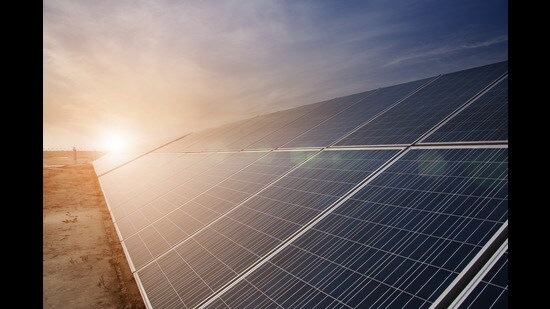
In January, the Joint Electricity Regulatory Commission had allowed the installation of grid-connected rooftop solar systems in Chandigarh under the RESCO (renewable energy service company) model.
In June, CREST had come close to finalising a company for executing the project, but could not reach a consensus on the BOT period. While the company demanded 23 years, CREST was intent on 20 years.
To resolve the issue, the administration has now asked CREST to finalise 22.5 years as the BOT period and initiate work at the earliest.
So far, CREST has received around 1,300 applications for free installation of rooftop solar plants, which will generate 8.5 MWp (megawatt peak) of solar power.
A senior CREST officer said since they had received a nod from the UT administration, the company will be starting the installation work soon.
As part of the RESCO model, the private firm will be responsible for developing, installing, financing and operating the rooftop solar power plant for a limited BOT period.
{{/usCountry}}As part of the RESCO model, the private firm will be responsible for developing, installing, financing and operating the rooftop solar power plant for a limited BOT period.
{{/usCountry}}During this period, the homeowner will be entitled to electricity at a uniform rate of ₹3.23 per unit, and on the BOT period’s completion, the plant’s ownership will be handed over to the consumer without any further charges. As the system’s expected life is nearly 25 years, the beneficiary will enjoy free solar power for at least 2.5 years.
At present, domestic consumers pay ₹2.75 per unit for 0-151 units, ₹4.25 per unit for 151-400 units and ₹4.65 per unit for over 400 units.
The UT administration, in May 2016, had made the installation of rooftop solar plants mandatory in residential units measuring 500 square yards and above, and group housing societies. While 30% subsidy for plant installation was being provided to home owners for the past seven years, after RESCO adoption, the plant will be installed free of cost. The cost to get a 1 kWp plant installed was ₹60,000, but with subsidy, it came down to ₹42,000. However, several residents who did switch to solar power after footing the complete installation cost, complain that they have not received any subsidy from the administration.
Residents can still apply for the solar plant installation at www.solar.chd.gov.in.