
Himachal Pradesh chief minister Sukhvinder Singh Sukhu on Sunday said that the Congress party would decide its stand on the proposed delimitation exercise, adding that the interests of smaller hill states must be taken into consideration while framing any legislation.
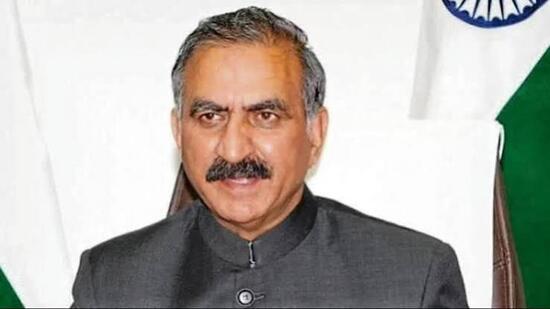
Speaking to reporters in Dharamshala, Sukhu said, “Himachal Pradesh was a small hill state and the implications of the proposed delimitation bill for mountainous states would become clear only after the government presents it.”
“Whatever the party decides, all of us will have to accept it. Himachal is a small state, and what kind of provisions they bring in the bill for hill states will become clear only when the delimitation bill is presented,” he said.
The CM stressed the need to promote tourism and hospitality-based industries, keeping the state’s ecological sensitivity and geographical conditions in mind.
He said only around 10% of the state’s geographical area was plain, while the rest comprised different Himalayan zones, including the Shivalik, Middle Himalayas and Greater Himalayas.
“Industries have now become consumer-driven. Around 35% of pharmaceutical production takes place in Baddi. Earlier, we used to receive around ₹4,000 crore through value added tax (VAT) and excise, which was subsequently compensated through goods and services tax (GST) compensation. But now, as production-driven industries are not coming to the state, we need to bring in hospitality-sector industries and promote tourism,” Sukhu said.
{{/usCountry}}“Industries have now become consumer-driven. Around 35% of pharmaceutical production takes place in Baddi. Earlier, we used to receive around ₹4,000 crore through value added tax (VAT) and excise, which was subsequently compensated through goods and services tax (GST) compensation. But now, as production-driven industries are not coming to the state, we need to bring in hospitality-sector industries and promote tourism,” Sukhu said.
{{/usCountry}}He added that tourism and hospitality could generate better GST revenue while remaining compatible with Himachal Pradesh’s climatic and ecological conditions.