For 80-year-old Rinchen Khando Choegyal, the steady decline in new arrivals stands in stark contrast to her memories from decades ago, when thousands crossed the Himalayas from Tibet seeking education and religious freedom.
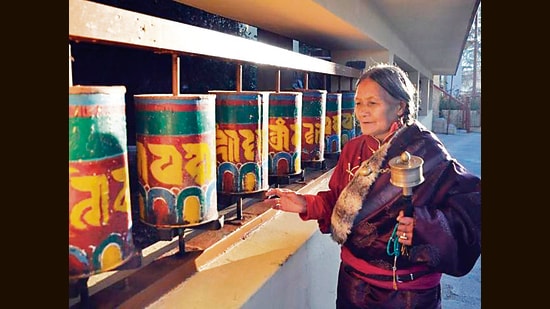
“When we started the project, we struggled to manage all the nuns because of limited resources and the large influx from Tibet,” says Choegyal, founding director of the Tibetan Nuns Project (TNP), established in 1987. “We had no places for them to stay. We rented small houses and pitched tents.”
“Tibetans inside Tibet were once eager to come to India to study,” Choegyal added. “In those days, if Tibetans escaped, no one stopped them—Beijing’s policy was to let them leave, assuming the exile community could not accommodate them. That backfired, and China subsequently imposed strict restrictions. In recent years, arrivals have dropped drastically, directly impacting our schools and monastic institutions.”
Nearly seven decades after the 1959 exodus, the Tibetan exile community is grappling with a shrinking population of Tibetan-descent monks and nuns in monasteries across India, Nepal, and Bhutan.
Turning point
{{/usCountry}}Turning point
{{/usCountry}}Data from the Dharamshala-based department of religion and culture of the government-in-exile reveals that across 295 registered monasteries and nunneries housing over 38,000 monastics, only 28% are currently of Tibetan descent. In 2014, Tibetans accounted for 42.5% of the total monastic population—a figure that fell to 33% in 2018, 32% in 2022, and 29% in 2023.
Monks and nuns from other Buddhist Himalayan regions now comprise the clear majority. Their share has risen from 55% in 2014 to 64% in 2018, reaching 68% today. The proportion of monastics from other foreign countries has also grown from 1.7% in 2014 to 4%.
Officials attribute the shift to three main factors: Tight Chinese border controls choking arrivals from Tibet, declining birth rates within the exile community, and outward migration of younger Tibetans to Western nations.
Tsegyal Chukya Dranyi, kalon (a minister), of the department of religion and culture, said that incoming arrivals are now mostly young adults rather than children.
“Earlier, parents in Tibet sent their children to study in exile schools and monasteries,” Dranyi said. “Now we receive only a few arrivals annually. Combined with falling local birth rates and migration to the West, Tibetan children numbers are dropping. However, non-Tibetans from Indian Himalayan regions—including Ladakh, Lahaul-Spiti, Kinnaur, Sikkim, and Arunachal Pradesh—as well as Bhutan, continue to join.”
Exile officials point to heightened border security following the 2008 protests in Tibet as the turning point.
“Much of our monastic population historically came from Tibet,” said Youdon Aukatsang, director of the Buddhist Women’s Educational Society. “While overall numbers remain relatively steady, the proportion of Tibetan-descent monastics has dropped significantly. Because our identity, language, and struggle are tied to Buddhist culture, this shift impacts us deeply. Yet, thanks to the Himalayan population, our monastic institutions remain vibrant.”
Future fear
Monasteries in exile function as educational centres, preserving Tibetan language, philosophy, and traditional knowledge alongside religious practice.
“Monasteries operate like schools and colleges where monks and nuns undertake rigorous multi-year studies,” says Geshe Lhakdor, director of the Library of Tibetan Works and Archives. “They are essential institutions for preserving Tibetan cultural and intellectual identity.”
With border restrictions unlikely to ease, officials in Dharamshala express concern over further demographic declines. In response, the Tibetan government-in-exile indicated in a recent vision paper that it plans to strengthen ties with monastic institutions and Buddhist centres to support long-term continuity.