
 E-Paper



Dragon fruit takes roots in Punjab, farmers eye profits
Farmers say the seasonal crop, yielding fruit from June to Sept, is both water-efficient & economically viable


As Punjab grapples with depleting groundwater levels and diminishing returns from the traditional wheat-paddy cycle, dragon fruit cultivation is quietly taking root. Several farmers are now turning to horticulture, with dragon fruit emerging as a profitable crop.
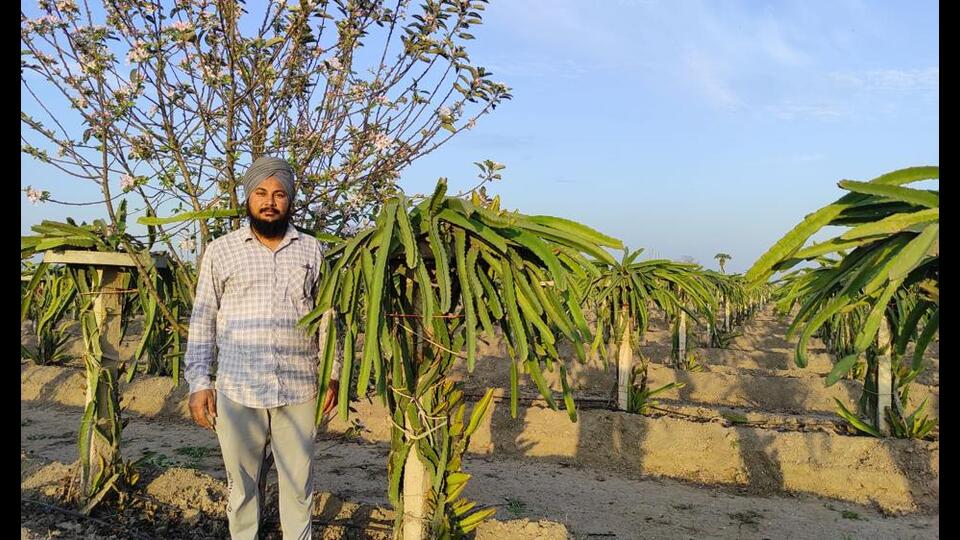
The seasonal crop, which bears fruit from June through October, is not only more water-efficient but also proving to be economically viable. Farmers across Sangrur and Barnala districts are reporting encouraging results, with many earning significantly higher profits compared to conventional crops.
Balwinder Singh, a 67-year-old farmer from Rogla village in Sangrur, started dragon fruit cultivation in 2021. He now grows the ‘C’ variety of the fruit on one acre and markets his produce across multiple districts. “We yield around 25 to 30 quintals per acre during the season and sell it at ₹200 per kg,” he said. His seasonal earnings amount to ₹4-5 lakh.
In Thulewal village of Barnala, 38-year-old Satnam Singh has gone a step further by dedicating four acres to the ‘American Beauty’ variety. His fruit reaches consumers in Bathinda, Ludhiana, Jalandhar, and Barnala. “We get 35 to 40 quintals per acre during the season and earn ₹4 to 5 lakh from each acre, selling at ₹150 to ₹200 per kg,” he said. Apart from profitability, Satnam values the crop’s sustainability. “It requires much less water than paddy,” he added.
Sukhpal Singh, 45, from Kakarwal village in Sangrur, is a recent entrant to dragon fruit cultivation. Growing on half an acre using organic methods such as vermicompost, dung cakes and carbon-based bio-fertilizers, he sells directly to consumers in Dhuri. “I expect a yield of 4 to 5 quintals this season, priced at ₹300 per kg,” he said, estimating earnings of ₹2.5 lakh. “This crop is chemical-free, low-maintenance and water-saving. After one watering, it can go 10 days without another.”
“All the farmers should try cultivating this. It does not require chemicals. Once sown, it is not necessary to pluck it for years. It saves water. Also, there are no diseases to it,” he added.
Agricultural experts are encouraging this shift.
Dr Mandeep, associate director at Krishi Vigyan Kendra, said horticulture plays a key role in both income enhancement and environmental conservation. “Farmers using drip irrigation are eligible for a government subsidy of ₹10,000 per acre. However, the paperwork and coordination with the soil conservation department discourages many from applying,” he said. “We always advise farmers to buy planting material from certified government nurseries and offer training to all interested cultivators.”
Chief agriculture officer Dr Jagsir Singh said crop diversification is a model other farmers should consider. “If anyone faces any hurdle during cultivation, they are welcome to approach the agriculture department for support.”


