
 E-Paper



Feeding stray dogs in public? Chandigarh MC plans ₹10,000 penalty
The Chandigarh Municipal Corporation has already started identifying feeding points across the city, listing around 60 spots so far

 Prefer HTon Google


Looking to tighten the leash on feeding of stray dogs at undesignated public places, the Chandigarh Municipal Corporation (MC) has proposed a ₹10,000 penalty under the newly framed Pet and Community Dogs Bylaws, 2025.
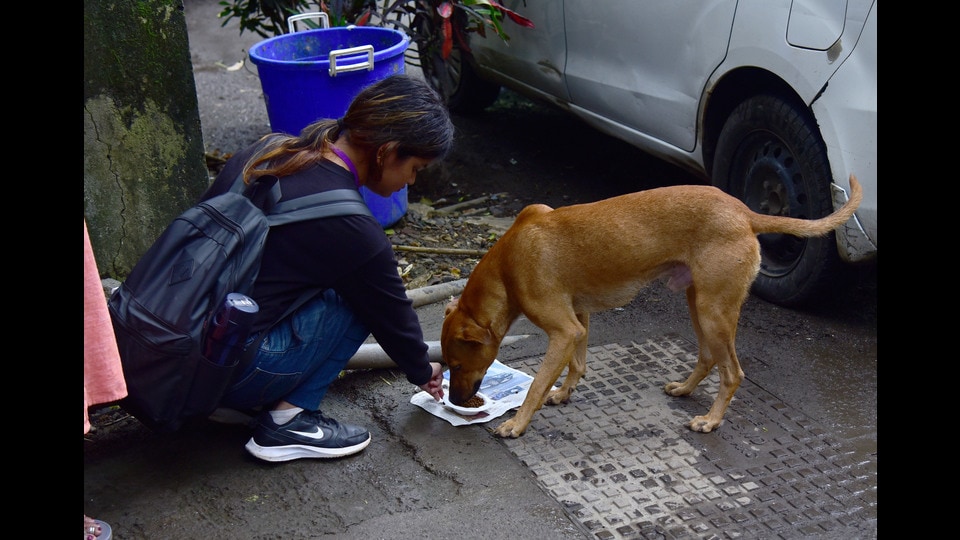
The civic body has already started identifying feeding points across the city, listing around 60 spots so far.
Once the bylaws are notified by the UT administration, residents found feeding strays outside these designated areas will be penalised. The move also comes in the backdrop of a recent directive by the Supreme Court, asking Union territories and states to earmark feeding spots for community dogs in consultation with resident welfare bodies and local authorities.
Under the new provisions, it will be the responsibility of Resident Welfare Associations (RWAs) and Market Welfare Associations (MWAs) to earmark appropriate places and timings for the feeding of stray dogs within their localities in consultation with local feeders, the area councillor, MC’s registration authority and recognised feeders.
The designated feeding points must comply with conditions such as being away from children’s play areas, stairways, entry and exit points of buildings, and high-traffic zones to ensure public safety.
In case RWAs or MWAs fail to submit their lists within the specified time frame, the feeding spots identified by the MC in consultation with feeders will be treated as final and binding.
The bylaws also make it mandatory for caregivers and occasional feeders to maintain cleanliness at designated feeding sites and avoid littering.
Any violation — such as throwing food in public spaces that attracts community dogs and creates risk or nuisance for people — will be treated as an offence under the Bharatiya Nyaya Sanhita or any other applicable law.
The penalty for such violations has been fixed at ₹10,000, comprising ₹500 fine and ₹9,500 administrative charges under the Solid Waste Management Bylaws, 2018. Apart from fines, legal action may also be initiated against habitual violators.
“Most of the RWAs and MWAs have yet to share their identified feeding points, but the process is underway. The objective is to strike a balance between animal welfare and public safety. Once the bylaws are enforced, RWAs and MWAs will be strictly asked to share the list of feeding points and feeding at random spots will not be tolerated,” said an MC official.
Also, in the new bylaws, the recovery of penalties has been structured in a way to ensure compliance: if the fine is not deposited within 10 days at MC’s Medical Officer of Health office, the amount will be added to the violator’s water bill, the official added.
In cases where no water connection exists, it will be added to property tax dues. If neither applies, the penalty will be recovered as land revenue under the Punjab Revenue Act, applicable in Chandigarh.
It is pertinent to mention that after the MC General House approved the final draft of the pet bylaws in June this year, the UT administration wrote to MC to include new guidelines or directions as per the recent Supreme Court orders. The final notification will come after MC responds with the revised draft.


