Punjab’s drug crisis has evolved beyond a law-and-order challenge into a critical test of governance, the integrity of public institutions, and the state’s resolve to safeguard its younger generation. Behind every drug seizure and arrest lies a sobering question: how many young lives have been saved, how many remain at risk, and how many families continue to live in constant fear of losing their loved ones to the menace of drugs?
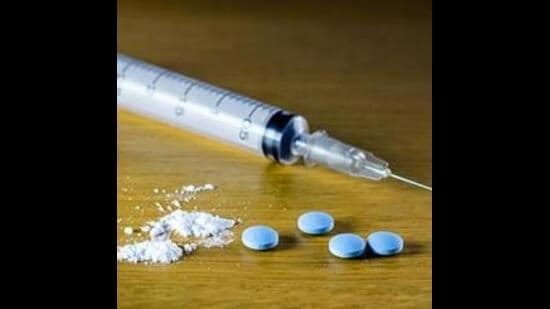
The killing of an anti-drug activist in Mansa has brought this question under a spotlight, exposing the risks faced by people who challenge the illegal sale of narcotics, and has renewed public concern about the reach of the drug trade.
The citizens should not have to risk their lives to tackle a menace that the state machinery is institutionally responsible to do, political dispensation has been elected for the purpose and above all the current government ahead of the 2022 state polls had taken vow to end drugs within six months after taking over. Three deadlines have passed since, the threat looms large.
This incident involving killing of activist Parvinder Singh alias Jhota needs a thorough probe, and convincing protection for those who assist the authorities in exposing the illegal trade. The incident should be the final one, leading to end of the menace.
Worrying data
{{/usCountry}}Worrying data
{{/usCountry}}It is vital that the tragedy should not become one more part of the political tale of Punjab. This is indeed a wider crisis, which is represented in the families, where parents desperately wait for the return of their addicted offspring, villages, where people find it hard to free themselves from the addiction, and communities, where drugs business continues to erode the trust.
However, the statistics is alarming too. In its reply to the question about the mortality caused by overdoses in Punjab in 2021, 2022 and 2023, dated December 2025, the Union home ministry based on the information provided by the National Crime Records Bureau that in 2021, there were 78 overdose deaths in Punjab, 144 in 2022, and 89 in 2023. Nevertheless, there are some deaths caused by narcotics that are not taken into account, since according to NCRB, there are no full annual statistics on all deaths caused by drugs.
It is especially hard to imagine the tragedy of the family of Shinder Kaur from Ludhiana, who has already lost all six of her sons due to the drug menace. No official statistics will be able to show the tragedy of the woman, who needs it the most. Lighting the pyres of all family members one after the other speaks volumes of the tragedy Punjab is passing through.
The gap between enforcement, results
The state government may claim of large number of arrests and huge seizures but this cannot be taken as conclusive proof that the crisis is receding. The arrests speak about the action and seizures about quantity intercepted. Neither, on its own, tells us whether drugs have become harder to procure, addiction is declining or whether fewer families are losing their children.
The reports of suspected overdoses and the easy availability of addiction causing substance demand a deeper assessment.
Political will must also be visible at the grassroots. A campaign cannot succeed if village-level intelligence is not taken into account, local complaints produce no timely response, or citizens who report suspected trafficking fear retribution. Nor can a government claim lasting success if enforcement is not accompanied by approachable treatment, prevention and follow-up for people recovering from addiction.
Distinctively, the government in the Centre keeps heavy concerns for the drug scourge Punjab is in the grip. Nasha Mukt Bharat Abhiyaan launched by Prime Minister Narendra Modi has placed the drug crisis in Punjab at the centre of national attention. Lately, on the conclusion of 13-day Nasha Mukt Punjab yatra, home minister Amit Shah announced to make Punjab completely drug-free by December 31, 2029, if the Bharatiya Janata Party is voted into power in the upcoming 2027 Punjab assembly elections.
The promise comes with an understanding and responsibility that drug menace has percolated deep into the system, so it needs a thorough and long term execution plan, not a knee-jerk action as perceived by the political system in the past.
Campaign and a measurable public mission
Punjab needs a comprehensive strategy built around key priorities. The government should develop a transparent district-wise dashboard that measures arrests and seizures, overdose deaths, admissions in treatment centres, rehabilitation, relapse rates and the availability of drugs in the communities.
Enforcement must target the entire financial and logistical network of trafficking. Investigators should pursue financiers, suppliers, interstate networks, illicit pharmaceutical diversion and the assets acquired through drug trade. Border agencies, central investigative bodies and Punjab Police must share intelligence and match up investigations. Successful prosecutions, not just arrests, are a key performance indicator.
Most importantly, citizens who expose the drug trade must get protection. A workable mechanism be devised allowing confidential reporting, and ensure credible complaints receive timely investigation. Punjab’s people do not need yet another declaration that the state will become drug-free. They need evidence of corrective steps.
For the state as a whole, the moral imperative is unmistakable. Behind the statistics are mothers who still wait for sons who may never return, fathers who have exhausted their savings seeking treatment, and young people whose futures are obscure.
Their sufferings must not be written as a footnote to another political season. Punjab must measure success not by how many cases it registers, but by how many lives it saves and how many have turned back to normal life. The ultimate measure of a drug-free Punjab will be fewer empty beds at home, lesser wailing parents and more young people able to reclaim their futures.
satnam.sandhu@sansad.nic.in
(The writer is a Rajya Sabha member and chancellor of Chandigarh University. Views expressed are personal)