
 E-Paper



Ludhiana: Researchers turn flood into field lab for maize hybrids
Borlaug Institute for South Asia has been testing maize hybrid varieties under 400 mm of water near Sutlej; besides developing flood tolerance, the challenge that the researchers face is to ensure that it also has a good yield

 Prefer HTon Google


The Ladhowal station of Borlaug Institute for South Asia (BISA) here is leveraging the recent floods to field-test its water-tolerant maize hybrids. The institute, a joint venture of the Indian Council of Agricultural Research and Mexico-based International Maize and Wheat Improvement Center (Centro Internacional de Mejoramiento de Maíz y Trigo or CIMMYT), is working on nine maize hybrids that are tolerant to waterlogging. Four of the experimental hybrids had been specifically developed for water-logging tolerance.
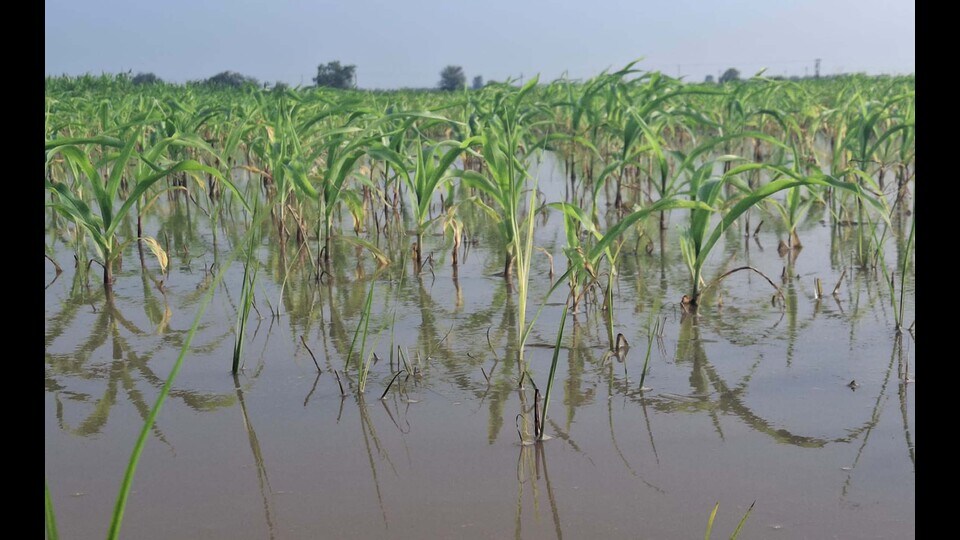
Situated just 200 metres from the Sutlej river, the BISA research fields were submerged under more than 400 mm of water after heavy rainfall this monsoon. Rather than viewing the flooding as a setback, researchers at the station saw it as a live-testing opportunity to evaluate their ongoing work on waterlogging-resistant maize, according to station coordinator and lead agronomist Dr Pardeep Sagwal. Flooding offers a unique testing ground that we usually have to simulate in controlled conditions, he said.
Dr Sagwal explained that unlike paddy, maize doesn’t have parenchyma cells which allow respiration even when the crop is inundated. Once the maize crop is inundated for over 24 hours it starts to rot, he said.
The BISA station, which has been working on this project for around two years, has been using the wild maize varieties that are tolerant to floods to develop hybrids. Besides developing flood tolerance, the challenge that the researchers face is to ensure that it also has a good yield.
The aim of the project is to develop a hybrid that can survive in standing water for five to seven days.
Maize scientist BM Prasanna, managing director of Borlaug Institute for South Asia, said the institute would intensify research to develop kharif-season maize hybrids that are well-suited to Punjab’s agro-climatic conditions. “Within a few weeks, we will come to know the difference between a water-logging tolerance hybrid from a susceptible hybrid,” said Prasanna, who led the global maize programme for 14 years.
The floods came just two weeks after Punjab’s additional chief secretary had approached CIMMYT-BISA, requesting development of improved maize hybrids with three specific traits: water-logging tolerance, resistance to fall armyworm pest, and water-use efficiency for summer cultivation, he added.


