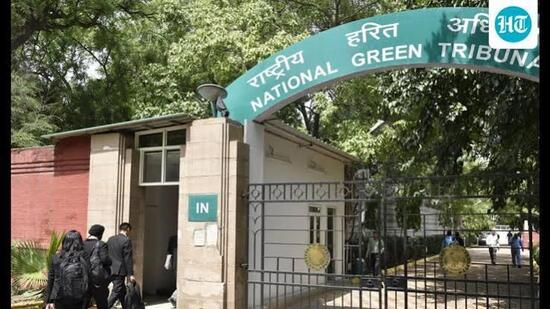
The National Green Tribunal (NGT) has issued notices to the Punjab Pollution Control Board (PPCB) and other environmental regulators over the alleged failure to recover and utilise environmental compensation, with ₹170.12 crore imposed on urban local bodies (ULBs) across Punjab over the past five years but only ₹21.87 crore recovered.
Nearly ₹149 crore in penalties remains unrealised, while crores of rupees already collected are lying in bank accounts and earning interest instead of being used for environmental remediation.
Environmental compensation is meant to be deployed for remediation, rejuvenation and restoration of the damaged environment, including pollution-control measures, restoration of affected water bodies and contaminated sites, and strengthening environmental monitoring — not allowed to remain idle in bank accounts.
The NGT principal bench passed the order on August 19 on a plea filed by Sangrur-based advocate and activist Kamal Anand. The bench, headed by chairperson justice Prakash Shrivastava and expert member Afroz Ahmad, issued notices after the petition highlighted the manner in which environmental compensation collected from industries, farmers and municipal bodies was allegedly being held without being fully deployed for ecological restoration.
The NGT has directed the applicant to complete service on the respondents and fixed October 29, 2026, for the next hearing.
{{/usCountry}}The NGT has directed the applicant to complete service on the respondents and fixed October 29, 2026, for the next hearing.
{{/usCountry}}According to RTI disclosures obtained by Anand, the PPCB collected ₹4.91 crore from farmers as environmental compensation for stubble burning but spent only ₹29.83 lakh on remediation. The amount lying in savings accounts, including the interest component, stood at ₹5.12 crore.
The petition also flagged the handling of compensation collected from industries and mining units. Against ₹45.83 crore collected for environmental violations, ₹10.29 crore remained idle in bank accounts, even though ₹36.62 crore had been spent over the years.
The PPCB also allegedly accumulated more than ₹1.45 crore in interest by parking industrial and stubble-burning compensation in fixed deposits and savings accounts. The petitioner argued that these funds should instead have been deployed for environmental restoration in polluted industrial areas and rural regions.
The issue of municipal solid waste management forms another significant part of the petition. Over the past five years, the PPCB imposed ₹170.12 crore in environmental compensation on defaulting ULBs but recovered only ₹21.87 crore, leaving approximately ₹149 crore unrecovered. Of the amount collected, ₹9.37 crore remained unspent in bank accounts and had generated nearly ₹2 crore in interest as of December 2025.
Anand contended that citizens were effectively bearing the burden on two fronts. While poor solid-waste management exposes residents to health hazards, polluted air and choked drains, penalties imposed on municipal bodies are ultimately paid from public funds. He argued that residents therefore indirectly bear the cost of civic failures while the environmental compensation remains idle and generates interest.
The petition has also raised questions over transparency in the collection, recovery and utilisation of environmental compensation. Anand has sought directions for pollution control boards to publish real-time data on compensation collected and itemised details of expenditure online, so that citizens can track how the funds are being used without having to file RTI applications.