Bharat Taxi, India’s first cooperative ride-hailing platform, was formally launched in the city on Friday, giving commuters a new app-based option for cabs, autos and bikes at a time when the licences of the major private aggregators stand suspended in the city.
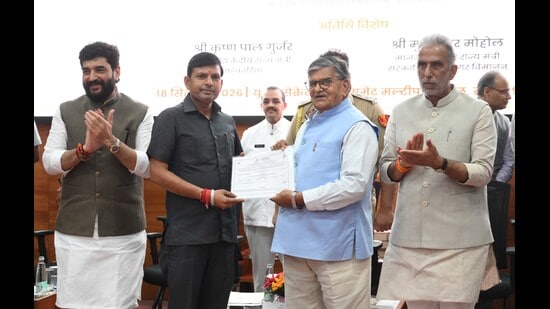
The service was inaugurated digitally by UT administrator Gulab Chand Kataria at the new UT secretariat in Sector 9. Union ministers of state (MoS) Murlidhar Mohol and Krishan Pal Gurjar were also present. Kataria later flagged off Bharat Taxi vehicles, marking the formal commencement of the service in the city. The launch comes 10 days after the UT administration suspended the licences of Uber and Rapido over non-compliance with the Chandigarh Motor Vehicles Aggregators Rules, 2025. Among other things, the policy links base fares to the Wholesale Price Index (WPI), caps surge pricing at 1.5x the base fare, allows discounts up to 50%, and mandates that drivers receive at least 80% of the total fare collected. The licences of Ola and InDrive had been suspended earlier this year, leaving commuters with fewer app-based transport options.
Locally compliant option
{{/usCountry}}Locally compliant option
{{/usCountry}}For passengers, Bharat Taxi is now a locally compliant alternative to the private ride-hailing platforms. The app offers cabs, autos and bikes, with Mini, Sedan and XL categories, besides rentals and inter-city rides. It provides an upfront fare estimate and, under its stated model, does not levy convenience fees or surge pricing. The platform has already started operating around the railway station, while airport services are expected to be added. Bharat Taxi also plans to expand its network to other cities in Punjab, including Ludhiana, Amritsar and Jalandhar, in the coming months.
While some commuters have found Bharat Taxi fares expensive, Bharat Taxi says its fares are determined according to operational costs, distance and prevailing market conditions. Under the fare framework notified by the UT administration, eligible taxi services will follow the prescribed rate of ₹25 per km.
Drivers stakeholders, not merely service providers
Unlike conventional aggregators, Bharat Taxi operates through Sahakar Taxi Cooperative Ltd (STCL), with drivers, called Sarathis and positioned as members and stakeholders rather than merely service providers. It is a multi-state cooperative society registered under the Multi-State Cooperative Societies Act, 2002. It follows a “Sarathi-owner” model, under which drivers can become members and owners of the cooperative, participate in its governance and share in its surplus. It was clarified that the government has supported the cooperative ecosystem, but Bharat Taxi itself is not a government-owned taxi company. The platform follows a zero-commission, subscription-based model, allowing drivers to retain the fare earned from rides. The cooperative model is also intended to give drivers a say in governance and profit-sharing.
Chandigarh tricity driver union president Amandeep Singh said, “The launch will help spread awareness among consumers to register on the new app which gives our drivers fair prices. For drivers who were against the suspension of private aggregators after they were fined for continuing to work through the private apps, we hope that they would understand that this fight is for the long haul.” The union was at the forefront to demand the suspension of the four private cab aggregators.
Kataria said the initiative would promote dignity of labour, cooperative ownership, technological self-reliance and inclusive growth.
Gurjar said that as drivers would be members and stakeholders in the cooperative model, it will help them improve their income, and strengthen their social and economic security.
Mohol said that nearly 10 lakh drivers have so far registered with Bharat Taxi across the country, including over one lakh drivers from Chandigarh.