Snakes kill more than 45,000 people in India each year, while only 30% of the victims reach hospitals to seek medical treatment, said the Indian Council of Medical Research (ICMR), which has released a study on the incidence, mortality, morbidity and socioeconomic burden of snakebite in the country.
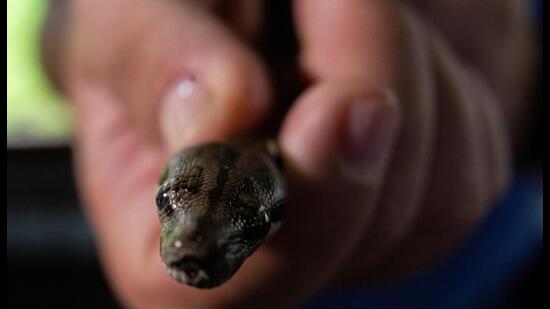
As per the Registrar General of India- Million Death Study (RGI-MDS), the number of deaths due to venomous snakebites in India is 46,900 per year. This is considerably high, compared to only 10-12 deaths per year due to venomous snakebites in the US and Australia, despite the fact that less populous Australia has probably more venomous species.
Reports suggest that only 20%-30% of snakebite victims in rural India seek treatment in hospitals. Under-reporting and lack of data on incidence, mortality and socio-economic burden make it difficult to understand the true impact of the condition, the study said.
First-of-its-kind in India, the study will look prospectively at the incidents of snakebite covering 13 states, including Himachal Pradesh, in five zones of India and a population of 84 million. The other states are Rajasthan, Maharashtra, Kerala, Tamil Nadu, Andhra Pradesh, Odisha, West Bengal, Uttarakhand, Meghalaya, Arunachal Pradesh, Mizoram and Tripura.
An article on the study ‘ICMR Task Force Project- A Survey of the Incidence, Mortality, Morbidity and Socioeconomic Burden of Snakebite in India: A study Protocol’ has been published in the international research journal Plos One on August 22.
{{/usCountry}}An article on the study ‘ICMR Task Force Project- A Survey of the Incidence, Mortality, Morbidity and Socioeconomic Burden of Snakebite in India: A study Protocol’ has been published in the international research journal Plos One on August 22.
{{/usCountry}}The national principal investigator for the ICMR study is Dr Jaideep C Menon from Preventive Cardiology and Population Health Sciences, Amrita Institute of Medical Sciences and Research Centre; Amrita Vishwa Vidyapeetham, Kochi, Kerala, while Dr Omesh Bharti, state epidemiologist with department of health and family welfare, Himachal Pradesh government, is the national principal co-investigator.
“This study will generate real data on snakebite cases, mortality, morbidity and socioeconomic burden of snakebite for the first time in the country to help the decision-makers in policy framing to prevent and control snakebite in India. The country still doesn’t know the real snakebite burden and is hence groping in the dark when it comes to policy making,” said Dr Bharti.
It is the first such study designed to survey the snakebite cases in South-East Asia. Sri Lanka has done it, but they covered a population of only 1%, whereas our study would cover a population of 6.12%, he added.
Currently, the snakebite case study is being carried out in 31 districts in six geographical zones in the country, including West, Central, South, East, North and North-East in 13 states. Three districts of Himachal Pradesh -- Kangra, Chamba and Una -- are also included in it.
According to the article on ‘study protocol’ to know snakebite incidents, it is possibly the ‘most neglected’ of the NTDs (neglected tropical diseases).
Half of the global deaths due to venomous snakebites, estimated at 100,000 per year, occur in India. The only representative data on snakebite available from India is the mortality data from the RGI-MDS study (Registrar General of India- 1 Million Death Study) and another study on mortality from the state of Bihar. The incidence data on snakebite is available for two districts of the state of West Bengal only.
It was only in 2017 that snakebite was added back onto the WHO (World Health Organization) list of neglected tropical diseases after being struck off the list in 2013.
The ICMR’s study protocol for snakebite incidence and burden mentions that the hospital-based data on snakebite admissions and use of ASV (anti-snake venom) are gross underestimates as most victims in rural India depend more on alternative treatment methods which do not get represented in National registries.