It is the 15th edition of the Kasauli Literature Festival, which has earned the prestige of being one of the most charming festivals among the many lit fests that have come up across the country after the great success of the Jaipur Literature Festival. It remains the only fest named after a specific writer, who was one of the most popular writer-editors of his time and who composed much of his literary work in his Kasauli home.
Established by his son Rahul Singh and managed largely by Nilofer Bilimoria (who heads a large team of dedicated and willing volunteers), it has for many years been the treasured annual destination for writers, thinkers and artists. They gather not just for its quaint mountain charm, but for the values it has upheld and the community projects it has launched for the local people, such as the planting of trees and the active encouragement of the education of young girls.
Each edition of the festival is anchored around a special theme through which sessions and musical performances find their way to the audience. Interestingly, this year the three-day dialogue from October 22 to 24 focused on the ‘Art of Disagreement’ in a constructive manner. The festival highlighted how civil disagreement contributes to the evolution of an inclusive, multipolar society that leaves ample space for debate and varied viewpoints to coexist in a cohesive manner.
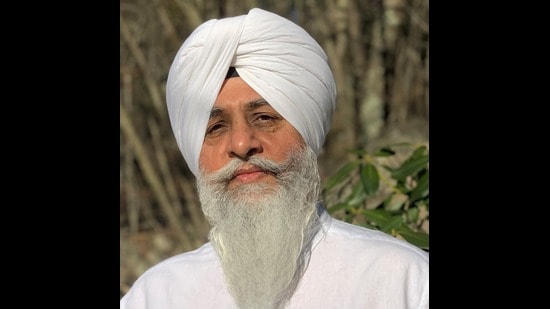
The festival opened on Friday morning with a joyful coming together around ‘The House of Dreams’ (Khwabgah), a book by US-based author-singer Sarabpreet Singh. Though living in America, his heart and soul remain deeply dedicated to the rich Sufi tradition of Punjab and the historical dargahs of ancient saints in the once-undivided Punjab prior to the Partition of 1947. Interestingly, the author grew up far away from Punjab in Gangtok, Sikkim, before eventually moving to the US. Nevertheless, the magnetic call of his Punjabi roots pulled him back. His first book was an evocative collection of stories from the era of a united Punjab under the secular rule of Maharaja Ranjit Singh, titled “The Camel Merchant of Philadelphia”. This was followed by his English translation of the poetry of the legendary Sufi saint, Shah Husain, titled The Sufi’s Nightingale. His latest book released at the festival is a collection of his own poems composed in the Sufi tradition across both Gurmukhi and Shahmukhi scripts, complete with English translations as well. His rendition of the poems captivated the gathering.
{{/usCountry}}The festival opened on Friday morning with a joyful coming together around ‘The House of Dreams’ (Khwabgah), a book by US-based author-singer Sarabpreet Singh. Though living in America, his heart and soul remain deeply dedicated to the rich Sufi tradition of Punjab and the historical dargahs of ancient saints in the once-undivided Punjab prior to the Partition of 1947. Interestingly, the author grew up far away from Punjab in Gangtok, Sikkim, before eventually moving to the US. Nevertheless, the magnetic call of his Punjabi roots pulled him back. His first book was an evocative collection of stories from the era of a united Punjab under the secular rule of Maharaja Ranjit Singh, titled “The Camel Merchant of Philadelphia”. This was followed by his English translation of the poetry of the legendary Sufi saint, Shah Husain, titled The Sufi’s Nightingale. His latest book released at the festival is a collection of his own poems composed in the Sufi tradition across both Gurmukhi and Shahmukhi scripts, complete with English translations as well. His rendition of the poems captivated the gathering.
{{/usCountry}}Recalling the great divide
During the Friday evening session, acclaimed filmmaker Imtiaz Ali and author Syeda Hameed engaged in a heartfelt discussion on the enduring tragedy of the Partition of India and Pakistan, which remains counted among the largest and bloodiest catastrophes in human history. The catalyst for this poignant discussion was Ali’s latest film, which re-examines this historic tragedy through the eyes of the third generation in “Main Wapas Aaunga”. The film has achieved an unprecedented impact, featuring a spectacular performance by Naseeruddin Shah as an aging man slipping into dementia who yearns to return to his ancestral hometown of Sargodha, and the cherished dreams he was forced to abandon when uprooted from Pakistan.
In the course of their conversation, Ali revealed that the seed of the film was sown in his mind during his days in Punjab when he was making a film on singer Amar Singh Chamkila. “The wounds of the divide and mass migration were written so deeply in the collective memory of the people that I was profoundly moved. It took time for the film to take shape in a contemporary context,” he said. Hameed shared the painful stories of those times, especially, the rapes and killings of girls on both sides.
Women in Punjab Raj
The opening day also featured yet another captivating session rooted in the era of Maharaja Ranjit Singh, looking at the influential roles played by women during his reign. The panel brought together three women writers — Ranjit Powar, Chetna Keer and Sakoon Singh — whose books look back at the socio-political landscape of that era through the experiences and voices of the women of the times.
nirudutt@gmail.com