The air quality index (AQI) of the city went from bad to worse a day after Diwali, with many residents complaining of breathlessness and runny nose due to the pollution.
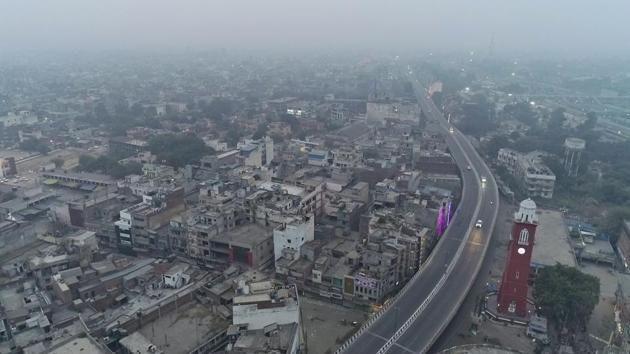
The city’s air quality had started deteriorating on Diwali afternoon itself when the AQI stood at 291 points (3pm). By 8pm, the AQI had reached 317 points, going down further to 332 points by 10pm and finally settling at 346 at midnight.
This is worse than last year, when the AQI recorded on Diwali night stood at 263 points.
The condition only worsened on Sunday morning, a day after the festivities, as the cloud cover and windy conditions, clubbed with an AQI of 377 (as of 9am) left many residents, especially the elderly and children, uneasy.
By noon, however, the pollution levels dipped and the AQI figures dipped to 358, and further went down to 348 by 3pm.
Last year, the city’s AQI a day after Diwali stood at 306 (7am) and further worsened by the evening as it settled at 356.
This time, authorities had issued a special advisory, asking residents to refrain from bursting crackers in view of the pandemic, stating that the pollution levels are only expected to make the Covid-19 fight tougher. However, residents clearly paid no heed to the advisory.
{{/usCountry}}This time, authorities had issued a special advisory, asking residents to refrain from bursting crackers in view of the pandemic, stating that the pollution levels are only expected to make the Covid-19 fight tougher. However, residents clearly paid no heed to the advisory.
{{/usCountry}}Rain, hailstorm brings respite
Dark clouds hovering over the city decreased the visibility levels on Sunday as it turned pitch black at 4.30pm itself. Rain and hailstorms were also witnessed in many parts of the city, bringing a much-needed respite from the rising pollution levels.
There were also reports of lightning strikes at isolated places but no loss of life or damage to property was reported.
According to Dr Prabhjyot Kaur Sidhu, HOD of climate change and agricultural meteorology, Punjab Agricultural University, the rain will bring respite from the rising pollution.
“Even if a small amount of rain occurs, it leads to washing down of the pollutants and smoke particles suspended in the air and hence improves the air quality,” she explained while adding that the hailstorm will not cause any crop damage as paddy has already been harvested.