Gurugram recorded its worst start to November in three years, with the average air quality index (AQI) for the first six days reaching 293, compared with 261 last year and 283 in 2024. Pollution levels continued to climb on Friday, with the city’s AQI reaching 368 in the ‘very poor’ category by 5pm.
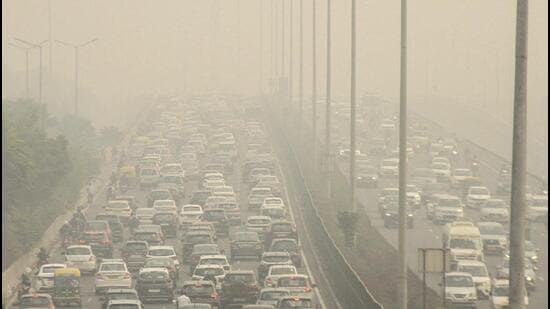
Three of the city’s four monitoring stations recorded readings close to the ‘severe’ threshold. Gwal Pahari was the most polluted at 398, followed by Teri Gram at 396 and Sector 51 at 380, while Vikas Sadan recorded 287, according to the Central Pollution Control Board’s (CPCB) Sameer app.
Gurugram recorded an average AQI of 261 during the first six days of November 2025 and 283 during the same period in 2024, against 293 this year, indicating that residents have been exposed to worse air quality at the start of this winter than in the previous two years.
Pulmonologists warned that prolonged exposure to high concentrations of particulate matter can aggravate respiratory illnesses, trigger asthma attacks and cause breathing difficulties even among otherwise healthy people.
Dr Manu Madan, senior consultant, respiratory and sleep medicine, at Medanta, said emergency visits for respiratory complaints rise significantly during periods of severe pollution.
{{/usCountry}}Dr Manu Madan, senior consultant, respiratory and sleep medicine, at Medanta, said emergency visits for respiratory complaints rise significantly during periods of severe pollution.
{{/usCountry}}“When the AQI hits the severe range, there is a 30-40% increase in the number of patients coming to the emergency with breathing difficulties and coughs,” he said. He advised residents to avoid outdoor exercise during periods of high pollution and use appropriate protective masks when travelling.
Experts attributed the worsening air quality to falling temperatures and unfavourable meteorological conditions, including low wind speeds and a shallow atmospheric mixing layer, which prevent pollutants from dispersing.
Dr Manoj Kumar, an analyst at the Centre for Research on Energy and Clean Air (CREA), said wind speed, temperature and mixing layer height play a crucial role in determining particulate matter concentrations.
“During the afternoon, rising temperatures generally increase the height of the atmospheric mixing layer, allowing pollutants to disperse through a larger volume of air. In the mornings and evenings, however, the mixing layer is typically shallower, trapping pollutants closer to the ground and increasing their concentration,” he explained.
These conditions allow emissions from vehicles, construction activity, road dust and waste burning to accumulate, particularly during the colder hours.
The deterioration in AQI comes despite civic agencies intensifying pollution-control measures ahead of winter. The Municipal Corporation of Gurugram (MCG) has directed daily mechanised road sweeping, water sprinkling, deployment of anti-smog guns, stricter inspections of construction sites and action against open waste burning and illegal dumping.
According to its winter preparedness review, the civic body has 24 mechanised sweeping machines, 40 water sprinklers and 13 anti-smog guns.
The district administration has also restricted dust-generating construction and demolition activities from November 5 to 20 and directed government and private offices to limit physical attendance to 50%, with the remaining employees working from home.
Stay updated with all the Breaking News and Latest News from Mumbai. Click here for comprehensive coverage of top Cities including Bengaluru, Delhi, Hyderabad, and more across India along with Stay informed on the latest happenings in World News.
Stay updated with all the Breaking News and Latest News from Mumbai. Click here for comprehensive coverage of top Cities including Bengaluru, Delhi, Hyderabad, and more across India along with Stay informed on the latest happenings in World News.