
 E-Paper



Lumpy skin disease has killed 14,000 cattle in Rajasthan
Lumpy skin disease in Rajasthan: The highest 2,752 deaths have been reported from Ganganagar, followed by Barmer (1,657) and Jodhpur (1,691).

 Prefer HTon Google


JAIPUR: The lumpy skin disease has killed about 14,000 cattle, mostly cows, in Rajasthan in 23 of the 33 districts of the state by Thursday, spreading from 16 to 23 districts in a week, Rajasthan animal husbandry department officials said.
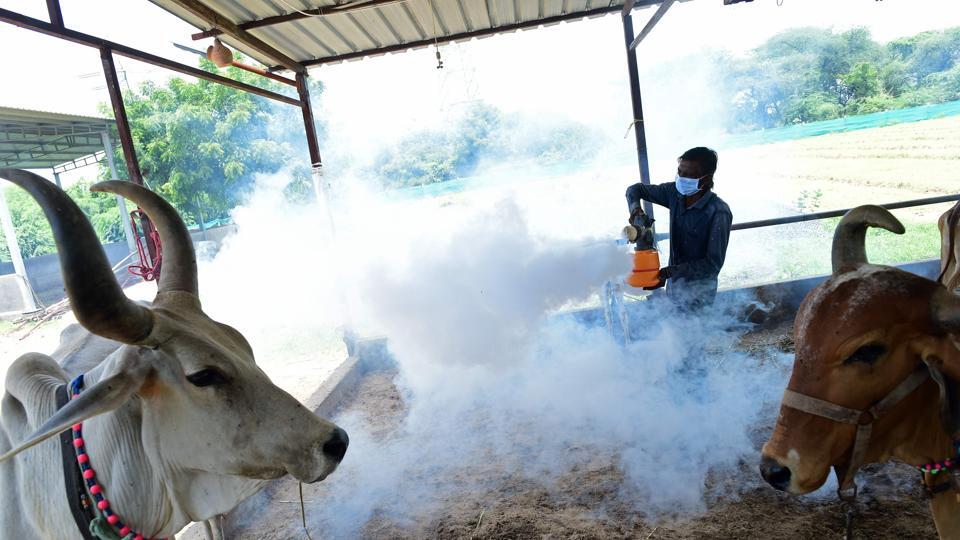
The highest 2,752 deaths have been reported from Ganganagar, followed by Barmer (1,657) and Jodhpur (1,691). Rajasthan animal husbandry secretary PC Kishan said the death rate is declining and the infection is getting controlled.Of the 310,460 animals that were infected in the state, over 268649 have been treated.
“The state will soon issue guidelines for the vaccination, which will be started from non-infected districts. We have demanded 20 lakh vaccines from GoI (government of India), of which 2 lakh will be received in next three-days,” he said.
The viral disease is spread by bloodsucking insects, certain species of flies and through contaminated food and water. The disease causes acute fever, discharge from the eyes and nose, salivation, soft blister-like nodules all over the body, marked reduction in milk yield, difficulty in eating, and sometimes, also leads to the animal’s death. The mortality rate for the contagion is 1.5%.
Chief Minister Ashok Gehlot said adequate arrangements are being made at every level for the treatment and prevention of epidemics such as lumpy skin disease spread in the cattle. “Approval has been given to fill 500 posts on a temporary basis in the districts affected with the disease, which include 200 posts of doctors,” he said.
The chief minister said the infection spread rapidly in animals in many districts, but expressed confidence that the administration will be able to control it soon.


