E-Paper



Amid rising power demand, UP eyes nuclear push; six sites identified
“Around half a dozen locations have been identified for nuclear plants. Preliminary joint surveys, including drilling in the identified areas, are currently being carried out by teams consisting of developers and state government agencies,” a senior energy department official said.

 Prefer HTon Google


The Uttar Pradesh government is planning to set up nuclear power plants at multiple locations across the state, with around half a dozen sites identified and detailed joint feasibility surveys underway following chief minister Yogi Adityanath’s nod, officials dealing with the issue disclosed.
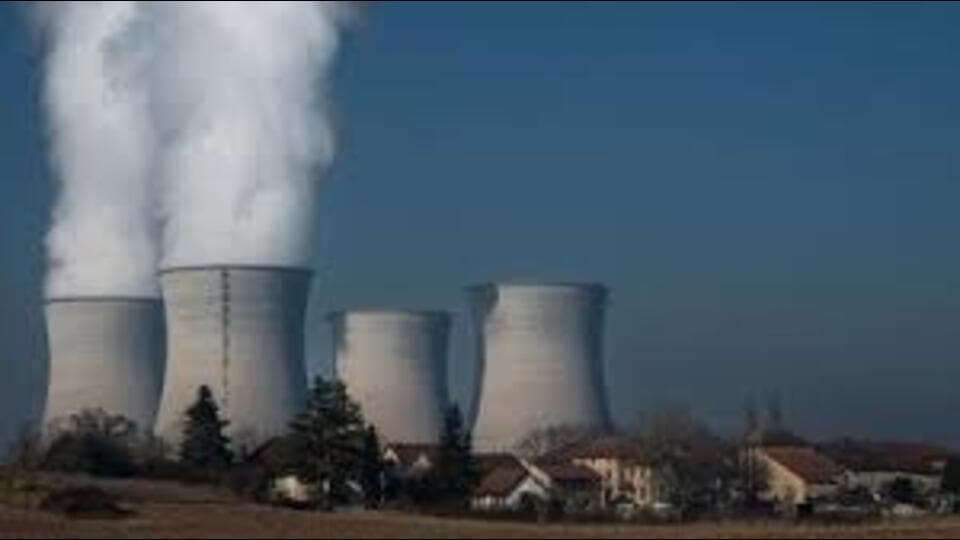
Aimed at addressing the rising power demand, the projects are proposed under the Sustainable Harnessing and Advancement of Nuclear Energy for Transforming India Act, 2025 (SHANTI Act) which provides a framework for private sector participation in nuclear energy through joint ventures with government entities, while mandating strict regulatory oversight, adherence to safety norms and enabling faster clearances for such high-capacity projects.
After a meeting with chief secretary SP Goyal last month, the irrigation department was asked to assist in site assessments given the very high water requirement for nuclear power plants.
“Around half a dozen locations have been identified for nuclear plants. Preliminary joint surveys, including drilling in the identified areas, are currently being carried out by teams consisting of developers and state government agencies,” a senior energy department official said.
Each plant, according to the official, is likely to be 1,400 MW, comprising two units of 700 MW each.
The UP government will allocate land and water resources required for the proposed plants.
The locations identified for proposed nuclear power plants in Uttar Pradesh include Prayagraj, Lalitpur, Sonbhadra, Mirzapur and Bulandshahr, officials said. While NTPC has shown interest in sites at Lalitpur, Prayagraj and Sonbhadra, Indian Oil Corporation is keen on projects in Bulandshahr and Mirzapur.
Discussions on exploring nuclear power in the state predate the SHANTI Act, 2025. On a request from the UP government in September 2024, an expert team of NTPC had identified three potential sites — Talbehat village in Lalitpur, Dewri village near the Meja thermal power plant in Prayagraj and Palhari village in Sonbhadra.
However, it remains unclear whether these are the same locations where preliminary surveys are currently ongoing or separate sites.
Currently, UP has only one nuclear facility, Narora Atomic Power Station, owned by the Centre, with its generation allocated to multiple states, including UP, through the central pool.
Officials said the move to install more nuclear power plants in UP would help reduce the state’s dependence on fossil fuel-based power, which currently dominates its energy mix, and support rising demand.
Uttar Pradesh remains one of the largest power-generating states in North India, ranking second in the northern region in terms of installed electricity capacity, while Rajasthan leads the region, driven by massive renewable energy additions, according to a latest report on the state-wise installed capacity by the Central Electricity Authority (CEA).
However, experts often point out that UP needs to augment its capacity fast to keep pace with the growing power demand, which officials expect to cross 40,000 megawatts (MW) by 2030.
The CEA report says Rajasthan tops the northern region with about 58,992 MW, largely driven by solar and wind power.
Uttar Pradesh follows with an installed capacity of around 36,700 MW, reflecting a generation mix still dominated by conventional sources.
Thermal power forms the backbone of Uttar Pradesh’s installed capacity. Of the state’s total, over 26,500 MW comes from thermal sources, including 9,115 MW from state-owned generating companies, 8,814 MW from private producers and 7,621 MW from central sector plants allocated to the state. This makes UP the largest thermal power producer in the northern region.
“UP requires enhancing power production capacity in a big way to meet its future peak demand, which has already surpassed that of Maharashtra, the highest in the country and setting up nuclear plants in the state will help,” a UP Electricity Regulatory Commission (UPERC) official said.