
LUCKNOW The release of senior Samajwadi Party (SP) leader Azam Khan on interim bail from Ghaziabad’s Dasna district jail has triggered political debate over his relevance in Uttar Pradesh politics ahead of the 2027 Assembly elections. Following a prolonged incarceration, Khan’s return is expected to influence the SP’s electoral strategy — particularly in western UP and the Rohilkhand region, where he has historically commanded strong support among Muslim voters.
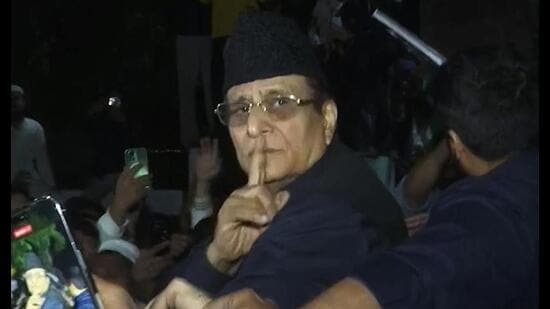
Making it clear that he intends to remain a central figure rather than operate from the fringes, Khan struck a sharp political tone immediately after his release on November 18. Declaring that the 2027 contest would be fought on public issues rather than caste or religion, he told reporters, “This time, there will be no election, there will be a revolution... there will be no change, there will be a deluge.” Opting for a narrative of “justice” rather than “revenge,” Khan sought to set the tone for the opposition’s campaign
Welcoming Khan’s release, SP chief Akhilesh Yadav described the veteran leader as a symbol of emotional unity who would once again stand with the marginalised and “raise his voice against oppression” by the BJP and its allies.
However, Khan’s re-entry also brings his equation with the party leadership back into focus. Speculation had circulated in political circles that the SP had sidelined Khan during his absence —especially after the party bypassed his preference to nominate Mohibbullah Nadvi from Rampur in the 2024 Lok Sabha elections. The party later moved to ease tensions by replacing sitting Moradabad MP ST Hasan with Ruchi Vira, a former MLA considered close to Khan’s camp.
{{/usCountry}}However, Khan’s re-entry also brings his equation with the party leadership back into focus. Speculation had circulated in political circles that the SP had sidelined Khan during his absence —especially after the party bypassed his preference to nominate Mohibbullah Nadvi from Rampur in the 2024 Lok Sabha elections. The party later moved to ease tensions by replacing sitting Moradabad MP ST Hasan with Ruchi Vira, a former MLA considered close to Khan’s camp.
{{/usCountry}}On October 22, Akhilesh Yadav met Khan at Rampur district jail before visiting his family, followed by visits from senior SP leader Shivpal Singh Yadav in Rampur and Dasna jail. Although legal restrictions bar Khan from contesting the 2027 elections himself, SP leaders familiar with the discussions said he will play a significant role in candidate selection.
Within the party, local leaders view Khan’s return as a timely boost. “Azam Khan commands considerable influence among the Muslim community in West UP districts including Rampur, Moradabad, Sambhal, Amroha, Bijnor, and Bareilly,” said SP Rampur district unit president Ajay Sagar. “He has challenged the might of the BJP in West UP in successive assembly elections and will play a pivotal role in the 2027 assembly polls.”
The timing is particularly crucial for the SP as the alliance between Asaduddin Owaisi’s All-India Majlis-e-Ittehadul Muslimeen (AIMIM) and Chandrashekhar Azad’s Azad Samaj Party (Kanshi Ram) gains traction in Muslim-majority pockets of West UP. Owaisi’s public rallies have drawn sizeable crowds, especially younger voters, raising concerns in the SP camp. Party strategists hope Khan’s return will help consolidate their traditional base and blunt the AIMIM–ASP narrative.
Political analysts, however, view Khan’s return as a complex variable for Akhilesh Yadav. Political observer SK Srivastava described Khan’s influence as a “double-edged sword” for the SP, noting that his fiery rhetoric and high-profile interventions on minority issues could give the ruling BJP an opening to sharpen a counter-polarisation campaign.
“Khan’s return is also a challenge for Akhilesh Yadav to accommodate an influential senior leader without disturbing the organisational and political structure that emerged in West UP after his incarceration,” Srivastava said, pointing out that prominent Muslim leaders who rose during Khan’s absence —including Mohibbullah Nadvi, ST Hasan, Zia-ur-Rahman Barq and Iqra Hasan — do not share smooth equations with him.
Meanwhile, the BJP dismissed any suggestion that Khan’s release would alter the electoral landscape. “Whether Khan remains in jail or outside will have no impact on the BJP’s fortunes in the upcoming assembly elections,” said Rampur BJP MLA Akash Saxena. “The BJP has strengthened the organisation down to the booth level, and the party will win a majority of the seats in West UP to retain power in the 2027 assembly polls.”
ABOUT THE AUTHOR
Rajesh Kumar Singh is Assistant Editor, Hindustan Times, at the political bureau in Lucknow. An Alumnus of Ramjas College, Delhi and the University of Delhi, he has covered politics in the Hindi heartland Uttar Pradesh and Bihar for three decades and has written extensively on Dalit and OBC politics. He travelled across Uttar Pradesh to cover the panchayat, assembly and Lok Sabha elections. Along with writing on development issues, governance and public policy has done crime reporting, including Maoist activities in Bihar as well as activities of gangsters in East Uttar Pradesh, Jungle Party gang active on UP- Bihar border, dacoit gangs in Bundelkhand region and Sand Mafia active in various districts of UP. Has done investigations and reporting exposing multi-crore NRHM scam in UP, Nutrition scam, Medicine supply scam, irregularities in the flood management projects, weapon smuggling and human trafficking on Indo- Nepal border. He highlighted the deaths of children due to encephalitis in the districts of East Uttar Pradesh; the central and state government took cognisance of the report to launch schemes to check deaths and improve the facilities in the health centres and hospitals. He also reported on the social issues in East Uttar Pradesh and Bundelkhand- migration, farming crisis, water crisis, plight of the deprived communities- Musahar, Vantongiyas, Sahariya and Kol communities. He covers state government departments. He also travels to write human-interest stories and in-depth stories from the ground in the Bundelkhand, Purvanchal, and Rohilkhand regions of Uttar Pradesh.