Women, who have consistently recorded higher voter turnout than men in successive major elections in Uttar Pradesh since 2012, are fast emerging as an influential electoral constituency, with political parties seeking to woo them through promises centred on their welfare and empowerment in the lead-up to the 2027 state assembly polls.
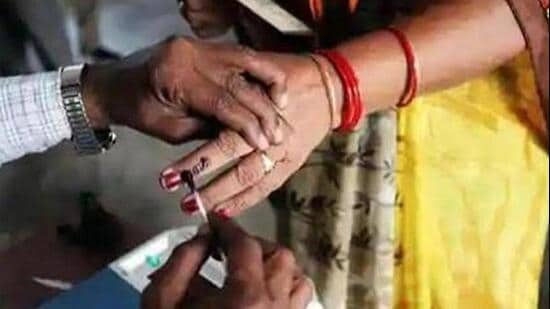
The trend is evident in the voting figures of the past three assembly elections and two Lok Sabha polls. Election Commission data show that in 2012, women’s turnout stood at 60.28% against 59.21% among men. The gap widened in 2017, when 63.38% of women voted against 59.21% of men. In 2022, the female turnout was 62.24% compared with 59.56% among men.
Female voter turnout in UP exceeded male turnout for the first time in 2012 assembly elections. These elections also recorded the total all-time highest turnout at 59.5%
Similarly, women’s participation in the Lok Sabha elections in Uttar Pradesh has steadily increased, with the gender gap in voter turnout narrowing over successive elections. A significant shift was visible in 2019, when women’s turnout (59.56%) marginally surpassed that of men (58.53%). The trend continued in 2024, when women’s turnout stood at 57.24% against 56.65% of male voters. In 33 of 80 Lok Sabha constituencies, women outvoted men in 2024.
The figures, observers say, point to a sustained increase in women’s electoral participation over the past decade. “This is true that women have outvoted men in many assembly and parliamentary elections in the last one decade in UP like in many other states. And this is why political parties have now started treating women as a separate votebank wooing them with promises of freebies,” SK Pandey, a political scientist, said.
{{/usCountry}}The figures, observers say, point to a sustained increase in women’s electoral participation over the past decade. “This is true that women have outvoted men in many assembly and parliamentary elections in the last one decade in UP like in many other states. And this is why political parties have now started treating women as a separate votebank wooing them with promises of freebies,” SK Pandey, a political scientist, said.
{{/usCountry}}The focus on women has become particularly evident in the emerging welfare competition between the ruling BJP and the Opposition Samajwadi Party (SP). In August, SP chief Akhilesh Yadav promised annual financial assistance of ₹40,000 to women if his party was voted to power in 2027. On November 4, chief minister Yogi Adityanath announced that his government would soon bring an attractive financial package to make women economically self-reliant.
The proposed women’s package is yet to be detailed, but the emphasis on economic self-reliance raises the possibility of a programme that could go beyond conventional welfare measures to include livelihood generation, entrepreneurship and financial support.
The Ujjwala Yojana which provides subsidised LPG connections in the name of women, supplemented by two free refills annually by the UP government, the PM Awas Yoajana under which money is given for construction of houses registered in the name of women, the free bus travel facility, increased widow pension, Lakhpati Didi and BC Sakhi are among the schemes believed to have already had found favour with women.
“The 2027 elections will witness competitive welfarism as an important additional dimension of UP’s traditionally caste-centric electoral politics with parties competing to secure the support of an increasingly active women’s electorate,” Pandey said.
“Direct cash transfer promises paid dividends to the BJP in states like Bihar, Maharashtra and West Bengal and Opposition parties, particularly the SP, also look keen on trying the same formula,” he added.
A senior BJP leader said the one reason political parties were increasingly focusing on women voters was also the perception that political preferences, once formed, were relatively stable.
“We have seen women in UP vote for Modi and Yogi, impressed by the Centre’s welfare schemes and the state government’s stress on law and order, even when their husbands or other male members of the family may have supported the rival parties,” the BJP leader said.
According to Pandey, empirical studies have discovered that many women now vote independently of their husbands. It is also observed that despite being fewer in number, they show up more than men at polling booths, especially in rural areas.
He said the 2027 elections in UP were set to see the ruling and Opposition parties compete with one another to woo women for these reasons.
“While there is nothing wrong with promising initiatives that aim at empowering women in the true sense, parties must avoid announcing freebies like direct cash transfers because when implemented, they leave a disastrous impact on the state’s exchequer,” he cautioned.