
In a state where caste equations strongly influence politics and the electoral landscape is shaped by several smaller caste-based parties, the Bharatiya Janata Party (BJP) is facing a ‘problem of plenty’ as it prepares for the 2027 Uttar Pradesh assembly elections.
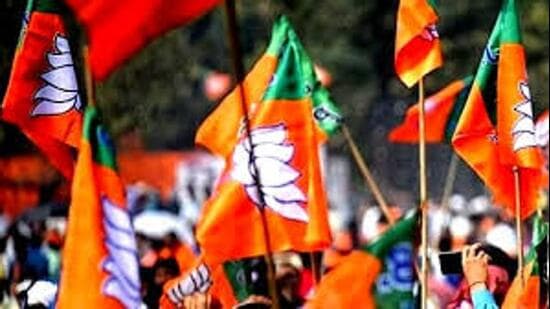
With four UP-based smaller parties as allies in the NDA and Chirag Paswan-led Lok Janshakti Party (Ram Vilas) also indicating regional aspirations, the BJP’s top leadership is reportedly in a huddle over how to address the question of seat-sharing.
In the 403-member Uttar Pradesh assembly, the BJP contested 376 seats in the 2022 polls, leaving 17 for Apna Dal (S) and 10 for the Nishad Party.
Om Prakash Rajbhar-led Suheldev Bharatiya Samaj Party (SBSP) and Jayant Chaudhary-led Rashtriya Lok Dal (RLD) were then allies of the Samajwadi Party. Both later joined the NDA. The SBSP returned to the NDA soon after the assembly polls, while the RLD switched sides ahead of the 2024 Lok Sabha elections.
The RLD, predominantly confined to western Uttar Pradesh, contested 33 assembly seats in 2022 and won eight. The SBSP contested 19 seats and won six.
According to BJP sources, the RLD and the SBSP are seeking the same number of seats they contested in the 2022 assembly polls.
{{/usCountry}}According to BJP sources, the RLD and the SBSP are seeking the same number of seats they contested in the 2022 assembly polls.
{{/usCountry}}The arithmetic is becoming increasingly complicated for the BJP. If the four allies get the same number of seats they contested in 2022 — RLD 33, SBSP 19, Apna Dal (S) 17 and Nishad Party 10 — the combined allocation would come to 79 seats. This would leave the BJP with 324 of the state’s 403 assembly seats, against the 376 it contested in 2022.
BJP sources said Apna Dal (S) and the Nishad Party were seeking at least 17 and 10 seats, respectively, for the 2027 polls, retaining their 2022 quotas.
“In such a scenario, the BJP will have to share seats with two new alliance partners from its own quota. It will have to contest fewer than the 376 assembly seats it contested in 2022,” a senior BJP leader said.
“As pressure mounts on the BJP for more seats from its alliance partners, it will not be easy for the ruling party to arrive at an amicable seat-sharing agreement with its NDA allies for the 2027 assembly polls in Uttar Pradesh,” another senior BJP leader said.
When contacted, RLD state president Anil Dubey said: “We are part of the NDA. We will be campaigning on all 403 seats for NDA candidates. As far as seat-sharing for the RLD is concerned, it will be decided by the party high command.”
Refusing to comment on seat-sharing talks with the BJP, Apna Dal (S) state president RP Gautam said: “We are part of the NDA. The party high command will take the final decision on seat-sharing.”
However, the challenge does not end there. Lok Janshakti Party (Ram Vilas) chief Chirag Paswan, whose party is an NDA ally in Bihar and at the Centre, has also sought seats in the Uttar Pradesh assembly elections from the NDA’s quota.
“Seat-sharing will be decided at the top level at the right time. Our focus right now is to strengthen the organisation at the booth level. The NDA is united and will fight together,” BJP chief state spokesperson Dinesh Pratap Singh said.
Within the BJP, however, the challenge is also about managing aspirations among its own leaders and workers. In every district, there are at least three to four BJP ticket aspirants for each assembly seat. A reduction in the number of seats contested by the party could make it even more difficult to accommodate them.
“The real problem is not just the number, but winnability. The RLD will want seats in western UP where it is strong, while the SBSP will seek seats in eastern UP. Many of these seats are currently held by BJP MLAs. How do we convince sitting MLAs to vacate them?” asked another BJP leader involved in the seat-sharing discussions.
The BJP leadership, sources said, is likely to adopt a two-pronged strategy. First, it may try to persuade allies to accept fewer seats, arguing that winnability, rather than the number of seats contested, will determine their share in power. Second, it may seek to accommodate allies in constituencies where the BJP is relatively weak, while retaining its strongholds.
The party is also looking at the Bihar model, where the NDA accommodated five allies through tough bargaining and last-minute adjustments. However, leaders admit that Uttar Pradesh, with 403 assembly seats and a more complex caste arithmetic, is a different ball game.
For now, the BJP has kept formal seat-sharing talks on hold. The central leadership, including national general secretary and UP in-charge Vinod Tawde, is said to be holding one-on-one meetings with alliance leaders to gauge their expectations.
A final decision is likely only after the party completes its ongoing organisational exercises, including the deployment of vistaraks and pravasis across all 403 constituencies and an assessment of sitting MLAs.
ABOUT THE AUTHOR
Pawan Dixit, Assistant Editor, brings over 20 years of frontline reporting experience to the newsroom. A specialist on Uttar Pradesh politics and governance, he has reported from the ground across the state’s most consequential stories. He cut his teeth in eastern UP, spending 15 years covering the region. Based in Varanasi, he reported the 2012 UP Assembly polls and the 2014 Lok Sabha elections that reshaped the state’s political map. Moving to Lucknow in 2016, he has since led coverage of the 2017 and 2022 UP Assembly elections and the 2024 Lok Sabha polls. His reporting tracks the BJP’s strategy, opposition moves, and voter sentiment across all 75 districts. Pawan has been a constant presence in Ayodhya since 2016. He reported the entire arc of the Ram Mandir movement — from the legal fight to the Supreme Court verdict, through temple construction, to the inauguration. He continues to track every development at the Shri Ram Janmabhoomi Teerth Kshetra Trust. On the state beat, he covers the BJP, the Industrial Development Department, and handles key outstation political assignments. He also reports major cases from the district court, Lucknow bench of the High Court, and the State Information Commission. Along with this, he also reports on NGT's important decisions related to UP. Known for sharp sourcing and clear analysis, Pawan connects politics, policy, infrastructure and faith — the forces driving UP today. He has reported developments in Ayodhya and Ram Mandir movement since 2016. The Supreme Court's Ram Mandir verdict, temple construction and the its opening have been reported by him. He reports all developments in Ayodhya and Ram Mandir Trust. He covers state BJP, Industrial development department, outstation political assignments, reports special cases from district court, high court and state information commission