As the evaluation of answer sheets of the UP Board’s High School and Intermediate examinations 2026 is set to begin on Wednesday (March 18), the Board has introduced strict performance-based rules under which the teachers’ honorarium can be reduced if mistakes are found in the copies they check, said UP Board secretary Bhagwati Singh.
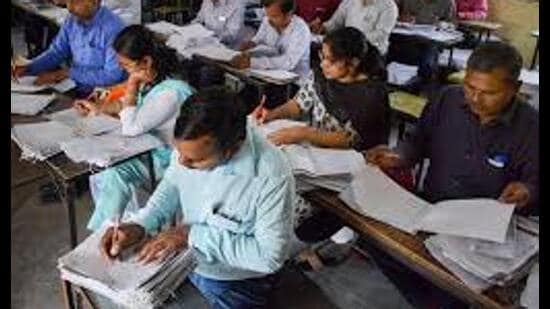
While students will still have the right to apply for rechecking if they feel their marks are unfair, the Board will also conduct random rechecking of answer sheets by subject experts. To prevent any error, the UP Board secretary has issued strict instructions to the deputy controllers (principals) of all 250 evaluation centres in the state. The evaluation work will conclude on April 1.
As per the new rules, if an examiner’s copies show an error rate of up to 2%, 85% of their evaluation honorarium will be deducted and the teacher will be barred from checking answer sheets for at least three years. If the error rate is up to 1%, half of the payment will be deducted, while an error rate of up to 0.5% will result in a 25 percent cut.
If any mistake is found even after rechecking, the teacher responsible will be held completely accountable. Such teachers may face disciplinary action under Board rules and under the Uttar Pradesh Public Examinations (Prevention of Unfair Means) Act, 2024. This action may include stopping promotions and blocking salary increments.
{{/usCountry}}If any mistake is found even after rechecking, the teacher responsible will be held completely accountable. Such teachers may face disciplinary action under Board rules and under the Uttar Pradesh Public Examinations (Prevention of Unfair Means) Act, 2024. This action may include stopping promotions and blocking salary increments.
{{/usCountry}}The Board has also warned teachers to enter marks very carefully as the computer system will reject any entry that shows overwriting or cuttings, which could leave a student’s result incomplete. The new measures have been introduced because, in previous years, many students applied for rechecking and several of those applications revealed mistakes either in awarding marks or in adding them.
This caused unnecessary trouble and extra cost for students and increased the workload of the Board. The stricter rules this year are aimed at preventing such errors, ensuring fair evaluation for every student.
Last year, the UP Board had issued warnings to 4,204 examiners for irregularities in evaluating answer sheets of the High School and Intermediate examinations. Of them, 3,077 were Class 10 examiners and 1,127 were of Class 12.
Records show that 31,194 students had applied for scrutiny—5,495 from Class 10 and 25,699 from Class 12. Of these, the marks of 5,946 students—about one in every five—were revised. Many cases revealed major discrepancies in the evaluation.