LUCKNOW With the Special Summary Revision (SSR) of electoral rolls for Uttar Pradesh’s assembly constituencies scheduled to commence on November 2, the Election Commission of India (ECI) has urged all recognised political parties to appoint Booth Level Agents (BLAs) across every polling station to coordinate with Booth Level Officers (BLOs).
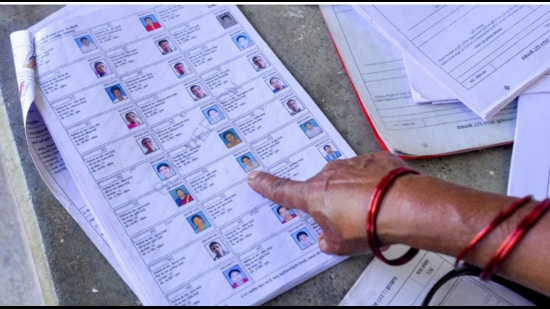
The list of all forms received during the claim and objection period will also be published on the chief electoral officer’s website. The ECI has authorised BLAs of recognised political parties to submit a maximum of 10 forms (Forms 6/7/8) per day to the BLO during the claim and objection period. If more than 30 forms are submitted by the booth level agent during the entire claim and objection period, it will be re-verified by the electoral registration officers/assistant electoral registration officers.
In a meeting with representatives of recognised national and state political parties regarding the SSR on Friday, UP chief electoral officer (CEO) Navdeep Rinwa said in accordance with the ECI directive dated October 9, 2026, all district election officers and assistant electoral registration officers have been directed to take action as per rules against a person making false declaration in Form 7 in accordance with the provisions mentioned in Section 31 of the Representation of the People Act, 1950.
The SSR of the voter list for the state’s assembly constituencies is based on the eligibility date of January 1, 2027. The objective of this revision is to include names of all eligible citizens in the voter list and to make the voter list error-free and up to date, he added.
{{/usCountry}}The SSR of the voter list for the state’s assembly constituencies is based on the eligibility date of January 1, 2027. The objective of this revision is to include names of all eligible citizens in the voter list and to make the voter list error-free and up to date, he added.
{{/usCountry}}As per the schedule, the process of rationalisation/rearrangement of polling stations will be completed by November 2, the unified draft voter list will be published on November 12 and the period for filing claims/objections has been fixed from November 12 to December 11. The claims and objections will be disposed by December 28 and the final voter list will be published on January 4, 2027, he said.
Under SSR of the electoral roll, eligible citizens who have completed 18 years of age by October 1, 2026, as well as youth who will complete 18 years of age by January 1, 2027, can apply to get their names included in the electoral roll.
Additionally, advance applications will also be received from prospective voters who become eligible based on the eligibility dates of April 1, July 1 and October 1, 2027. These applications will be processed according to the established procedure in the quarter of the respective eligibility date.
During the allocation of polling stations, it will be ensured that no polling station typically has more than 1,200 voters. In the determination of new polling stations and the reorganisation of existing polling stations, special attention will be paid to physical verification, voter convenience, keeping names of family members in the same section and minimising inconvenience in reaching the polling station. Clarity in the boundaries of polling stations and the suitability of the buildings will also be ensured, said the CEO.
All district election officers have been directed to conduct the SSR in a timely, transparent and error-free manner, in accordance with the ECI’s guidelines.
Representatives of Samajwadi Party, Apna Dal (S), Communist Party of India (M), Bahujan Samaj Party, Aam Aadmi Party, Bharatiya Janata Party, Indian National Congress Party were present in the meeting.
High-rises to get ground-floor booths
UP chief electoral officer (CEO) Navdeep Rinwa on Friday directed the district electoral officers, sub-district electoral officers and electoral registration officers to review arrangements of polling stations as per the guidelines issued by the Election Commission of India (ECI).
Officials should ensure that the arrangement of polling stations is based on the standard of 1,200 voters, he said.
To make the voting experience more convenient, the ECI has limited polling stations to a maximum of 1,200 voters. It will ensure better queue management, prevent congestion inside and outside the polling stations and make comfortable voting experience for senior citizens and persons with disabilities (PwDs). The arrangement will also assist booth level officers and security personnel in better management of polling process.
The CEO said under Section 25 of the Representation of the People Act, 1951, the district election officers are responsible for determining polling stations. A new documented list of polling stations should be prepared for each assembly constituency and made available to district-level representatives of all recognized political parties, he said.
A meeting with political party representatives, MLAs, and MPs, chaired by the district election officer, should be held to discuss the polling stations’ list and finalize it after completing the necessary procedures, he said.
Keeping in mind the convenience of voters in developed group housing societies and multi-storey buildings in urban areas, polling booths should be established in common facility areas, community halls, etc, located on the ground floor. It will provide more convenient voting facilities for voters living in the residential complexes, he said.
Use of various forms
During SSR process, Form-6 can be used for inclusion of name in the electoral roll, Form-6A for registration of overseas Indian voters, Form-7 for objection to inclusion or deletion of name and Form-8 for change of residence, amendment of entries, replacement of Voter ID card (EPIC) and marking as a disabled voter. Eligible citizens can fill these forms offline and get them delivered to the booth level officers or can also fill them online through the Voter Service Portal (https://voters.eci.gov.in) or ECINET App.