Months before the 2027 Uttar Pradesh assembly polls, the long-dormant demand for splitting the country’s most populous state has suddenly returned to the political centre stage with the NDA allies not only backing the idea of smaller states, but also beginning to stake claims to the political leadership in the suggested states.
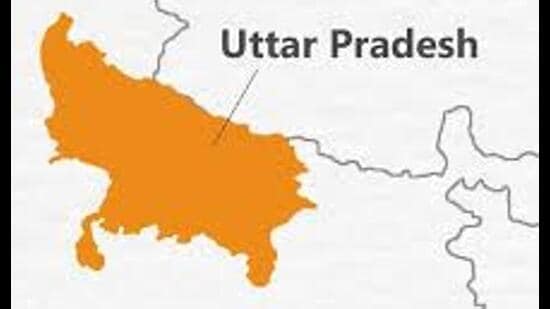
Though the issue of dividing Uttar Pradesh surfaces in some form before every state election, it had largely been dormant since 2011 when the Bahujan Samaj Party (BSP) government led by Mayawati formally passed a resolution in the assembly advocating UP’s division into four states.
The latest revival of the issue began when Suheldev Bharatiya Samaj Party (SBSP) president and panchayati raj minister Om Prakash Rajbhar recently claimed that Uttar Pradesh would eventually be divided into four states—Purvanchal, Madhyanchal, Bundelkhand and Harit Pradesh. Rajbhar even went to the extent of saying that the BJP’s central leadership assured him the state would be divided into four regions after the caste census.
More significantly, he said that if Purvanchal became a separate state, a Rajbhar should head it. Rajbhar was not available for his comment despite several phone calls.
The remark has now triggered messaging from several other parties as well.
{{/usCountry}}The remark has now triggered messaging from several other parties as well.
{{/usCountry}}Ashish Patel, Apna Dal (Sone Lal) vice-president and a minister in the Yogi Adityanath government, said that if Uttar Pradesh were divided into four parts before the assembly elections, there was no reason why a Patel could not become chief minister. He was speaking at a party organisational meeting in Prayagraj on Saturday,
He went further, suggesting that people from different communities could get an opportunity to head the new states.
The Rashtriya Lok Dal (RLD), another BJP ally with its principal base in western UP and main champion of the decades-old demand for a separate Harit Pradesh, has also reiterated its support for smaller states, including the idea of a separate Western Uttar Pradesh.
“RLD founder Ajit Singh always championed the cause of smaller states and division of UP into four regions, including Harit Pradesh,” senior RLD leader Trilok Tyagi said. “Party chief Jayant Chaudhary is the natural claimant to the chief minister’s post of the new state in western UP,” he added.
The response from another NDA ally, however, has been markedly different. Nishad party chief Sanjay Nishad has reportedly opposed the division of the state, arguing that UP is progressing and special funds have been provided to Purvanchal and Bundelkhand.
Observers feel that two statements have transformed what was largely an old administrative demand into an obvious caste and regional conversation ahead of the 2027 assembly elections.
While the Samajwadi Party (SP) has historically been opposed to the idea of fragmentation of UP in any form since the days of Mulayam Singh Yadav, the Congress’s response to the latest discussion has been more nuanced.
Congress MP from Saharanpur Imran Masood has supported the principle of dividing UP, arguing that smaller states could make administration easier. However, UP Congress president Ajay Rai was heard maintaining a more cautious position, saying that such a major issue would require high-level consultation in the party.
The BSP has not reacted to the latest political debate initiated by Rajbhar.
In November 2011, as the 2012 assembly elections approached, the Mayawati government got an assembly resolution passed proposing division of UP into Purvanchal, Bundelkhand, Awadh Pradesh and Paschim Pradesh. The resolution was subsequently sent to the Congress-led UPA government at the Centre but no further action followed after the SP came to power in the state in 2012.
The BJP has historically and ideologically supported the principle of smaller states. During the party’s earlier stint in power at the Centre, three new states— Uttarakhand, Jharkhand and Telangana—were carved out.
Further dividing UP in four regions is a different proposition for reasons related to the party’s political status and dominance as the state sends the largest number of MPs to Lok Sabha.
For the BJP, it is believed, the proposed four-state map also presents a complicated demographic and political equation.
“The proposed Harit Pradesh/Paschim Pradesh will cover a region with a significantly higher Muslim population than the UP average. The BJP fears that Harit Pradesh may turn out to be a Muslim-dominant state and this is why the party remains mum on the issue,” a senior BJP leader said.
The BJP has, for now, maintained a strategic silence over the renewed debate. BJP leaders, when contacted, avoided giving any response. “Please leave it,” BJP spokesman Sameer Singh said when asked to respond to the UP division issue raised by Rajbhar and others.
Under Article 3 of the Constitution, the creation of new states ultimately requires Parliamentary legislation, with the President referring the proposal to the state legislature concerned for its views. Currently, there is no such exercise underway despite the BJP’s allies and others kicking up dust.