MUMBAI: One of the worst bottlenecks affecting local trains on Bandra in the Western Line has been finally upgraded after more than three decades offering a major relief for nearly 3 million daily commuters. The Western Railway has enhanced drainage capacity along the flood-prone Mahim–Bandra stretch near the Mithi River.
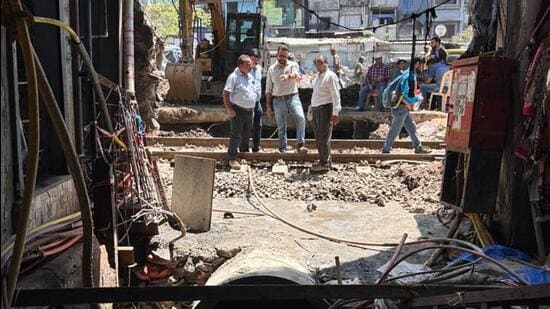
The upgrade replaces a narrow 300 mm pipe with a much wider 1200 mm pipeline, allowing nearly four times more rainwater to flow through at a time. This means water that earlier accumulated and spilled onto tracks can now drain faster, reducing the chances of flooding and disruption to suburban services.
The work was completed during a 36-hour mega block on Sunday.
For years, the densely populated Navpada area in Bandra East has been prone to severe waterlogging during the monsoon. Rainwater from surrounding areas would flow towards the railway tracks, frequently leading to flooding along the Mahim–Bandra stretch and delays in train services and therefore causing overcrowding at stations.
At the centre of the problem was an ageing drainage system, Culvert No 22, built in 1991–92. It relied on a 300 mm pipe to carry stormwater to a BMC drain connected to the Mithi River. Over time, the pipeline became choked due to garbage accumulation, encroachments and limited access for maintenance, eventually becoming almost non-functional.
While the BMC undertook drainage improvements on the eastern side, the bottleneck beneath the railway tracks continued to restrict the flow of water, leading to recurring flooding during heavy rain.
{{/usCountry}}While the BMC undertook drainage improvements on the eastern side, the bottleneck beneath the railway tracks continued to restrict the flow of water, leading to recurring flooding during heavy rain.
{{/usCountry}}Railway officials said the new 1200 mm pipeline is expected to remove this choke point and significantly improve the outflow of rainwater, reducing waterlogging on tracks and helping trains run more smoothly during peak monsoon conditions.
Executing the project posed major engineering challenges due to the congested terrain. The drainage line runs through a dense slum pocket, alongside a road overbridge and beneath active railway tracks, leaving minimal space for heavy machinery or excavation.
Initial plans to use micro-tunnelling were dropped due to lack of space. Instead, engineers dismantled a railway line and manually carried out the work. Over 1,100 to 1,200 cubic metres of debris was removed before laying the new pipeline across a 500-metre stretch.
Multiple signalling, telecom and electrical cables in the area also had to be carefully relocated to enable the work.
Stay updated with all the Breaking News and Latest News from Mumbai. Click here for comprehensive coverage of top Cities including Bengaluru, Delhi, Hyderabad, and more across India along with Stay informed on the latest happenings in World News.
Stay updated with all the Breaking News and Latest News from Mumbai. Click here for comprehensive coverage of top Cities including Bengaluru, Delhi, Hyderabad, and more across India along with Stay informed on the latest happenings in World News.