MUMBAI: Last month, Gajanan Jamge, a 21-year-old nursing student, died after he contracted malaria at his college hostel. Two other nursing students were also hospitalised for malaria. The Maharashtra Association of Resident Doctors (MARD) estimates that during the monsoon months, more than 150 medical students across the state, including 40-0dd from Mumbai alone, fell sick with malaria, dengue and typhoid. Around 25 doctors at JJ Hospital were admitted to the very hospital where they worked.
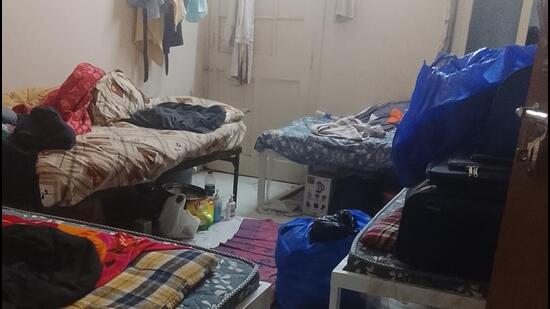
Although a major clean-up was undertaken on the campus of the government-run Grant Medical College (GMC) and Sir JJ Group of Hospitals after Jamge’s death, the situation points to challenging living conditions and poor hygiene in the hostels of Mumbai’s major civic- and government-run medical institutions.
Medical students, interns, post-graduates and super-speciality students and nursing students – the backbone of the state’s healthcare system – spoke to HT about the accommodation crunch.
Rule versus Reality
A 2018 National Medical Commission (NMC) rule requires medical colleges to provide hostel facilities for 75% of their total student intake. Colleges must also provide hostel accommodation for 50% of their medical interns. The NMC specifies 9 sq m per student, that is, not more than three students in one room of 27 sq m. Each student is to be provided with a chair, table, bed and a cupboard.
The reality, on the ground, is very different. One student said double-occupancy rooms have been given to four or even five students. HT visited hostel rooms in JJ and Cooper hospitals and found clothes and bags competing for space; they were stuffed on and under the beds. Large books and personal belongings are merely stored on beds.
{{/usCountry}}The reality, on the ground, is very different. One student said double-occupancy rooms have been given to four or even five students. HT visited hostel rooms in JJ and Cooper hospitals and found clothes and bags competing for space; they were stuffed on and under the beds. Large books and personal belongings are merely stored on beds.
{{/usCountry}}One medical student said he keeps his books in his college library locker. “I never bring them to my room because where is the space?” he said. At one hostel, four toilets are shared by 32 post-graduate students at each end of the floor.
At Cooper Hospital, garbage bins line the corridors. A TB clinic is located right next to the entrance of the resident doctors’ hostel, despite objections. “The conditions make it very difficult to study, while hygiene is also a concern. Trash overflowing from bins is preyed upon by rodents and cats that frequent the hostel premises,” said Vinayak Shah, president of the JJ Hospital unit of MARD.
Hostel Congestion
Hospital authorities said it is hard to meet the NMC’s space norms in a space-starved city like Mumbai. JJ Hospital has about 1,075 resident doctors, including 851 broad-speciality residents, 116 bonded students and 108 super-speciality senior residents. “They have to be accommodated in 310 rooms, including 40 rooms for super-speciality seniors. We are short of accommodation for 750 resident students,” said Shah.
He added about 120 students had been accommodated in 45 rooms at GT Hospital but will now have to vacate, as GT needs the space for its own students. Shah recalled that a few years ago, his college provided accommodation outside the campus, but the arrangement was shut down over non-payment of dues, forcing students to vacate.
At Cooper Hospital, undergraduates are housed outside the campus, forcing them to travel to and from college. For post-graduates, 77 rooms on campus are shared by over 200 students.
“The 150 undergraduates have been accommodated in maternity homes-turned-hostels at Versova and Lokhandwala, with functional health services on the ground floor. Another 602 undergraduates are in 100 rooms, six per room, at a hostel in Tata Compound, Vile Parle,” said Dr Vishal Mule, vice-president of MARD, Cooper Hospital.
A student at Cooper Hospital, put up at the hostel in Versova, said the ten students placed here had classes at 8am. Between the arduous commute and lack of tiffin service in the vicinity, commuting was very challenging. “It was such a bad experience that I simply shifted out and preferred to pay around ₹35,000 for rent close to campus. Here, I have breathing space along with facilities like laundry, food and even Wi-Fi,” he said.
BYL Nair Hospital too has taken additional hostel accommodation at Curry Road and Haji Ali, while Sion Hospital offers accommodation outside its campus but commuting time and the odd hours they keep renders this option unfeasible.
“There used to be extra beds in every ward for doctors to rest between shifts. Those spaces have been lost to accommodate additional patients. At Nair Hospital, the hostel is almost 7km from the hospital campus. With long and late hours, returning to the accommodation at night is tough,” said Dr Atharva Shinde, president of central MARD.
Beefing up facilities
Dr Shailesh Mohite, director, medical education and major hospitals, Brihanmumbai Municipal Corporation (BMC), said, “Hostel conditions should have been considered before increasing seat intake in these colleges. We are trying our best to accommodate as many students as possible.”
However, he said, facilities like hostels or lecture halls cannot be upgraded overnight. “They need planning, funding and permissions at various levels.” He added, “At Nair, we have adequate hostel facilities, and KEM recently upgraded its facility to 1,200 students. At Sion, Nair and Cooper, we have already taken up hostel facilities outside the campuses.”
Dr Pramod Ingale, dean of Sion Hospital, said one hostel is expected to be ready for inauguration by December and a second likely next year.
At JJ Hospital, recently retired dean Dr Ajay Bhandarwar said there are over 2,000 students on campus, including 921 undergraduate medical students. “The increase in seat capacity has not matched infrastructure. We have submitted proposals to raise hostel capacity to 1,400 beds, but that will take time,” he said.
Medical interns get a stipend of about ₹18,000, while resident doctors get ₹90,000. Renting a decent apartment close to medical colleges costs over ₹30,000, along with a deposit and other expenses. This and other factors make on-campus living the only feasible option.
Stay updated with all the Breaking News and Latest News from Mumbai. Click here for comprehensive coverage of top Cities including Bengaluru, Delhi, Hyderabad, and more across India along with Stay informed on the latest happenings in World News.
Stay updated with all the Breaking News and Latest News from Mumbai. Click here for comprehensive coverage of top Cities including Bengaluru, Delhi, Hyderabad, and more across India along with Stay informed on the latest happenings in World News.