MUMBAI: Cancer patients undergoing PET-CT scans at government hospitals and facilities run under the public-private partnership (PPP) model in Maharashtra will now pay a fixed rate of ₹10,250. The state government has also standardised charges for contrast agents used in CT and MRI scans to prevent hospitals from charging different amounts for the same investigation.
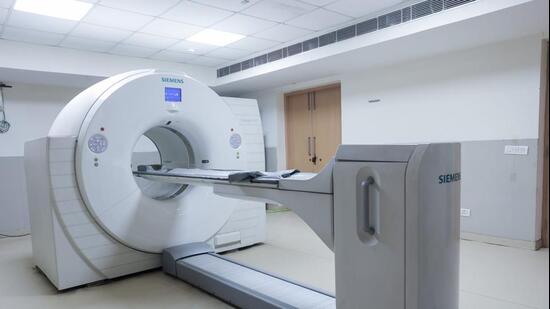
The order, issued by the state medical education department, fixes the PET-CT scan rate at ₹10,250, inclusive of the radiotracer FDG (Fluorodeoxyglucose) and contrast, wherever required. The rate has been arrived at by offering a 50% concession on the ₹20,500 package prescribed under the Mahatma Jyotirao Phule Jan Arogya Yojana (MJPJAY) and Ayushman Bharat Pradhan Mantri Jan Arogya Yojana (PMJAY).
The move is expected to bring considerable relief to cancer patients, for whom a PET-CT scan is an expensive but essential investigation. The scan helps doctors diagnose cancer, determine how far it has spread, establish its stage and assess how well a patient is responding to treatment.
Importantly, the revised rate will also benefit patients who are not eligible for MJPJAY or PMJAY but undergo the scan at government-run hospitals or hospitals operating under the PPP model. They, too, will pay ₹10,250. The order, however, does not apply to private hospitals and diagnostic laboratories.
This is the second major decision taken by the state government concerning access to PET-CT scans, after making the investigation available under MJPJAY and PMJAY on October 17.
{{/usCountry}}This is the second major decision taken by the state government concerning access to PET-CT scans, after making the investigation available under MJPJAY and PMJAY on October 17.
{{/usCountry}}The government has also capped charges for contrast agents, substances injected into patients to make organs and blood vessels more visible during scans. For CT scans, the rate has been fixed at ₹420 for 50 ml and ₹830 for 100 ml of contrast agent. For MRI scans, the charge for gadolinium-based contrast has been set at ₹950 for 10 ml.
The standardisation follows complaints that hospitals were charging varying amounts for contrast agents in the absence of prescribed rates. The Directorate of Medical Education and Research (DMER) flagged the issue and sought uniform charges across government medical colleges and hospitals.
The government resolution also lays down how patients must be charged, dividing them into three categories: those entitled to free treatment, paying patients and those sponsored or referred by other hospitals.
Patients eligible for free services under the government’s July 4, 2017, order will not have to pay anything for the investigations. Similarly, beneficiaries covered under MJPJAY and PMJAY will receive the prescribed investigations free of cost under the respective schemes.
Those who do not qualify for free services will have to pay the applicable investigation and contrast charges at the hospital’s billing desk. Patients sponsored or referred by other hospitals, meanwhile, will be charged the full rates specified in the concession agreement.
In order to ensure that the prescribed rates are followed, hospitals have been directed to maintain separate patient records, introduce a dedicated digital dashboard and preserve all records in both electronic and hard-copy formats for audits. Bills must be prepared in four copies for record-keeping and verification.
Hospital deans have also been instructed to prominently display the rates and payment procedures in Marathi and English. The quantity of contrast agent used must be certified by the treating medical officer. Hospitals cannot charge patients proportionately for the partial use of a vial.
No direct payments to private operators
The government has also put in place safeguards to prevent patients from being charged directly by private operators running diagnostic services under the PPP model.
Patients and their relatives will not be allowed to make payments directly to these operators, whether in cash, online or through any other mode. All charges must be paid exclusively at the hospital’s billing desk and deposited into the institution’s designated account.
Hospitals, in turn, will settle payments with private operators every month, based on the concessional rates specified in their agreements. Any operator or representative found collecting money directly from patients will be treated as having breached the agreement and will face action under its provisions.
Stay updated with all the Breaking News and Latest News from Mumbai. Click here for comprehensive coverage of top Cities including Bengaluru, Delhi, Hyderabad, and more across India along with Stay informed on the latest happenings in World News.
Stay updated with all the Breaking News and Latest News from Mumbai. Click here for comprehensive coverage of top Cities including Bengaluru, Delhi, Hyderabad, and more across India along with Stay informed on the latest happenings in World News.