MUMBAI: Nearly a decade after Balchitravani, the State Institute of Educational Technology (SIET) that once brought educational programmes to children across Maharashtra through Doordarshan, would up, the Bombay High Court has closed the legal chapter for two of its former employees, ruling that they were not state government servants and therefore not entitled to pension benefits.
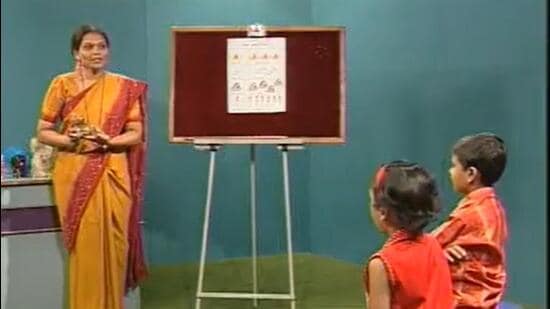
The ruling, delivered while dismissing petitions filed by Ravindra Bidkar and Ramdas Shendge, also revisited the journey of an institution that, long before the internet and search engines became household tools, served as an educational gateway for children, particularly in rural Maharashtra. Established in 1984 and formally shut down in 2017 after becoming financially unviable and technologically obsolete, Balchitravani was once known for research-based educational programming on Doordarshan.
Bidkar, formerly employed as a painter, and Shendge, who worked as a khalasi (general helper), had challenged an August 11, 2023 order of the Maharashtra Administrative Tribunal (MAT), which rejected their claim that they should be treated as state government employees entitled to pension.
From screens to silence
In order to decide whether the petitioners were government servants, the high court traced the evolution of SIET from its inception to its eventual closure.
The central ministry of education and culture decided in 1982 to establish SIET to produce research-based educational audio-visual content for children to be telecast on Doordarshan. Following discussions between the Centre and the state government, SIET was established in 1984. Initially based in Worli, Mumbai, it shifted its headquarters to Pune in 1986.
{{/usCountry}}The central ministry of education and culture decided in 1982 to establish SIET to produce research-based educational audio-visual content for children to be telecast on Doordarshan. Following discussions between the Centre and the state government, SIET was established in 1984. Initially based in Worli, Mumbai, it shifted its headquarters to Pune in 1986.
{{/usCountry}}Funded by the Centre for its first five years, SIET became an autonomous body in 1991 and was registered as a society the following year.
Through Balchitravani, children across Maharashtra watched programmes that simplified subjects such as history, science, the state’s culture, flora and fauna, and the lives of eminent personalities. The programmes frequently featured children from schools across the state in skits and dance performances. The content enjoyed particular popularity in rural Maharashtra, where it became an important educational resource well before the digital era.
However, SIET’s fortunes began to decline in 2003 after the Centre withdrew financial support and the state government expressed its inability to take over funding. The institute managed to sustain itself for some time by generating revenue from programmes telecast on Doordarshan. But once Doordarshan stopped airing its programmes free of cost, revenues dwindled, and employees allegedly stopped receiving salaries from April 2014.
Its journey finally came to an end through a government resolution dated May 31, 2017, which shut down the institute as it had become financially unsustainable and obsolete in the age of rapidly advancing technology.
Demand for pension
Following SIET’s closure, former employees argued before the MAT that 120 posts had been created with the approval of the state government’s finance department and carried pay scales identical to those of state government employees. This, they contended, made them “government servants for all practical purposes” and entitled them to pension benefits. After the tribunal rejected their plea in 2023, Bidkar and Shendge approached the high court.
The high court acknowledged the circumstances surrounding the closure of Balchitravani.
It observed that Balchitravani was shut down “due to technological advancements and availability of alternative platform, there was no longer any need for a separate state-level Educational Technology Institute (Balchitravani), since the objective with which, ‘Balchitravani’ was established was now being fulfilled through technological advancements among the teachers and the digital schools”. The court noted that Balchitravani had eventually made way for the digital platform e-Balbharati.
Justices Suman Shyam and Shyam Chandak, in their recent order, held that persons who were never appointed to a civil post under the state government could not claim the status of “government servant”.
The bench observed that although SIET was a government undertaking and the state exercised pervasive control over its affairs, there was nothing to indicate that the state government had provided it with financial assistance. The judges further held that applying the Maharashtra Civil Services Rules, 1981 to SIET employees would not automatically confer government servant status upon them.
The court also noted that since the petitioners had not retired from service upon attaining the age of superannuation, they did not satisfy the eligibility requirements under the pension rules. Consequently, the high court dismissed their petitions.
Stay updated with all the Breaking News and Latest News from Mumbai. Click here for comprehensive coverage of top Cities including Bengaluru, Delhi, Hyderabad, and more across India along with Stay informed on the latest happenings in World News.
Stay updated with all the Breaking News and Latest News from Mumbai. Click here for comprehensive coverage of top Cities including Bengaluru, Delhi, Hyderabad, and more across India along with Stay informed on the latest happenings in World News.