
 E-Paper



Malavika’s Mumbaistan: Mourning Has Broken
It never ceases to amaze me how ‘au courant’ our households and parents were with international popular culture, tucked away in the sleepy, tree-lined hamlet of Juhu, back in the Sixties

 Prefer HTon Google


If it hasn’t been given a name, called out for what it is and analysed by pop psychologists and social commentators yet- it’s high time it is.
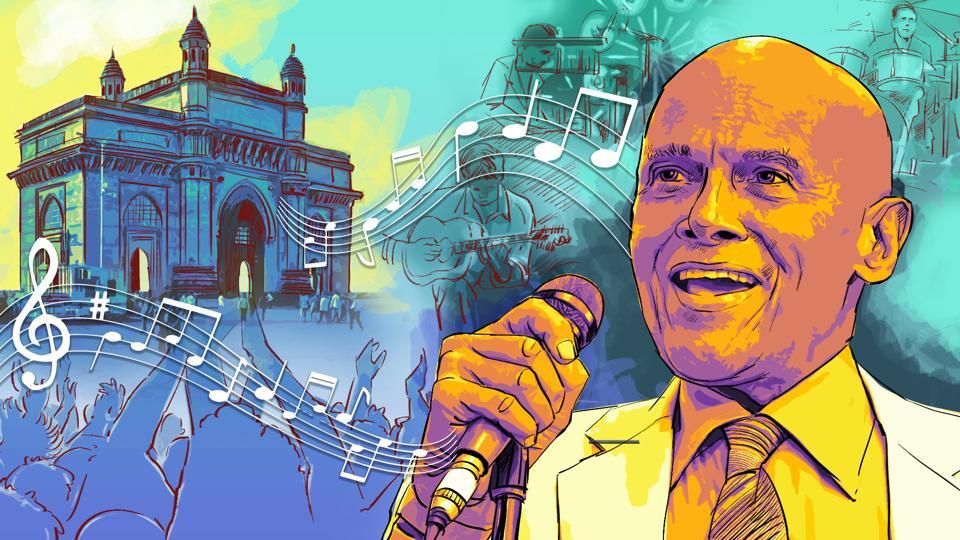
I’m referring to the syndrome spawned by social media, which I refer to as ‘ Mourning Has Broken’ (sorry Cat Stevens), that we are all too familiar with that of the spontaneous groundswell of remembrances, tributes, paeans and praise, shared on social media platforms, that follows on the heels of the death of any famous (or infamous) Tom, Dick and Harry by well… every Tom Dick and Harry.
It could be an obscure artist, living halfway across the world, whose life passed in pitiful neglect; or a long forgotten writer, whose books never sold a single copy, who died in penury; or an under-appreciated and consigned- to –oblivion, local personality, who no one ever visited, let alone mentioned; but come the moment of their passing and you can be sure there will be a universal chorus of lamentations, from every corner of the globe, of people sharing how much the loss has affected them deeply, greatly, personally…
The worst of these are of course the self-aggrandizers, who cannot let any opportunity pass without enhancing their own social status. So there will be many tributes, which even as they mourn the loss, will carry chosen words to burnish their own profiles. But let that be.
A more charitable view of this practice of universal breast-beating, to be considered by anthropologists and students of the sociology of digital communication, is that no man is an island and by sharing our grief and merging it with that of others, for a brief moment we feel connected with the rest of the human race.
*
The above section will surely negate everything I am going to say about the passing this week of American singer, actor and activist, Harry Belafonte Because in the great outpouring of tributes and eulogies that followed his death, one sensed a genuine, searing sense of loss, not for a celebrity whose death triggered the usual bon mots, but for an extraordinary human being, whose music spoke to such a wide section of people, on so many levels for so many years and for so many reasons.
Because, for a whole swathe of people, recognition and admiration for Harry Belafonte and his work was a lifelong process, spanning most of our lives and many of us tuned in to his songs 2 or 3 times a week if not more.
*
It never ceases to amaze me how ‘au courant’ our households and parents were with international popular culture, tucked away in the sleepy, tree-lined hamlet of Juhu, back in the Sixties. Remember, these were the days before the internet, frequent and easy foreign travel, IPods, playlists, liberalisation and Spotify. For God’s sake even to speak to someone outside one’s city one had to book a ‘trunk call’!!
And yet, it would not be wrong to say that as toddlers, our homes reverberated with the music of Harry Belafonte (along with that of Paul Robeson, Pete Seeger, Trini Lopez and Chubby Checker).
How on earth was this even possible? How did my parents discover and fall in love with the grainy, voluptuous voice of an impossibly handsome Calypso singer, when the only access to Western music in those days was a weekly broadcast by Radio Ceylon?
In retrospect, the answer to this conundrum is simple: Air India and its on-flight crew: like much of the suburbs, Juhu, due to its proximity to the Santacruz airport, was inhabited by colonies of Air India personnel and it is to them that we owe a great debt of gratitude, for much of our exposure to Belafonte’s music and that of others of his generation.
It was AI’s pilots, pursers and air hostesses, who lived in our and around our neighbourhoods who would generously lend us their LPs for our listening pleasure and it was through them that not only our parents, but we too were later, as teenagers exposed to the records of western musicians like Simon and Garfunkel, Joan Baez Elton John and Don Maclean.
*
“I had recently switched from ukulele to guitar, and proceeded to memorise every song in his repertoire. “ says Baez, another icon of our generation about Belafonte
“ I could not have known then that the man with the scratchy/smooth voice and the face of brown velvet would be there ten years later walking side by side with Dr King and myself in Montgomery, Alabama. Or that his commitment to nonviolence and civil rights was unshakable, and that as he was lifted up by the movement, he lifted up the movement with his eloquent voice, both singing and speaking.”
That was the great thing about Belafonte. And I suppose that is the thing about all great art: At its most successful, it encompasses and addresses the whole of the human spirit – the high and the low, the playful and the serious, the earthy and the spiritual, the humorous and the achingly sad. In his ribald ‘Man Smart ( Woman Smarter)’ ‘Mama Look a Boo Boo’ or ‘Matilda’, Belafonte’s rousing, full -of -laughter – and- mischief rich baritone would sweep us up in its playfulness. He was not above playing the fool for an instant connection with audiences. He didn’t wear his anger or his activism on his sleeve. And yet, in songs like ‘Jamaica Farewell’, ‘Island In The Sun’ and ‘Cu Cu Ru Cu,’ he embodied the anguish of human longing and suffering so hauntingly, that it could move listeners to tears.
*
I began this column by railing against the new and strange social media phenomena of the uprising of mourning of what appear to be random and obscure ‘famous ‘ people on social media.
But Belafonte was and is different. After his demise, at the ripe old age of 96 and a rich and full life, the eulogies from every Tom Dick and Harry appeared a lot more genuine and heartfelt.
After all, this wasn’t any Tom Dick and Harry we were eulogising-this was Tom Dick and Harry BELAFONTE!


