
 E-Paper



3 Maoists killed in 2 encounters in Chhattisgarh’s Bastar region
Police have also recovered weapons, a cache of explosives and Maoist-related materials from the encounter spots in Sukma and Bijapur districts of Chhattisgarh

 Prefer HTon Google


Three Maoists were killed in two different encounters with security personnel in Sukma and Bijapur districts of Chhattisgarh on Saturday, police said.
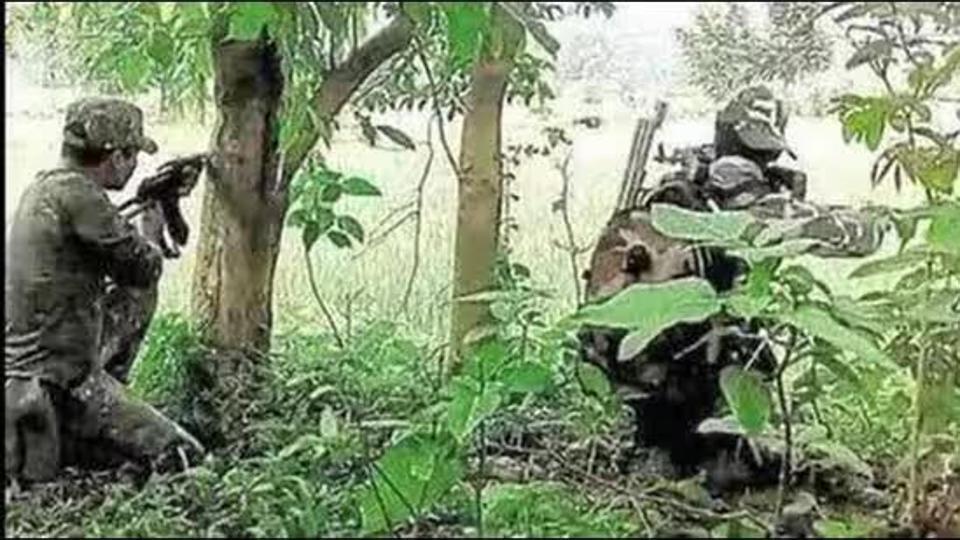
Police have also recovered weapons, a cache of explosives and Maoist-related materials from both the encounter spots
The identities of the Maoists killed in both the encounters are yet to be ascertained, officials said.
The first incident took place on Saturday morning near Belpchcha village in Sukma district.
Superintendent of Police, Sukma, Kiran Chavan said that the encounter took place near Belpochcha village when a joint team of security personnel was out on an anti-naxal operation
“The operation, involving personnel belonging to District Reserve Guard, Bastar Fighters and district force, was launched on Friday night based on inputs about a gathering of Maoists in the forests of Belpochcha, Jinetong and Uskawaya villages in view of their bandh call on May 26,” he said.
Maoists have given a bandh call on May 26 in Bastar region in protest against the alleged fake encounters.
“When the patrolling team was near Belpochcha, an exchange of fire broke out between the two sides. After guns fell silent, the body of a Maoist, a weapon, a cache of explosives and Maoist-related materials were recovered from the spot,” the official said.
The second encounter took place in a forest which comes under Mirtur police station of Bijapur district.
As per a statement issued by the Bijapur police, two Maoists were killed by security forces in the jungles of Jammemarka and Kamkanaar village.
“An anti-naxal operation was carried out on Saturday following the input of presence of senior Maoists leaders including supply-in-change of West Bastar Division of CPI (Maoist), Pandru, along with other 15 Maoists camping in the jungles. A team of the district reserve guard (DRG) reached close to their camp and a firing started. When the guns fell silent, two bodies of Maoists were recovered,” the statement said.
The Bijapur police said that the search operation is still going on.
“The bodies of the deceased are yet to be identified,” it said, adding the forces are still in the jungle.
With these incidents, 116 Maoists have been killed so far this year in separate encounters with security forces in Chhattisgarh, which is much higher than the figure in 2023 when only 22 Maoists were killed.
On Thursday, seven Maoist were killed in an encounter with security personnel on the Narayanpur-Bijapur inter-district border.
-kW0H-U20214218012MgB-250x250%40HT-Web.jpg)


