
 E-Paper



‘77 tuskers, 296 people killed in human-elephant conflict in Chhattisgarh’
In the last five years, Odisha recorded 410 elephant deaths while 518 people have died in the state in the same period. West Bengal recorded 42 deaths of the tuskers and 358 human deaths due to human elephant conflict in the state

 Prefer HTon Google


Human-elephant conflict in Chhattisgarh has resulted in the death of 77 elephants and 296 people in the last five years, the state forest department said on Wednesday.
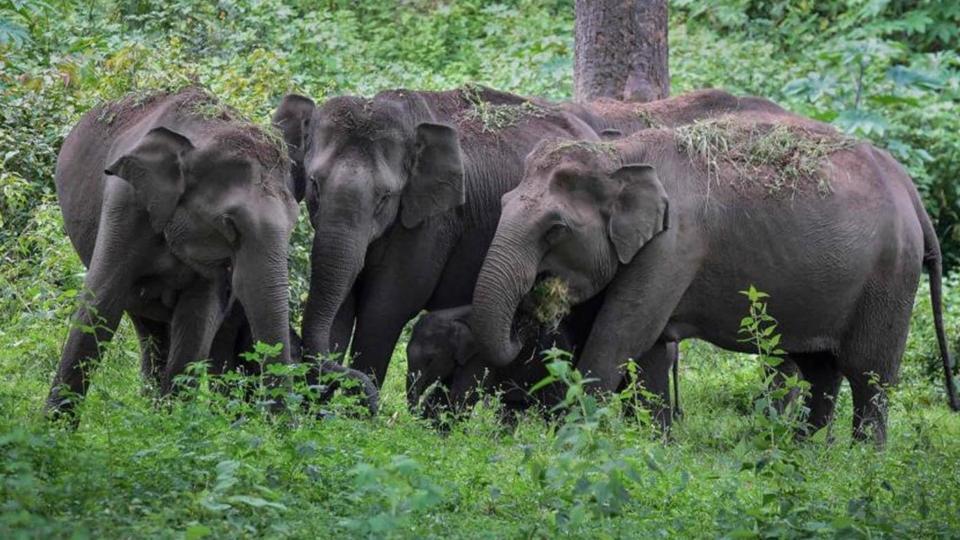
According to the officials, there are around 300 wild elephants in the forests of Chhattisgarh.
As per the figures provided by the department, both in 2018 and 2020, 18 tuskers lost their lives in the man-elephant conflict while in 2019 the highest number of human lives, 82, were lost in the conflict.
Also Read: Odisha elephant carcass burning: ‘2022 worst year for tuskers’, says HC
Data shows that contrary to the belief, in 2021 and 2022 the conflict resulted in the loss of 14 human lives and 16 tuskers, slightly less than the 18 elephants losing their lives in 2018.
However, of the total five years, the least number of elephants losing their lives, 11, was recorded in 2019.
According to the data, a total of 11,659 cases of damage to houses or other properties were recorded between 2018-2022. The highest number of such instances, 3,062, were recorded in 2021,” forest officials said.
Meanwhile, over ₹14 crore were disbursed as compensation to the deceased’s families in the five years, the figures stated.
It is worth mentioning that in 2021, the union government in the parliament claimed 1,578 humans died in elephant attacks in the country in the last three years. According to the government, 222 elephants died due to electrocution, 45 in train accidents, 29 due to poaching and 11 died due to poisoning during this period.
Meanwhile, in the last five years, Odisha recorded 410 elephant deaths while 518 people have died in the state in the same period. West Bengal recorded 42 deaths of the tuskers and 358 human deaths due to human-elephant conflict.
Activists believe that the biggest cause of wild elephant deaths in Chhattisgarh is due to electrocution.
Also Read: Controversial wildlife bill introduced in RS
“Another reason is the illegal hooking of power lines, especially during the crop season. We have seen that to run irrigation bores, farmers hook wires on the power lines. Often elephants come in contact with these live wires resulting in their death,” said Amelendu Mishra, a wildlife expert.
Mishra said that the government will have to make sure that power lines passing through jungles should be at least 15 to 18 feet high as the height of wild elephants in Chhattisgarh is not more than 12 feet.
“Also, if we get information about elephant movement in the risky spots then in those areas, power flow could be stopped for some time. Forest is swiftly shrinking and now mosaic forests exist in most places. Lack of dense forest has forced elephants to change their behaviour,” said Mishra.
“We need to create protected forests and ensure food-water availability in those jungles. A good example is the Tamor Pingla wildlife sanctuary in the Surajpur district in Chhattisgarh. There are about 40-45 elephants in the sanctuary who do not come out. Also, real-time information about elephant movement can also help in reducing the conflict,” Mishra added.
-kW0H-U20214218012MgB-250x250%40HT-Web.jpg)


